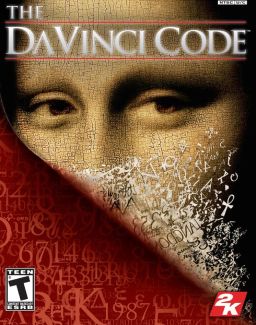
The Da Vinci Code is a 2006 adventure puzzle video game developed by The Collective and published by 2K for PlayStation 2, Xbox and Microsoft Windows. Although the game was released on the same day that the film of the same name opened in theaters, it is based directly on the 2003 novel by Dan Brown rather than the film. As such, the characters in the game do not resemble nor sound like their filmic counterparts.
The Da Vinci Code is a 2006 adventure puzzle video game developed by The Collective and published by 2K for PlayStation 2, Xbox and Microsoft Windows. Although the game was released on the same day that the film of the same name opened in theaters, it is based directly on the 2003 novel by Dan Brown rather than the film. As such, the characters in the game do not resemble nor sound like their filmic counterparts.
소개 자세히 읽기
The Da Vinci Code is a 2006 adventure puzzle video game developed by The Collective and published by 2K for PlayStation 2, Xbox and Microsoft Windows. Although the game was released on the same day that the film of the same name opened in theaters, it is based directly on the 2003 novel by Dan Brown rather than the film. As such, the characters in the game do not resemble nor sound like their filmic counterparts.
The Da Vinci Code received mixed reviews across all platforms. Although some critics praised the game's fidelity to its source material, the majority criticized the graphics and basic gameplay, particularly the melee combat.
Gameplay
The Da Vinci Code is an action-adventure/puzzle game played from a third-person perspective. The aim of the game, as with both the book and the film, is to locate the Holy Grail. To achieve this goal, the player must gather clues, solve puzzles, and successfully evade or defeat enemies.
Players control both Robert Langdon and Sophie Neveu. Who the player controls during any given level is pre-determined; the player has no choice as to which character to use at any given time in the game. The differences between the two characters are purely for narrative purposes; in terms of gameplay, both characters have the same speed, strength and abilities, can use the same items, and share an inventory.
The majority of the gameplay involves one of three aspects; searching, melee combat and puzzles. When searching locations, the player moves the characters around in a 3D environment viewed from a third-person perspective. When an object or location which can be examined more closely is found, the game switches to first-person mode, and the player can investigate in more detail. At this time, clues can be discovered on the object, or more specific objects can be found within the location.
Melee combat is split into two phases. In the first phase, the player approaches an enemy and attempts to punch them, as with most beat 'em up games. If the player successfully hits the enemy, the game enters attack mode. If the player misses and is instead attacked themselves, the game enters defense mode. Both modes are identical insofar as the player must enter a sequence of button presses before the timer runs out. If they do so correctly, they will successfully attack or block the enemy. If they run out of time or press the wrong buttons, they will be attacked or blocked themselves. Players can also push enemies away and attempt to flee from combat, and they can attempt to avoid combat altogether by sneaking up behind enemies and knocking them out.
Plot
The game begins with Silas (voiced by Phil LaMarr) sitting in his chamber, tightening a spiked metal cilice around his leg. He then picks up a handgun and leaves. The game cuts to Robert Langdon (Robert Clotworthy), a Harvard professor of symbology in Paris for a lecture, arriving at the Louvre, where he has been asked to view a crime scene by Cpt. Bezu Fache (Enn Reitel). Jacques Saunière (Neil Ross), Langdon's friend and curator of the museum, has been murdered. In flashback, Silas is shown asking Saunière where something is. Saunière tells him, and Silas responds, "I believe you. The others told me the same," before shooting him.
In the museum, Fache shows Langdon that before he died, Saunière wrote a numeric cipher and a message, "O Draconian Devil! Oh Lame Saint!" in blacklight ink. At this point, Sophie Neveu (Jennifer Hale), a member of the cryptography department arrives, explaining the cipher is part of the Fibonacci sequence, although the numbers are out of order. She then secretly tells Langdon he is in danger, as Fache thinks he is the murderer. In the toilets, she reveals the police have planted a GPS tracking device on Langdon. Neveu tells him that also written in black light ink were the words "PS. Find Robert Langdon." She explains that Saunière was her grandfather and "PS" was his nickname for her; "Princess Sophie." She believes that Saunière included the numerical cipher in the message to insure her involvement in the case.
Langdon throws the GPS device onto a passing car, and most of the police leave the museum to follow. He and Neveu return to the body, and Langdon realizes the numbers are out of sequence to tell them that the letters are also out of sequence; the words are anagrams. He deciphers "Draconian Devil" as "Leonardo da Vinci" and "Oh Lame Saint" as "The Mona Lisa". As they head to the painting, Langdon speculates "PS" could also refer to the Priory of Sion. His theory is strengthened when Neveu remembers seeing the letters together with a fleur-de-lis when she was a child; "PS" combined with a fleur-de-lis is the coat of arms of the Priory. At the Mona Lisa, they find a substitution cipher written in black light ink on the glass around the painting. The clues lead them to Saunière's office, where they listen to a message in which Sister Sandrine of Saint-Sulpice tells Saunière "the floor is broken and the other three are dead." A window is heard smashing and a man says, "Your fate was sealed the moment you stood against Manus Dei." As they continue to follow clues left by Saunière, eventually Neveu concludes they must head to his chateau. She and Robert split up as she heads to the chateau and he heads to Saint-Sulpice.
Once there, he finds a monk attacking a young nun. He knocks the monk out, and the nun, Sister Marguerite (Jane Carr), tells him that Sandrine is dead, killed by Silas, who was looking for something that Sandrine refused to give him. He left moments before the monks arrived, who seemed to be trying to erase evidence of his actions. Langdon concludes the monks are members of Sanctus Umbra, a militant subgroup of Manus Dei. Langdon examines the broken floor at the base of the Gnomon of Saint-Sulpice and finds a stone tablet with Job 38:11 inscribed on it; "Hitherto shalt thou come but no further." He deduces that Silas was misled by Saunière and the others. He heads into the crypt, where he fi