The Cat in the Hat Comes Back is a 1958 children's book written and illustrated by American author Theodor Geisel under his pen name Dr. Seuss. Published by Random House as one of its five original Beginner Books, it is the sequel to The Cat in the Hat (1957). In the book, the Cat in the Hat leaves a pink stain in the bathtub and spreads it around the house while cleaning it. He unveils a series of increasingly small cats from beneath his hat until the smallest one lifts his hat and unleashes a force called Voom that cleans away the pink stain. The book uses under 300 distinct words with a plo
The Cat in the Hat Comes Back is a 1958 children's book written and illustrated by American author Theodor Geisel under his pen name Dr. Seuss. Published by Random House as one of its five original Beginner Books, it is the sequel to The Cat in the Hat (1957). In the book, the Cat in the Hat leaves a pink stain in the bathtub and spreads it around the house while cleaning it. He unveils a series of increasingly small cats from beneath his hat until the smallest one lifts his hat and unleashes a force called Voom that cleans away the pink stain. The book uses under 300 distinct words with a plo
소개 자세히 읽기
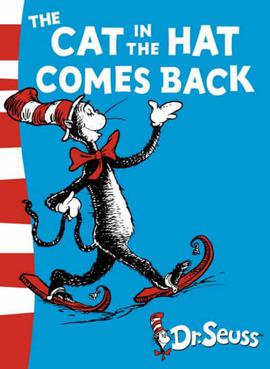
The Cat in the Hat Comes Back is a 1958 children's book written and illustrated by American author Theodor Geisel under his pen name Dr. Seuss. Published by Random House as one of its five original Beginner Books, it is the sequel to The Cat in the Hat (1957). In the book, the Cat in the Hat leaves a pink stain in the bathtub and spreads it around the house while cleaning it. He unveils a series of increasingly small cats from beneath his hat until the smallest one lifts his hat and unleashes a force called Voom that cleans away the pink stain. The book uses under 300 distinct words with a plot inspired by Geisel's earlier story "The Strange Shirt Spot" (1951). It reuses several aspects of The Cat in the Hat, such as poor weather preventing the children from playing and the absence of an adult figure. The children are quicker to confront the Cat compared to the first book, and the character of Sally engages more with other characters instead of staying silent.
The Cat in the Hat Comes Back was well-received, but did not garner as much critical praise as the original book. A live-action film adaptation was planned, but was ultimately canceled after the critical failure of the 2003 Cat in the Hat film.
Plot
A boy and his sister Sally are shoveling snow while their mother is out. The Cat in the Hat arrives, and Sally reminds her brother about the tricks the Cat played during his last visit. The Cat promises he only wants to go inside to get out of the snow, but they find him eating cake in a bathtub. The boy turns off the water, but a pink stain is left along the side of the bathtub. The Cat uses their mother's dress to clean it, staining the dress pink. The Cat tries various methods to clean the pink spot, wiping it onto a wall, their father's shoes, a rug, and a bed.
To get help cleaning the stain from the bed, the Cat lifts his hat and a smaller version of himself, Little Cat A, comes out. Little Cat A lifts his hat to let out a smaller cat, Little Cat B, who then lifts his hat to let out Little Cat C. They move the pink spot to a broom and a television set before blowing it out of the house with a fan. It stains the snow, so Little Cat C takes off his hat to let out Little Cats D through G. They try to clean up the snow, but make a bigger mess of the pink spot, so they let out Little Cats H through V, each smaller than the last. They try to clean up the stain until all of the snow is pink, so they let out Little Cats W, X, Y, and the microscopic Little Cat Z. Little Cat Z lifts his hat to let out the Voom, a powerful, mysterious, and unseen force hidden under it which cleans the pink from the snow and puts the Little Cats back in the Cat's hat.
The Cat in the Hat Comes Back is a sequel to the book The Cat in the Hat by Theodor Geisel. He did not wish to write a sequel, especially as he was more focused on his work running the Beginner Books imprint, but there was an unspoken implication from his publisher that a sequel was expected for such a popular book. Geisel wrote The Cat in the Hat Comes Back at his home in La Jolla, California. He incorporated elements of his short story "The Strange Shirt Spot" (1951) when writing The Cat in the Hat Comes Back. The images of the Cat in the bathtub are reminiscent of his political cartoons from the early-1940s which feature vulnerable characters in bathtubs. Geisel discarded six drafts of possible sequels for The Cat in the Hat before settling on what became The Cat in the Hat Comes Back. Little of his draft work was preserved, with no existing color-pencil sketches.
Geisel drew from a list of 348 words, selecting them from a list of words appropriate for early readers with the exception of Voom. Depending on how a distinct word is defined, the final draft uses 253, 266, or 290 words. There are only four three-syllable words in The Cat in the Hat Comes Back: anything, somebodies, somebody, and W. Another 26 words were two-syllables. The most common words are the with 87 uses followed by and and cat with 54 uses each. While no words beginning with Q or Z appear in The Cat in the Hat, The Cat in the Hat Comes Back features the letters as standalone names of two characters along with the other letters.
The Cat in the Hat Comes Back was published in 1958. It was one of the original five books published in the Beginner Books line, along with A Big Ball of String by Marion Holland, The Big Jump and Other Stories by Benjamin Elkin and Katherine Evans, A Fly Went By by Michael McClintock, and Sam and the Firefly by P. D. Eastman. Geisel's book was the most popular of the group. He immediately began working on Yertle the Turtle and Other Stories while The Cat in the Hat Comes Back was prepared for publication. To promote the two books, Geisel went on a book tour, which was an unusual marketing strategy for children's books at the time.
The Cat in the Hat Comes Back was the first of Geisel's books to feature the "I can read it all by myself" logo of the Beginner Books series, which was then added to future printings of The Cat in the Hat. The original cover art featured an image on page six where the Cat walks up a snowy hill, but it was tilted so that the Cat appeared to walk on level ground. This design had the title printed in blue text, used the original Beginner Books logo, and erroneously had the Cat wearing a white bowtie instead of a red one. After it had already sold 100,000 copies, Geisel decided that a line on the cover was drawn too dark and that a new cover needed to be printed. Subsequent editions used a solid blue background and the updated Beginner Books logo, which itself featured the Cat. Seuss was unhappy with the first printing, feeling that the colors bled too much in some places and that the black lines were not crisp enough. Geisel made use of S-shaped curves throughout the book, including the Cat's path when skiing, the rug as it is moved, and the tails of the little cats. The title page of The Cat in the Hat Comes Back includes an exclam