Strange Case of Dr Jekyll and Mr Hyde is an 1886 Gothic horror novella by Scottish author Robert Louis Stevenson. It follows Gabriel John Utterson, a London-based legal practitioner who investigates a series of strange occurrences between his old friend, Dr Henry Jekyll, and a murderous criminal named Edward Hyde.
Strange Case of Dr Jekyll and Mr Hyde is an 1886 Gothic horror novella by Scottish author Robert Louis Stevenson. It follows Gabriel John Utterson, a London-based legal practitioner who investigates a series of strange occurrences between his old friend, Dr Henry Jekyll, and a murderous criminal named Edward Hyde.
詳しい紹介を読む
Strange Case of Dr Jekyll and Mr Hyde is an 1886 Gothic horror novella by Scottish author Robert Louis Stevenson. It follows Gabriel John Utterson, a London-based legal practitioner who investigates a series of strange occurrences between his old friend, Dr Henry Jekyll, and a murderous criminal named Edward Hyde.
Strange Case of Dr Jekyll and Mr Hyde is considered to be a defining book of the gothic literature genre. The novella has also had an impact on popular culture, with the phrase "Jekyll and Hyde" being used in vernacular to refer to people with an outwardly good but sometimes shockingly evil nature.
Plot summary
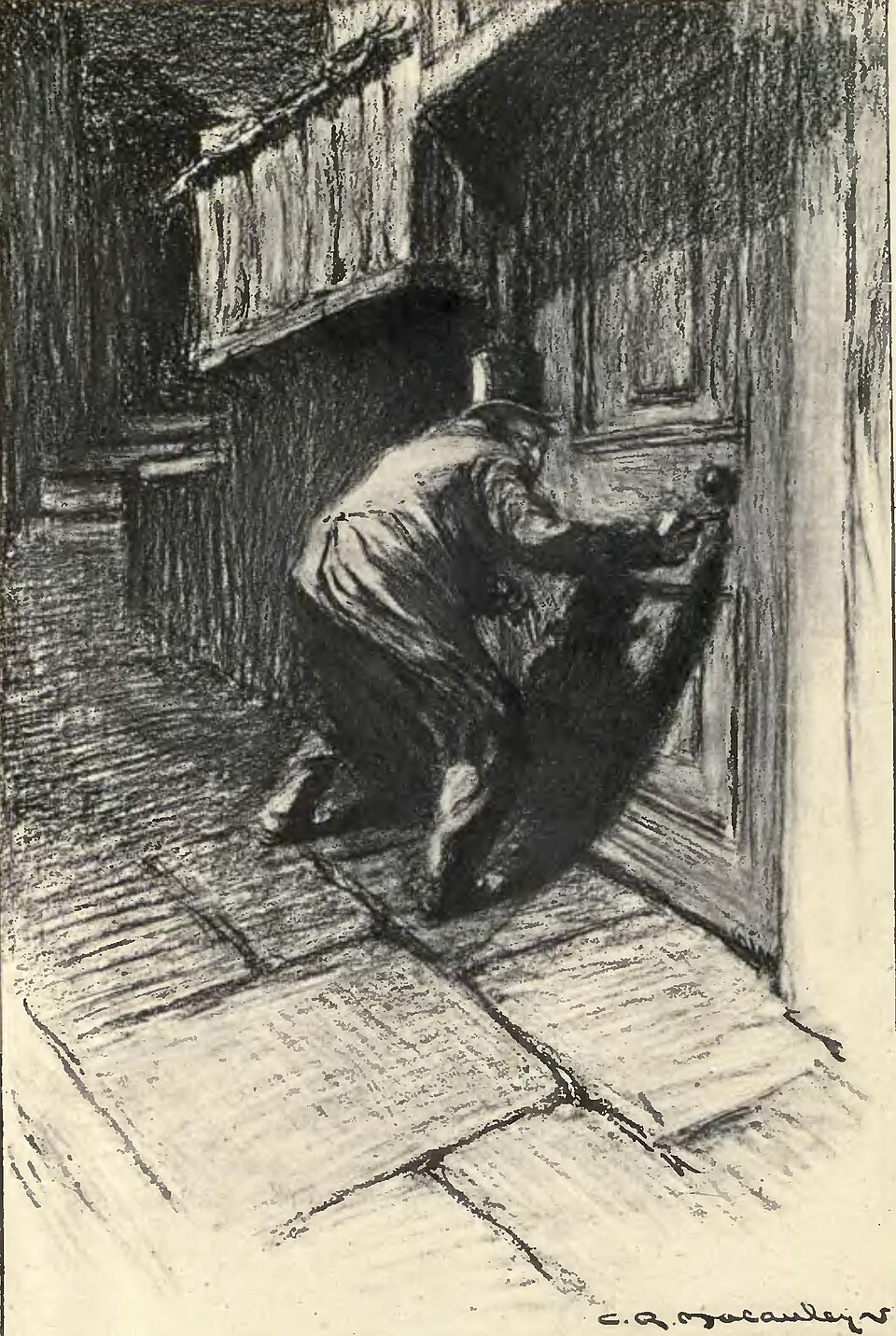
Mr Utterson, a reserved and morally upright lawyer, and his lighthearted cousin Mr Enfield are on their weekly walk when they reach the door of a mysterious, unkempt house located down a by-street in a bustling quarter of London. Enfield recounts to Utterson that months prior, he witnessed a malevolent-looking man named Edward Hyde deliberately trample a young girl after a seemingly minor collision. Enfield forced Hyde to pay her family a large sum of money to avoid a scandal. Hyde brought Enfield to this door and gave him a cheque signed by a reputable gentleman later revealed to be Dr Henry Jekyll, Utterson's friend and client. Utterson fears Hyde is blackmailing Jekyll, as Jekyll recently changed his will to make Hyde the sole beneficiary in the event of Jekyll's death or disappearance. When Utterson tries to discuss Hyde with Jekyll, Jekyll says he can get rid of Hyde when he wants and asks him to drop the matter.
A year later in October, a servant sees Hyde beat Sir Danvers Carew, anothe
Stevenson had long been intrigued by the idea of how human personalities can reflect the interplay of good and evil. While still a teenager, he developed a script for a play about William Brodie, a Scottish cabinet-maker, deacon of a trades guild, and Edinburgh city councillor, who maintained a secret life as a burglar in order to fund his mistresses and gambling addiction, which Stevenson later reworked with the help of W. E. Henley and which was produced for the first time in 1882.
Inspiration may also have come from the writer's friendship with an Edinburgh-based French teacher, Eugène Chantrelle, who was convicted and executed for the murder of his wife in May 1878. Chantrelle, who had appeared to lead a normal life in the city, poisoned his wife with opium. According to author Jeremy Hodges, Stevenson was present throughout the trial and as "the evidence unfolded he found himself, like Dr Jekyll, 'aghast before the acts of Edward Hyde'." Moreover, it was believed that the teacher had committed other murders both in France and Britain by poisoning his victims at supper parties with a "favourite dish of toasted cheese and opium".
Stevenson was friends with homosexual men, including Horatio Brown, Edmund Gosse, and John Addington Symonds, and the duality of their socially suppressed selves may have shaped his book. Symonds was shocked by the book, writing to Stevenson that "viewed as an allegory, it touches one too closely."
According to Stevenson's essay "A Chapter on Dreams" (Scribner's, Jan. 1888), after racking his brains for days over a possible plot for the story, he had a dream that gave him "three scenes, and the central idea of a voluntary change becoming involuntary". Biographer Graham Balfour quoted Stevenson's wife, Fanny Stevenson: In the small hours of one morning,[...] I was awakened by cries of horror from Louis. Thinking he had a nightmare, I awakened him. He said angrily: "Why did you wake me? I was dreaming a fine bogey tale." I had awakened him at the first transformation scene.
Lloyd Osbourne, Stevenson's stepson, wrote: "I don't believe that there was ever such a literary feat before as the writing of Dr Jekyll. I remember the first reading as though it were yesterday. Louis came downstairs in a fever; read nearly half the book aloud; and then, while we were still gasping, he was away again, and busy writing. I doubt if the first draft took so long as three days."
As was customary, Mrs Stevenson would read the draft and offer her criticisms in the margins. Stevenson was confined to bed at the time from a haemorrhage. In her comments in the manuscript, she observed that in effect the story was really an allegory, but Stevenson was writing it as a story. After a while, Stevenson called her back into the bedroom and pointed to a pile of ashes: he had burnt the manuscript in fear that he would try to salvage it, and thus forced himself to start again from nothing, writing an allegorical story as she had suggested. Scholars debate whether he really burnt his manuscript; there is no direct factual evidence for the burning, but it remains an integral part of the history of the novella. In another version of the story, Stevenson came downstairs to read the manuscript for his wife and stepson. Enraged by his wife's criticism, he went back to his room, only to come back later admitting she was right. He then threw the original draft into the fire, and stopped his wife and stepson from rescuing it.
The novella was written in the southern English seaside town of Bournemouth in Dorset, where Stevenson had moved in 1884, because his stepson was at school there and to benefit from its mild climate, sea air and the aroma of its many resinous pine trees. Stevenson rewrote the story in three to six days. The original dream may have been stimulated by the medication Stevenson was receiving: ergotine (to stop lung hemorrhaging), derived from ergot, which could induce hallucinations, and possibly cocaine (at the time being investigated for medical benefits), though we have no direct evidence of this. However, there is no reason to believe he was "on drugs" when he wrote the work. According to Osbourne, "The mere physical feat was tremendous, and, instead of harming him, it roused and cheered him inexpressibly". He continued to refine the work for four to six weeks after the initial revision.