CASE #008: The Extra Hour
Do clocks go back or forward when daylight saving time ends in the US?
The parties are fictional. The evidence is real.
VERIFIED FACTS
Every sentence here links to an official source you can open.
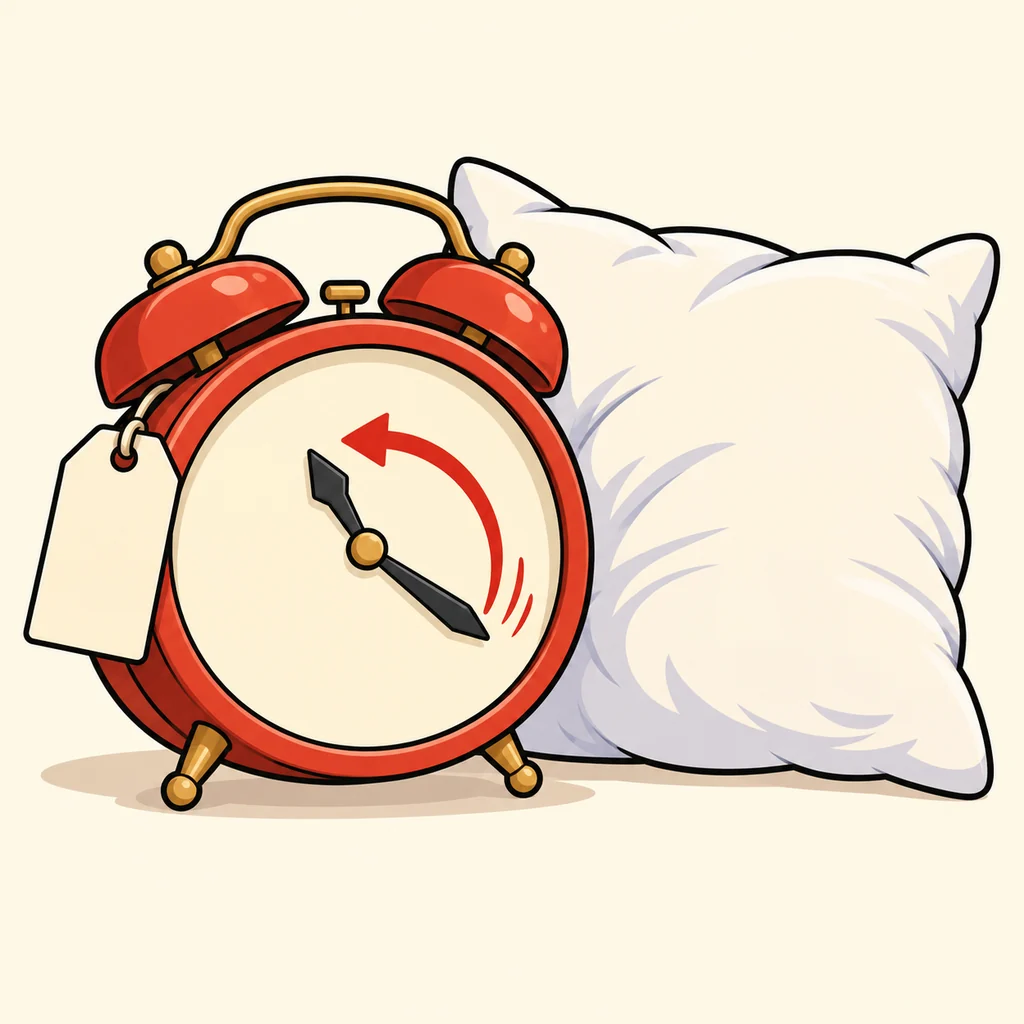
Back. NIST, the US national standards lab, says daylight saving time ends at 2:00 a.m. on the first Sunday of November. At 2 a.m. the local time becomes 1 a.m. and that hour is repeated, so there is an extra hour in that day. In 2026, daylight saving time runs from March 8 at 2 a.m. to November 1 at 2 a.m. (local time).[1]
1 official source: National Institute of Standards and Technology (NIST)Checked Oct 29, 2026The evidence
Questions people ask
Do you gain or lose an hour of sleep in November?
DRAMATIZATION
This part is made up for fun. Names, people and events are fictional.
The case
Timeline
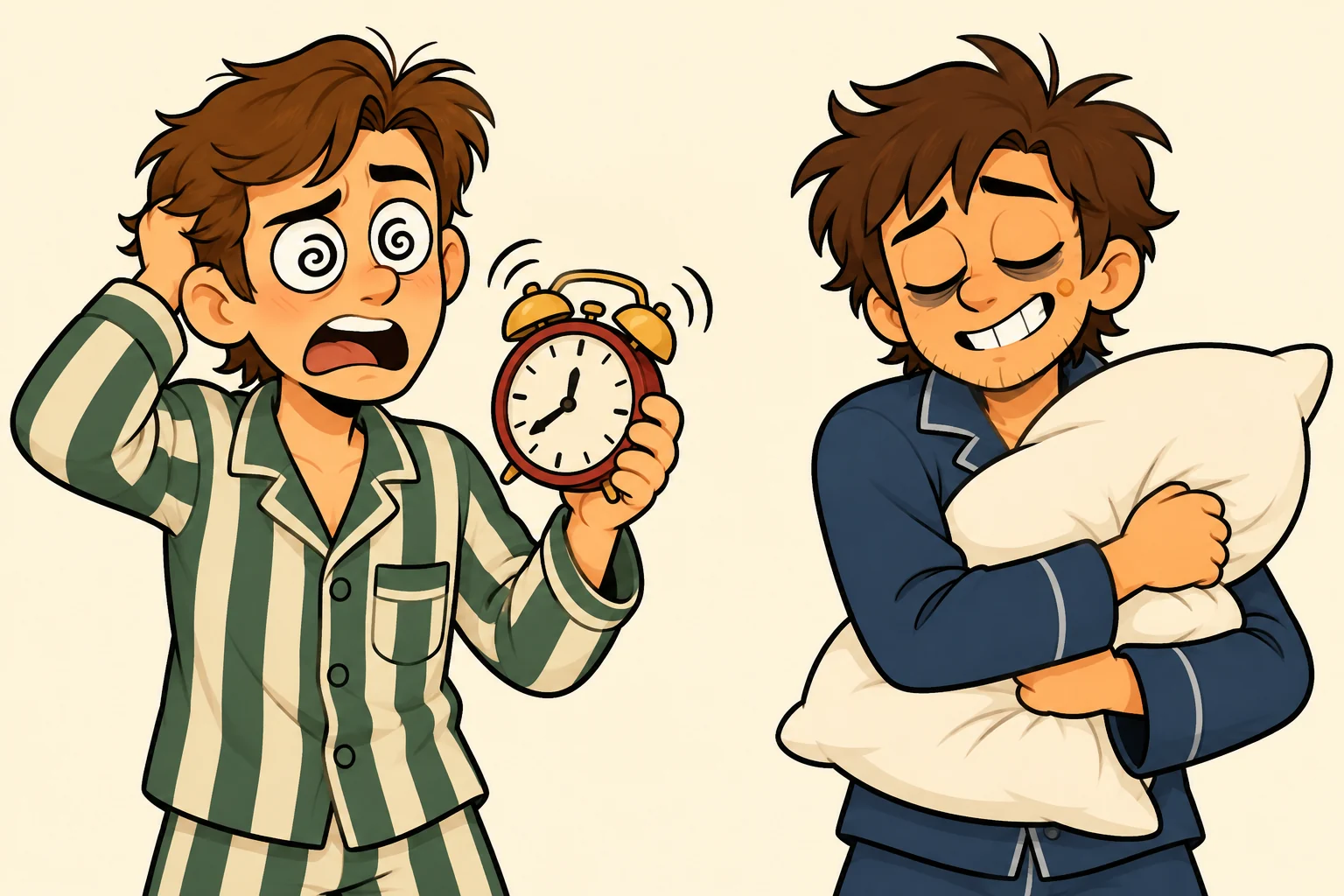
- Sat 11:00 PMThe plaintiff sets an alarm an hour early to make up for the hour we lose tonight.
- 11:01 PMThe defendant laughs and announces a plan to sleep in.
- Sun 1:30 AMBoth are still awake, arguing. The clock reaches 1:59.
- Sun 1:00 AMThe clock reads 1:00 again. The plaintiff files a complaint, very confused.
The claims
Plaintiff: The Roommate Who Set the Alarm EarlySpring forward, fall back, or fall forward? I always get it wrong, so I set it early to be safe.
Defendant: The Roommate Who Planned to Sleep InFall back. We get an hour. I am spending mine asleep.
The court's sentence
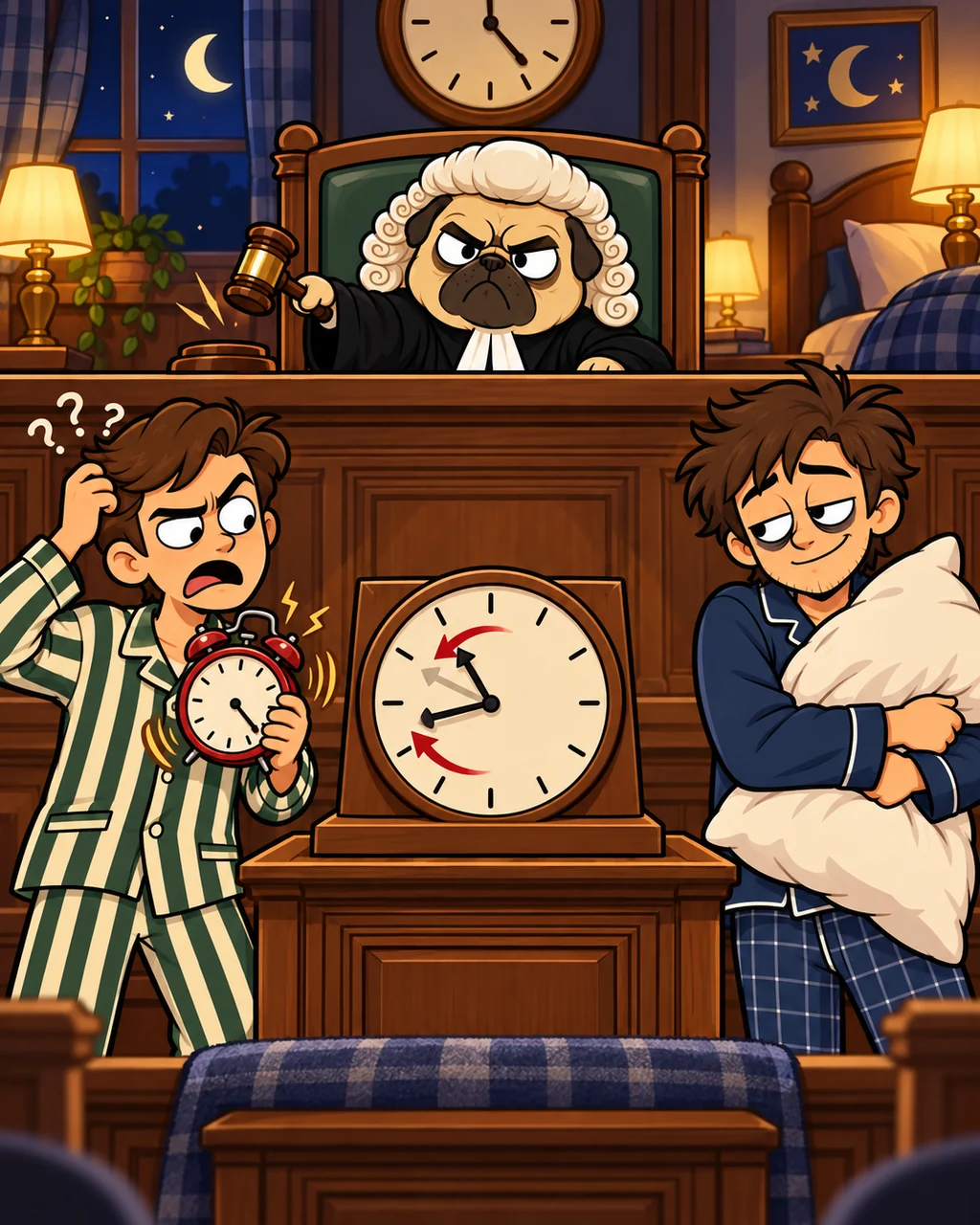
NOT GUILTY. ENJOY THE EXTRA HOUR.
SentenceThe plaintiff is sentenced to one extra hour of sleep, to be served immediately. The alarm clock is ordered to update itself, or be updated by hand.
Sources
- Source 1
National Institute of Standards and Technology (NIST)
www.nist.gov/pml/time-and-frequency-division/popular-links/daylight-saving-time-dst
Published Feb 9, 2026Checked Oct 29, 2026
During 2026, daylight saving time is in effect from March 8 at 2 a.m. (local time) to November 1 at 2 a.m. (local time). ... ends at 2:00 a.m. on the first Sunday of November ... at 2 a.m. the local time becomes 1 a.m. and that hour is repeated, so there is an extra hour in that day. ... DST is not observed in Hawaii, American Samoa, Guam, Puerto Rico, the Virgin Islands and the state of Arizona (with the exception of the Navajo Indian Reservation, which does observe DST).