CASE #006: The Pre-Rinse
Should you rinse dishes before putting them in the dishwasher?
The parties are fictional. The evidence is real.
VERIFIED FACTS
Every sentence here links to an official source you can open.
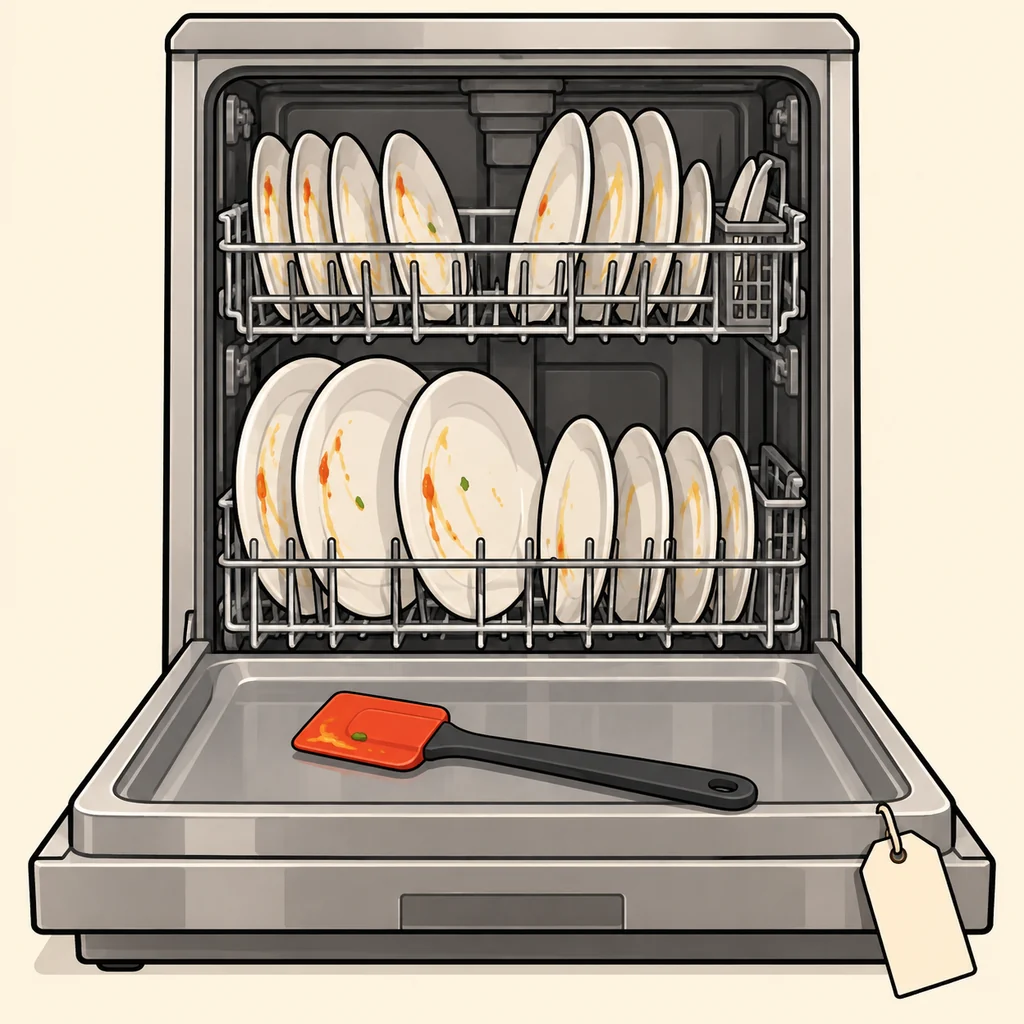
No. ENERGY STAR, the US government program for energy efficiency, says rinsing dishes before loading them increases the total water and energy used. Scrape food off instead, and if dirty dishes sit overnight, use the dishwasher's rinse feature.[1]
1 official source: ENERGY STAR (U.S. EPA and DOE)Checked Oct 29, 2026The evidence
Questions people ask
Is using a dishwasher better than washing by hand?
DRAMATIZATION
This part is made up for fun. Names, people and events are fictional.
The case

Timeline
- Sun 7:40 PMDinner ends. Six plates, two pans, one heroic lasagna dish.
- 7:45 PMThe defendant scrapes each plate into the bin and loads the dishwasher.
- 7:46 PMThe plaintiff takes every plate back out and rinses it under the tap.
- 8:02 PMSixteen minutes of running water later, the plaintiff files a complaint about dirty dishes.
The claims
Plaintiff: The Roommate Who RinsesHe puts dirty plates in the dishwasher. Unrinsed. Like an animal.
Defendant: The Roommate Who ScrapesWashing dirty plates is literally what the dishwasher is for.

The court's sentence
NOT GUILTY. SCRAPE, DON'T RINSE.
SentenceThe plaintiff surrenders the sponge and is sentenced to one week of scraping only. The faucet is ordered to rest.
Sources
- Source 1
ENERGY STAR (U.S. EPA and DOE)
www.energystar.gov/products/dishwashers
Published Jul 19, 2023Checked Oct 29, 2026
Rinsing dishes before loading them in the dishwasher increases the total water and energy used. ... Scrape don't rinse ... Save yourself the rinsing - just scrape food off dishes. If your dirty dishes sit overnight, use your dishwasher's rinse feature. ... uses less than half as much energy as washing dishes by hand