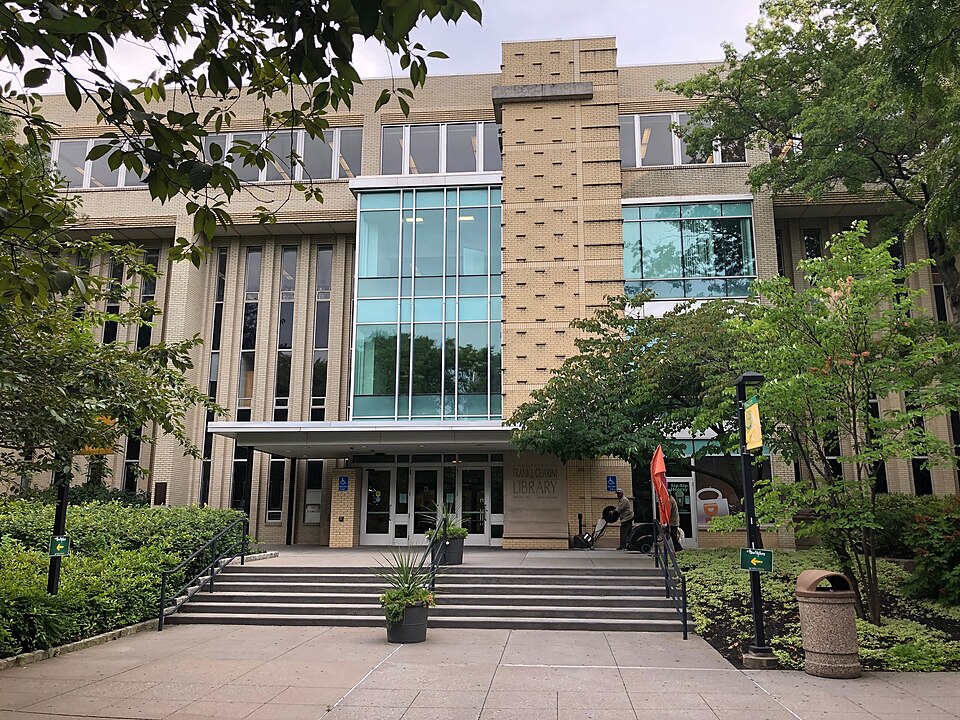
1927: The New Jersey State Normal School at Jersey City was chartered. The institution was built to accommodate 1,000 students and an eight-room demonstration school in its one building, Hepburn Hall, on 10 acres (40,000 m2) on what was then Hudson Boulevard.
1935: The name was changed to New Jersey State Teachers College at Jersey City. The institution was authorized to offer a four-year teacher education program and award the bachelor of science degree in education.
1936: A degree program in health education and nursing was initiated in cooperation with the Jersey City Medical Center for the training of school nurses.
1958: New Jersey State Teachers College at Jersey City became Jersey City State College and was authorized to award the bachelor of arts degree.
1959: The institution began to offer the master of arts degree in elementary education.
1968: Jersey City State College became a multipurpose institution, authorized to develop a liberal arts program and to enlarge teacher preparation programs.
1981: The Thomas Edison Film Festival established as the Black Maria Film and Video Festival at NJCU Media Arts Department.
1985: The institution was awarded a $5.7 million Governor's Challenge Grant for an expanded Cooperative Education Program, which would serve all academic majors.
1998: The New Jersey Commission on Higher Education approved a petition submitted by the JCSC Board of Trustees requesting that the institution be granted university status and renamed New Jersey City University. The university was restructured into three colleges: Arts and Sciences, Education, and Professional Studies.
2003: NJCU joined with the City of Jersey City, the Jersey City Board of Education, and New Jersey Transit to collaborate on the West Side/Bayfront urban development plan.
2012: After 19 years, NJCU President Carlos Hernandez retired. Under his tenure, three new buildings were erected and, in 1998, the school became a university.
2013: On September 20, NJCU inaugurated Dr. Sue Henderson to be the 12th president of the University, the first woman to hold the position.
2016: First building of major campus expansion opened.
2022: In June 2022, NJCU declared a financial emergency and sought a $10 million lifeline from the state government. Henderson resigned as president of the university, effective July 1. In August, Governor Phil Murphy called for an investigation into NJCU's dramatic change in financial standing from a surplus of $108 million in 2013 to a deficit of $67 million amid plans to expand NJCU's campus. It was later learned that there was never a surplus and those facts were misreported. The university did have a $22.7 million operating deficit. The university announced a cut of 37% of its academic offerings. Campus expansion was curtailed.