
地點
尼克工作室
Nickelodeon Studios
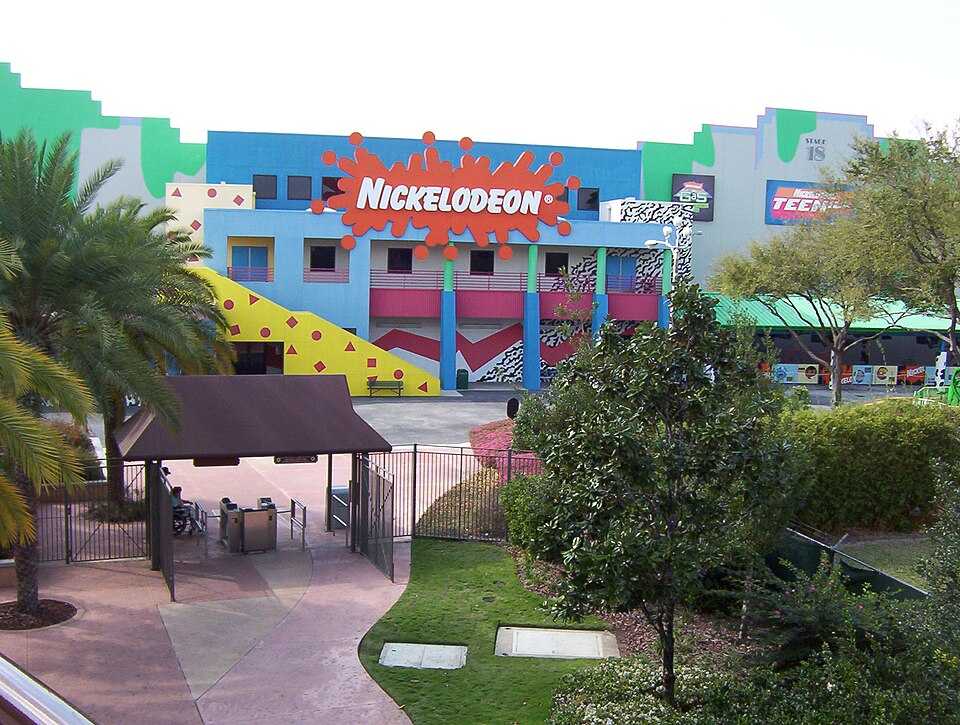
Nickelodeon Studios was a production studio and theme park attraction run by the television network Nickelodeon at Universal Studios Florida.
地點
Nickelodeon Studios
Nickelodeon Studios was a production studio and theme park attraction run by the television network Nickelodeon at Universal Studios Florida.
在包含此條目的事件檔案中探索資訊與關係。
還沒有包含此條目的事件檔案。
從此條目開始調查等待第一則留言。
Nickelodeon Studios was a production studio and theme park attraction run by the television network Nickelodeon at Universal Studios Florida.
Nickelodeon Studios was a production studio and theme park attraction run by the television network Nickelodeon at Universal Studios Florida.
Opening on June 7, 1990, as The First World Headquarters for Kids, the studio attracted young tourists as contestants and audience members for Nickelodeon's live-action programming. At its peak, the studio employed 400 people and was the largest production studio in Florida, bringing $110 million in business to the state by 1994.
The studio closed permanently on April 30, 2005, after much of Nickelodeon's production had moved to Nickelodeon on Sunset in Los Angeles. Nickelodeon Studios produced over 2,000 episodes of original programming.
In November 1988, Nickelodeon contracted space within the soon to be built Universal Studios Florida for its first production studio. Universal had determined through market research that a working studio was crucial in attracting guests to a movie themed park, and they offered Nickelodeon a sweetheart deal to supply that production. The promise of a custom-built studio at no expense, coupled with rent-free production, lured Nickelodeon away from negotiating with Disney-MGM Studios. The contract stipulated that Nickelodeon promote Universal Studios Florida on-air 1,000 times per year, while also broadcasting the park's television commercials.
來源:Nickelodeon Studios (CC BY-SA)
結構化資訊、使用者意見與 AI 擷取的關係會分別標示。
The exterior of the facility was designed by network production designer Byron Taylor, and the interior was designed by network art director Don St. Mars. Viacom senior vice president Scott Davis would supervise the design and construction of the complex, and he was later named the first general manager of Nickelodeon Studios.
Super Sloppy Double Dare in April 1989 and Think Fast in January 1990 were the first Nickelodeon productions filmed at Universal Studios Florida, and they were shot on the 21,000 sq ft (2,000 m2) Soundstage 21 while Nickelodeon Studios was still being constructed. Like other Nickelodeon game shows, both programs were previously filmed at WHYY-TV in Philadelphia. Nickelodeon's live-action productions had traditionally been shot on rented soundstages in multiple cities, which was not cost-effective and limited the network's growth.
Prior to the studio's completion, Double Dare executive producer Andy Bamberger, Double Dare creator Geoffrey Darby, Nickelodeon President Geraldine Laybourne, and Nickelodeon Studios general manager Scott Davis wrote their names in Building 17's second story concrete floor. Bamberger, who also served as executive producer of Make the Grade and Total Panic, wrote "I Love TV Production" above his name.
On June 7, 1990, Universal Studios Florida officially opened to the public. Nickelodeon Studios Opening Day Celebration! was broadcast live from the studio on Nickelodeon, hosted by Marc Summers of Super Sloppy Double Dare. The event was announced by John Harvey of Super Sloppy Double Dare and co-hosted by Greg Lee of Total Panic, Skip Lackey of Think Fast, Christine Taylor and Kelly Brown of Hey Dude (in character as Melody and Brad respectively), and Alie Smith, Matt Brown, Wendy Douglas and Will Friedle of Don't Just Sit There!. Celebrity appearances were made by Andrea Elson, Bill Cosby, Brooke Theiss, Danny Ponce, Gerard Christopher, Jane Seymour, Jason Hervey, Kellie Martin, Les Lye, Linda Blair, Steven Spielberg and Wil Wheaton. The broadcast included live performances by Kid 'n Play, Perfect Gentlemen and The Cover Girls.
Daily tours were given of the studio, starting with a queue area outside Soundstage 18 that led into Building 17. The 45-minute tours took park guests upstairs through the control room, through a viewing area that allowed glimpses of Soundstages 18 and 19, then downstairs through the wardrobe department and Gak Kitchen, with the tour concluding in Building 17's large audition room. While game shows were often shot 5 days a week while in production, sitcoms such as Welcome Freshmen would rehearse during the week and only shoot on weekends. This became problematic, as Nickelodeon's contract with Universal stipulated that their guests would be able to witness shows being filmed, "seven days a week, 52 weeks a year, during all hours of the tour's operation". To remedy this, the audition room was renamed Soundstage 17 and began hosting Game Lab, a mock game show at the end of every tour that culminated with one of the guests getting slimed.
Nickelodeon unveiled its Slime Geyser (also known as the Gak Geyser) in front of the studio on October 27, 1990. Russell Johnson, famous for playing The Professor on Gilligan's Island, appeared at the unveiling ceremony. The 17-foot high fountain would "erupt" with green colored water every 10 minutes. The network subsequently used a recording of the Geyser erupting as the sign-on for their broadcasting day.
On April 30, 1992, the Nickelodeon time capsule was buried near the Slime Geyser. The burial ceremony was broadcast live on Nickelodeon and hosted by Mike O'Malley of Get the Picture and Joey Lawrence of Blossom, with an appearance by Dr. Emmett Brown of Back to the Future: The Ride (portrayed by the park's costumed performer and not Christopher Lloyd). It contains items deemed important to the children of 1992 as voted upon by Nickelodeon viewers. These items included a Barbie doll, baseball, books (comic book, endangered species book, history book, phone book, TV Guide and World Atlas), bubble gum, CDs (MC Hammer and Michael Jackson), hat featuring the catchphrase of Joey Lawrence, news reports (1991 Soviet coup d'état attempt, Dissolution of the Soviet Union, Epidemiology of HIV/AIDS and Operation Desert Storm), Nickelodeon Gak, Nickelodeon Magazine, Nintendo Game Boy, pencils, photos of things too big to fit inside (bicycles, cars, celeb