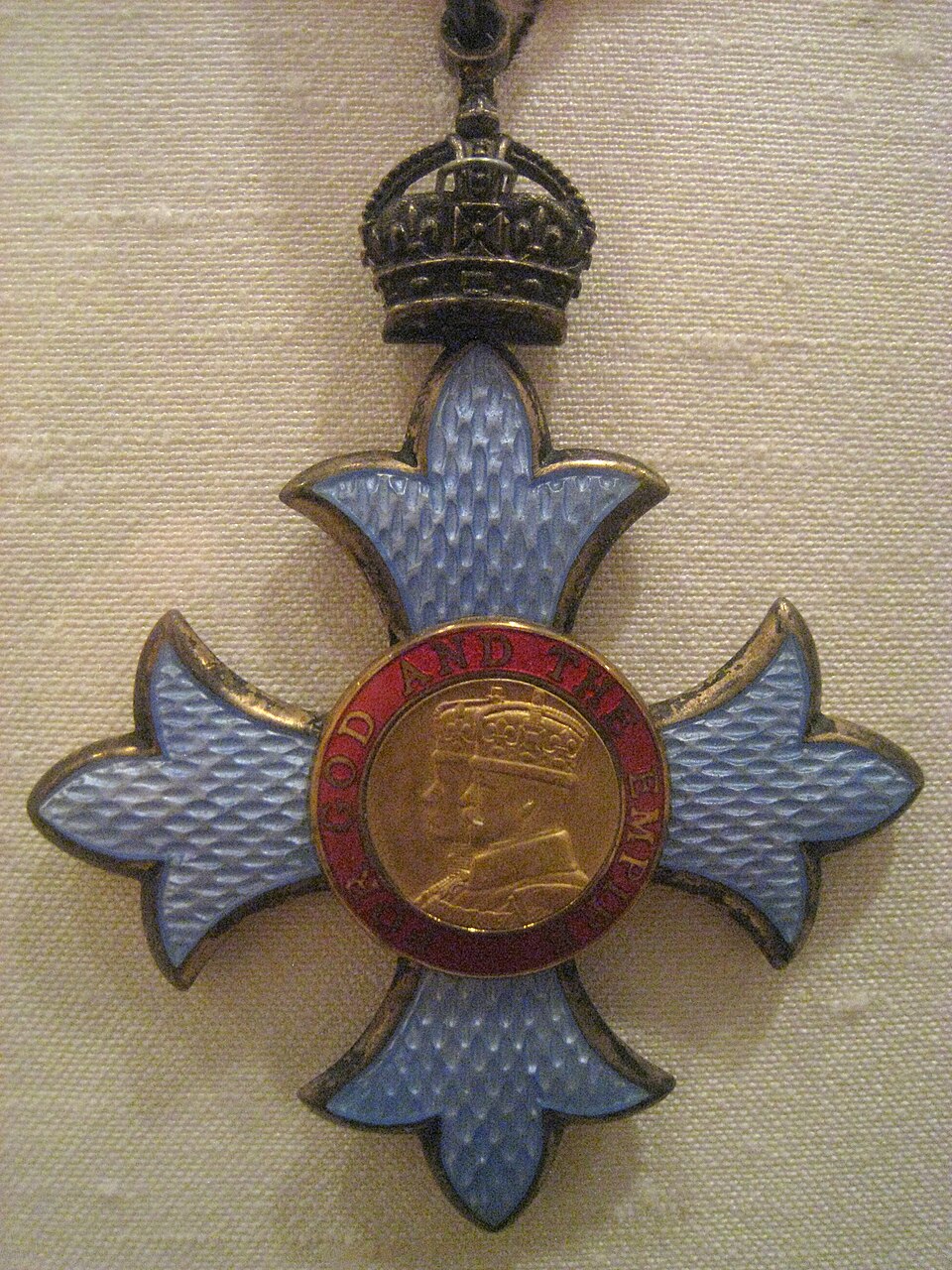
The Most Excellent Order of the British Empire is a British order of chivalry, rewarding valuable service in a wide range of useful activities. It comprises six classes of appointments across both civil and military divisions, the most senior two of which make the recipient either a knight if male or a dame if female.
The Most Excellent Order of the British Empire is a British order of chivalry, rewarding valuable service in a wide range of useful activities. It comprises six classes of appointments across both civil and military divisions, the most senior two of which make the recipient either a knight if male or a dame if female.
閱讀詳細介紹
The Most Excellent Order of the British Empire is a British order of chivalry, rewarding valuable service in a wide range of useful activities. It comprises six classes of appointments across both civil and military divisions, the most senior two of which make the recipient either a knight if male or a dame if female.
The order was established on 4 June 1917 by King George V, who created the order to recognise "such persons, male or female, as may have rendered or shall hereafter render important services to Our Empire". Equal recognition was to be given for services rendered in the UK and overseas. The order was retained after the decline of the British Empire in the second half of the 20th century. The majority of recipients are UK citizens, though a number of Commonwealth realms outside the UK continue to make appointments to the order. Honorary appointments may be made to citizens of other nations of which the order's sovereign is not the head of state.
Appointments are announced in The Gazette.
Classes
The six classes of appointment to the order are, from highest to lowest:
The two highest ranks, Knight or Dame Grand Cross and Knight or Dame Commander, entitle the holder to use the title Sir or Dame before their forename, except in the case of honorary appointments.
King George V founded the order to fill gaps in the British honours system:
The Orders of the Garter, the Thistle and St Patrick honoured royals, peers, statesmen and eminent military commanders;
The Order of the Bath honoured senior military officers and civil servants;
The Order of St Michael and St George honoured diplomats and colonial officials;
The Order of the Star of India and the Order of the Indian Empire honoured Indian rulers and British and Indian officials of the British Indian Empire; and
The Royal Victorian Order, in the personal gift of the monarch, honoured those who had personally served the royal family.
In particular, George V wished to create an order to honour the many thousands of individuals from across the Empire who had served in a variety of non-combat roles during the First World War.
From its foundation the order consisted of five classes (GBE, KBE/DBE, CBE, OBE and MBE) and was open to both men and women; provision was also made for conferring honorary appointments on foreign recipients. At the same time, alongside the order, the Medal of the Order of the British Empire was instituted, to serve as a lower appointment granting recipients affiliation but not membership. The first investiture took place at Ibrox Stadium, as part of a royal visit to the Glasgow shipyards, with the appointment of Alexander Ure, 1st Baron Strathclyde as a GBE (in recognition of his role as chairman of the Scottish War Savings Committee) and the conferral of medal of the order to Lizzie Robinson, a munitions worker.
The order had been established primarily as being for civilians; in August 1918, however, not long after its foundation, a number of appointments were made to serving naval and military personnel. Four months later, a 'Military Division' was added to the order, to which serving personnel would in future be appointed. The classes were the same as for the Civil Division (as it was now termed), but military awards were distinguished by the addition of a central vertical red stripe to the purple riband of the civil awards. In 1920, appointment as an MBE "for an act of gallantry" was granted for the first time, to Sydney Frank Blanck Esq, who had rescued an injured man from a burning building containing explosives.
In December 1922, the statutes of the order were amended; there having been a large number of awards for war work prior to this date, these amended statutes placed the order on more of a peacetime footing. For the first time numbers of appointments were limited, with the stipulation that senior awards in the Civil Division were to outnumber those in the Military Division by a proportion of six to one. Furthermore appointments in the civil division were to be divided equally between UK and overseas awards.
With regard to the Medal of the Order (but not the order itself), a distinction was made in 1922 between awards "for gallantry" and awards "for meritorious service" (each being appropriately inscribed, and the former having laurel leaves decorating the clasp, the latter oak leaves). In 1933, holders of the medal "for gallantry", which had come to be known as the Empire Gallantry Medal, were given permission to use the postnominal letters EGM (and at the same time to add a laurel branch emblem to the ribbon of the medal); however, in 1940, awards of the EGM ceased and all holders of the medal were instructed to exchange it for a new and more prestigious gallantry award: the George Cross. In 1941, the medal of the order "for meritorious service" was renamed the British Empire Medal, and the following year its recipients were granted the right to use the postnominal letters BEM. During the war, the BEM came to be used to recognise acts of bravery which did not merit the conferral of the George Cross or the George Medal, a use which continued until the introduction of the Queen's Gallantry Medal in 1974.
The designs of insignia of the order and medal were altered in 1937, prior to the coronation of King George VI, 'in commemoration of the reign of King George V and Queen Mary, during which the Order was founded'. The figure of Britannia at the centre of the badge of the order was replaced with an image of the crowned heads of the late King and Queen Mary, and the words 'Instituted by King George V' were added to the reverse of the medal. The colour o