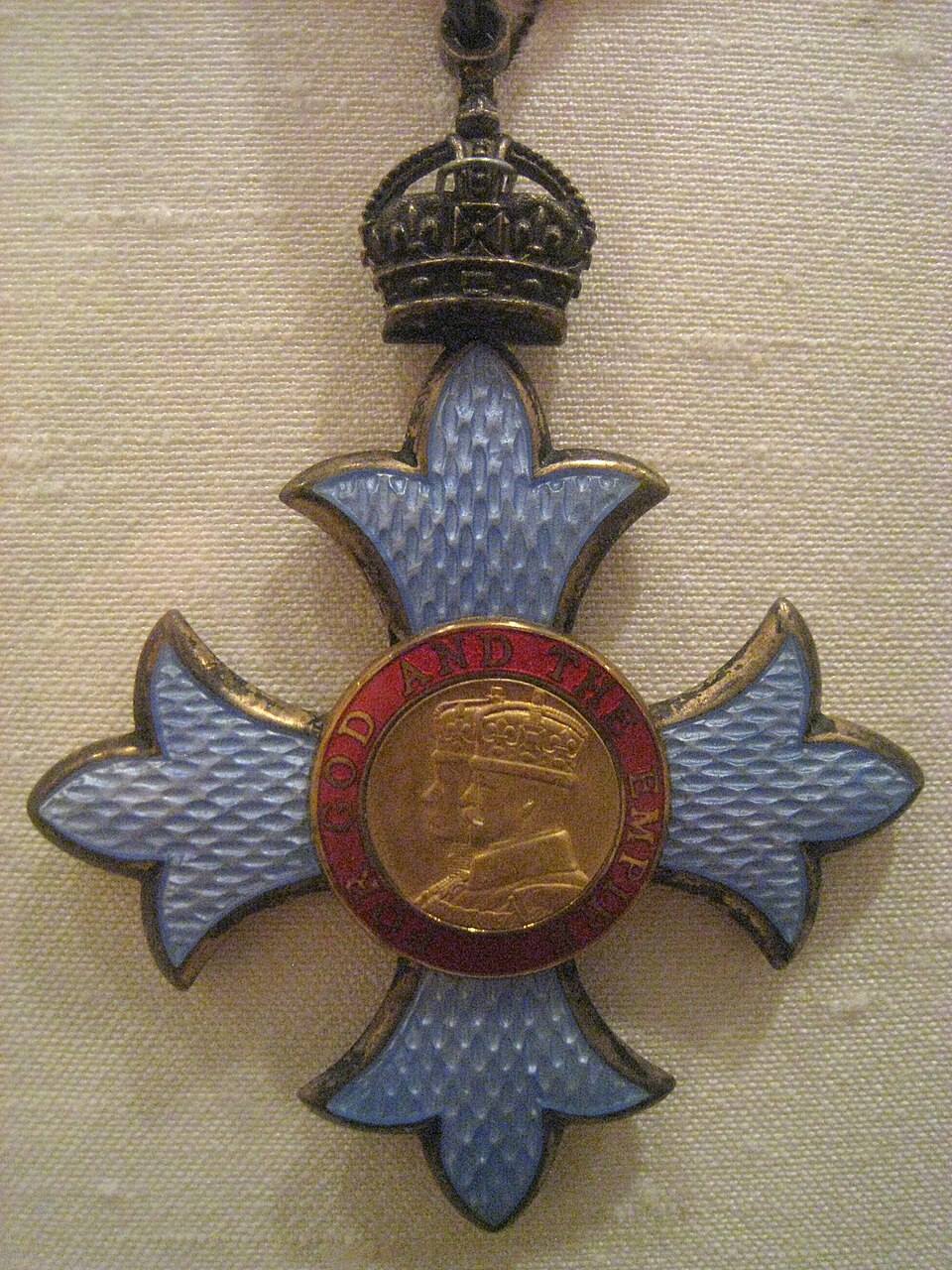
King George V founded the order to fill gaps in the British honours system:
The Orders of the Garter, the Thistle and St Patrick honoured royals, peers, statesmen and eminent military commanders;
The Order of the Bath honoured senior military officers and civil servants;
The Order of St Michael and St George honoured diplomats and colonial officials;
The Order of the Star of India and the Order of the Indian Empire honoured Indian rulers and British and Indian officials of the British Indian Empire; and
The Royal Victorian Order, in the personal gift of the monarch, honoured those who had personally served the royal family.
In particular, George V wished to create an order to honour the many thousands of individuals from across the Empire who had served in a variety of non-combat roles during the First World War.
From its foundation the order consisted of five classes (GBE, KBE/DBE, CBE, OBE and MBE) and was open to both men and women; provision was also made for conferring honorary appointments on foreign recipients. At the same time, alongside the order, the Medal of the Order of the British Empire was instituted, to serve as a lower appointment granting recipients affiliation but not membership. The first investiture took place at Ibrox Stadium, as part of a royal visit to the Glasgow shipyards, with the appointment of Alexander Ure, 1st Baron Strathclyde as a GBE (in recognition of his role as chairman of the Scottish War Savings Committee) and the conferral of medal of the order to Lizzie Robinson, a munitions worker.
The order had been established primarily as being for civilians; in August 1918, however, not long after its foundation, a number of appointments were made to serving naval and military personnel. Four months later, a 'Military Division' was added to the order, to which serving personnel would in future be appointed. The classes were the same as for the Civil Division (as it was now termed), but military awards were distinguished by the addition of a central vertical red stripe to the purple riband of the civil awards. In 1920, appointment as an MBE "for an act of gallantry" was granted for the first time, to Sydney Frank Blanck Esq, who had rescued an injured man from a burning building containing explosives.
In December 1922, the statutes of the order were amended; there having been a large number of awards for war work prior to this date, these amended statutes placed the order on more of a peacetime footing. For the first time numbers of appointments were limited, with the stipulation that senior awards in the Civil Division were to outnumber those in the Military Division by a proportion of six to one. Furthermore appointments in the civil division were to be divided equally between UK and overseas awards.