
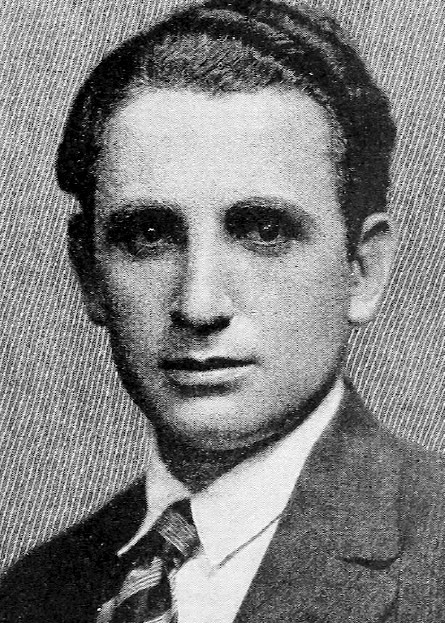
인물1898
아서 루빈
Arthur Lubin
미국 영화 감독
인물1898
Arthur Lubin
미국 영화 감독
이 항목이 포함된 사건 파일에서 정보와 관계를 함께 살펴보세요.
이 항목이 포함된 사건 파일이 아직 없습니다.
이 항목으로 조사 시작하기아직 댓글이 없어요. 먼저 한마디 남겨 보세요.
미국 영화 감독
Arthur Lubin (July 25, 1898 – May 11, 1995) was an American film director and producer who directed several Abbott & Costello films, Phantom of the Opera (1943), the Francis the Talking Mule film series and created the talking-horse TV series Mister Ed. A prominent director for Universal Pictures in the 1940s and 1950s, he is perhaps best known today as the man who gave Clint Eastwood his first contract in film.
Arthur William Lubovsky was born in Los Angeles in 1898. His father, William Lubovsky, had come to the US from Poland in 1889. He originally lived in Willsborough, Pennsylvania then moved to California. Lubovsky changed his name to Lubin in honor of filmmaker Siegmund Lubin and became a salesman. Lubin says his father "became quite wealthy" due to his success selling clothes and investments in copper mines in Arizona.
His family moved to Jerome, Arizona, when Arthur was five. He was interested in acting at an early age, appearing in local Sunday school productions, with the encouragement of his mother, who died when Lubin was six. His father remarried and Lubin was sent away to the Page School for Little Boys, a military school. The family moved from Jerome to San Diego when Lubin was eight for the climate, to help with his step-mother's health. He managed the music and drama clubs at high school and said a key influence was playing the title role in The Vicar of Wakefield.
He joined the San Diego Stock Company at $12 a week; the director was John Griffith Wray and the actors including Harold Lloyd.
Lubin attended Carnegie Tech, in part on the recommendation of the head of English at his high school, because of its reputation as a drama school. He attended for three years and appeared regularly in plays.
As a child he had worked as a water boy for touring theatre companies, such as the Virginia Brissoe stock company, and volunteered for circuses. He briefly served in the navy in World War One and attended Carnegie Tech, where he studied drama and made money by shifting scenery and props. On graduation from college in 1922, he decided to become an actor. He started appearing at the Pasadena Playhouse and was soon seen by talent scouts and put in films.
He worked as a drama coach at Canadian Steel Mills before following one of his college drama teachers, B. Iden Payne, to New York.
In New York, Lubin managed to get work on stage in such plays as The Red Poppy, Anything Might Happen and My Aunt from Ypsilanti. None of these plays were particularly successful so he moved to Hollywood, where he succeeded in getting roles in some films such as His People. He also acted in stage, notably at the Potboiler Act Theatre.
In 1925, the Los Angeles Times called Lubin "one of this year's juvenile screen sensations." He began directing shows for the Hollywood Writers Club.
Lubin later said "Whatever personality I had on the stage certainly wasn't photogenic. I was a little disappointed in the way I looked."
Lubin returned to New York gaining a job casting and directing with the firm of Crosby Graige and Selwyn. They wanted to try out summer shows in Greenwich and he directed two plays there. He went out to California and briefly returned to acting in Pasadena, then decided to stick with directing. He tried out two plays at the Pasadena Playhouse which he later produced and directed in New York with the financial help of Lee Schubert.
He produced When the Bough Breaks with Pauline Frederick, One Man with Paul Muni and another play with Lenore Ulric.
Lubin said Paul Bern "encouraged me to go back to New York because talking pictures were then coming in and he felt that most of the studios were engaging actors with stage experience."
He worked for nine months for the Ray-Minor Company, a subsidiary of Paramount. He later sued them for unpaid wages. However working for Ray-Minor which brought him to the attention of that studio's chief, B.P. Schulberg.
In June 1932, Lubin returned to Hollywood to work for William Le Baron at Paramount as an associate producer. His contract included the right to return to New York in the first six months to produce and direct a play. He assisted Le Baron on films such as Hot Saturday, Night After Night, She Done Him Wrong' and Hello Everybody'.
Lubin began directing Little Theatre in his spare time, including productions of Lilliom, and got reputation for doing "outstanding work". He was fired from Paramount as part of an economy drive.
Lubin received acclaim for directing a theatre production of The Green Bay Tree. He said "a man who knew my family [Hermann Slum]said to me, 'Why don't you come with us and Trem Carr and direct a pict
출처: Arthur Lubin (CC BY-SA)
확인된 구조화 정보, 사용자 의견, AI가 찾은 관계를 구분해 표시해요.
As an actor, he specialized in heavy melodrama, in sharp contrast with his later work as a film director. He later said "every part that Joseph Schildkraut did in New York, I did... on the Coast [Los Angeles]".
He appeared in Liliom. In 1925 he and some friends were charged with obscenity by the Los Angeles police for putting on a production of Eugene O'Neill's Desire Under the Elms. He later worked on Broadway, including Jealousy, where he replaced John Halliday opposite Fay Bainter.
A 1926 profile described him as a "genius" actor who was very down to earth: "When I met him, it was if I were meeting a young banker or a matter of fact businessman... human and charming... not only good but awfully good looking."
His films as an actor included The Woman on the Jury (1924), His People (1925), Bardelys the Magnificent (1926) with John Gilbert for King Vidor, Millionaires (1926), Afraid to Love (1927), The Wedding March (1928), The Bushranger (1928), Eyes of the Underworld (1929) and Times Square (1929), an early talking picture.
Over time Lubin's interests increasingly leant towards directing. "On the stage I had a personality I never had in pictures," he said. "That's one of the reasons I got the hell out of acting."