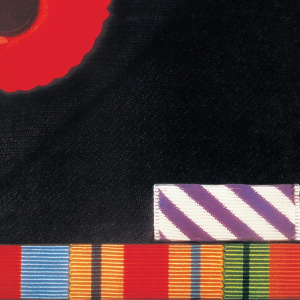
The Final Cut is the twelfth studio album by the English rock band Pink Floyd, released on 21 March 1983 through Harvest and Columbia Records. It includes unused material from the band's previous studio album, The Wall (1979), and new material recorded throughout 1982.
The Final Cut is the twelfth studio album by the English rock band Pink Floyd, released on 21 March 1983 through Harvest and Columbia Records. It includes unused material from the band's previous studio album, The Wall (1979), and new material recorded throughout 1982.
소개 자세히 읽기
The Final Cut is the twelfth studio album by the English rock band Pink Floyd, released on 21 March 1983 through Harvest and Columbia Records. It includes unused material from the band's previous studio album, The Wall (1979), and new material recorded throughout 1982.
The Final Cut is the last Pink Floyd album to feature founding member Roger Waters, who left the band in 1985. It is the only Pink Floyd album without founding member and keyboardist Richard Wright, who had left the band under pressure from Waters after the Wall sessions. The recording was plagued by conflict; guitarist David Gilmour felt many of the tracks were not worthy of inclusion, but Waters accused him of failing to contribute material himself. The contributions from drummer Nick Mason were limited mostly to sound effects.
Waters planned the album as a soundtrack for The Wall's 1982 film adaptation. With the onset of the Falklands War, he rewrote it as a concept album exploring what he considered the betrayal of those—including his father—who died defending freedom in the Second World War. Waters sang lead vocals on all but one track, and he is credited for all songwriting. The album was accompanied by a short film released in the same year.
The Final Cut received mixed reviews. Though it reached number one in the UK and number six in the US, it was the lowest-selling Pink Floyd studio album worldwide since their sixth album, Meddle (1971).
Concept
The Final Cut is an anti-war concept album that explores what Waters regards as the betrayal of fallen British servicemen—such as his father—who during the Second World War sacrificed their lives in the spirit of a post-war dream. This dream was that their victory would usher in a more peaceful world, whose leaders would no longer be so eager to resolve disputes by resorting to war. The lyrics are critical of Thatcher, whose policies and decisions Waters regarded as an example of this betrayal. She is referred to as "Maggie" throughout most of the album, and on "The Fletcher Memorial Home" as "Mrs. Thatcher".
The opening track, "The Post War Dream", begins with a recorded announcement that the replacement for the Atlantic Conveyor, a ship lost during the Falklands campaign, will be built in Japan. Waters' lyrics refer to his dead father, the loss of Britain's shipbuilding industry to Japan, and Margaret Thatcher, before moving on to "Your Possible Pasts", a rewritten version of a song rejected for The Wall. In "One of the Few", another rejected song, the schoolteacher from The Wall feat
The Final Cut was conceived as a soundtrack album for Pink Floyd – The Wall, the 1982 film based on Pink Floyd's previous studio album The Wall (1979). Under its working title Spare Bricks, it would have featured new music rerecorded for the film, such as "When the Tigers Broke Free". Primary songwriter Roger Waters also planned to record a small amount of new material, expanding The Wall's narrative.
As a result of the Falklands War, Waters changed direction and wrote new material. He saw British Prime Minister Margaret Thatcher's response to Argentina's invasion of the islands as jingoistic and unnecessary, and dedicated the new album—provisionally titled Requiem for a Post-War Dream—to his father, Eric Fletcher Waters. A second lieutenant of the 8th Royal Fusiliers, Eric Waters died during the Second World War at Aprilia in Italy, on 18 February 1944, when Roger was five months old. Waters said:The Final Cut was about how, with the introduction of the Welfare State, we felt we were moving forward into something resembling a liberal country where we would all look after one another ... but I'd seen all that chiselled away, and I'd seen a return to an almost Dickensian society under Margaret Thatcher. I felt then, as now, that the British government should have pursued diplomatic avenues, rather than steaming in the moment that task force arrived in the South Atlantic.
Waters had conflicting feelings about how his generation was tackling issues that greatly affected his father's generation. In an interview in 1987, he confessed: It says something about a sense, I suppose for me personally, a sense that I may have betrayed him. He died in the last war and I kind of feel that I personally may have betrayed him, because we haven't managed to improve things very much. That the economic cycles still over-ride everything, with the best intentions, the cycle of economic recession followed by resurgence still governs our actions. Guitarist David Gilmour disliked Waters' politicising, and the new creative direction prompted arguments. Five other tracks not used on The Wall ("Your Possible Pasts", "One of the Few", "The Final Cut", "The Fletcher Memorial Home", and "The Hero's Return") had been set aside for Spare Bricks, and although Pink Floyd had often reused material, Gilmour felt the songs were not good enough for a new studio album. He wanted to write new material, but Waters remained doubtful as Gilmour had lately contributed little new music. Gilmour said:
I'm certainly guilty at times of being lazy, and moments have arrived when Roger might say, "Well, what have you got?" And I'd be like, "Well, I haven't got anything right now. I need a bit of time to put some ideas on tape." There are elements of all this stuff that, years later, you can look back on and say, "Well, he had a point there." But he wasn't right about wanting to put some duff tracks on The Final Cut. I said to Roger, "If these songs weren't good enough for The Wall, why are they good enough now?"
The title The Final Cut is a reference to William Shakespeare's play Julius Caesar (1599): "This was the most unkindest cut of all". "When the Tigers Broke Free" was issued as a single titled "Pink Floyd: The Wall: Music from the Film" on 26 July 1982, with the film version of "Bring the Boys Back Home" on the B-side; the single was labelled "Taken from the album The Final Cut" but was not included on that album until the 2004 CD reissue.