
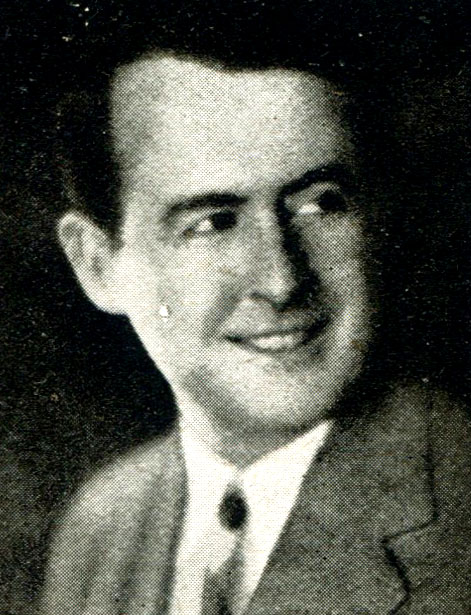
인물1897
Alberto Cavalcanti
Alberto de Almeida Cavalcanti was a Brazilian-born film director and producer. He was often credited under the single name "Cavalcanti".
인물1897
Alberto de Almeida Cavalcanti was a Brazilian-born film director and producer. He was often credited under the single name "Cavalcanti".
이 항목이 포함된 사건 파일에서 정보와 관계를 함께 살펴보세요.
이 항목이 포함된 사건 파일이 아직 없습니다.
이 항목으로 조사 시작하기아직 댓글이 없어요. 먼저 한마디 남겨 보세요.
관계가 언제 생기고 바뀌었는지 날짜순으로 모았습니다. 소식 글과 출처에 적힌 날짜를 기준으로 합니다.
Alberto Cavalcanti 국가 프랑스
Alberto de Almeida Cavalcanti was a Brazilian-born film director and producer. He was often credited under the single name "Cavalcanti".
Alberto de Almeida Cavalcanti (February 6, 1897 – August 23, 1982) was a Brazilian-born film director and producer. He was often credited under the single name "Cavalcanti".
Cavalcanti was born in Rio de Janeiro, the son of a prominent mathematician. He was a precociously intelligent child and, by the age of 15, was studying law at university, but was expelled following an argument with a professor. His father sent him to Geneva, Switzerland, on condition that he did not study law or politics. Cavalcanti chose to study architecture instead. At 18, he moved to Paris to work for an architect, later switching to working in interior design. After a visit to Brazil, he took up a position at the Brazilian consulate in Liverpool, England.
Cavalcanti corresponded with Marcel L'Herbier, a leading light in France's avant-garde film movement, which led to a job offer from L'Herbier for Cavalcanti to work as a set designer.
In 1920, Cavalcanti left his job at the consulate and moved back to France to work for L'Herbier. Directing his first film in 1926, he was involved in the making of numerous others, the most notable being L'Inhumaine. Cavalcanti was soon making his own films, the first being a 1926 experimental documentary, Rien que les heures (Nothing But Time), showing a day in the life of Paris and its citizens. After the advent of talkies, he took a job at the French studios of Paramount Pictures, but found himself making more commercial films, which did not hold his interest, so he left Paramount in 1933.
출처: Alberto Cavalcanti (CC BY-SA)
확인된 구조화 정보, 사용자 의견, AI가 찾은 관계를 구분해 표시해요.
The following year, Cavalcanti returned to England to work for the GPO Film Unit, headed by John Grierson. Cavalcanti spent seven years there in several departments, from production to sound engineer, working on many projects, most notably: Coal Face (1935), Night Mail (1936), Message to Geneva (1937), Four Barriers (1937), and Spare Time (1939). Although much of his work at the GPO was uncredited, he acted as a mentor to many new film makers. In 1937, he was appointed acting head of the GPO Film Unit when Grierson left for Canada. Told that the only way the position could become permanent was for him to become a naturalized British citizen, Cavalcanti decided to leave the unit.
In 1940, Cavalcanti joined Ealing Studios, under the leadership of producer Michael Balcon. He worked as an art editor, producer and director, and his most notable works of this period (many of them propaganda films) were Yellow Caesar (1941), Went the Day Well? (1942), Three Songs of Resistance (1943), Champagne Charlie (1944), Dead of Night (as co-director) (1945) and Nicholas Nickleby (1947). In 1946, Cavalcanti left Ealing after a dispute about money. He went on to direct three more films in the UK, before returning to Brazil in 1950.
In Brazil, Cavalcanti became head of production for Companhia Cinematográfica Vera Cruz, though the company eventually became insolvent. After being blacklisted in Brazil as a communist, he moved back to Europe, spending much of the 1960s and 1970s working as an itinerant film maker in various countries, including East Germany, France and Israel.
Cavalcanti died in Paris at the age of 85.