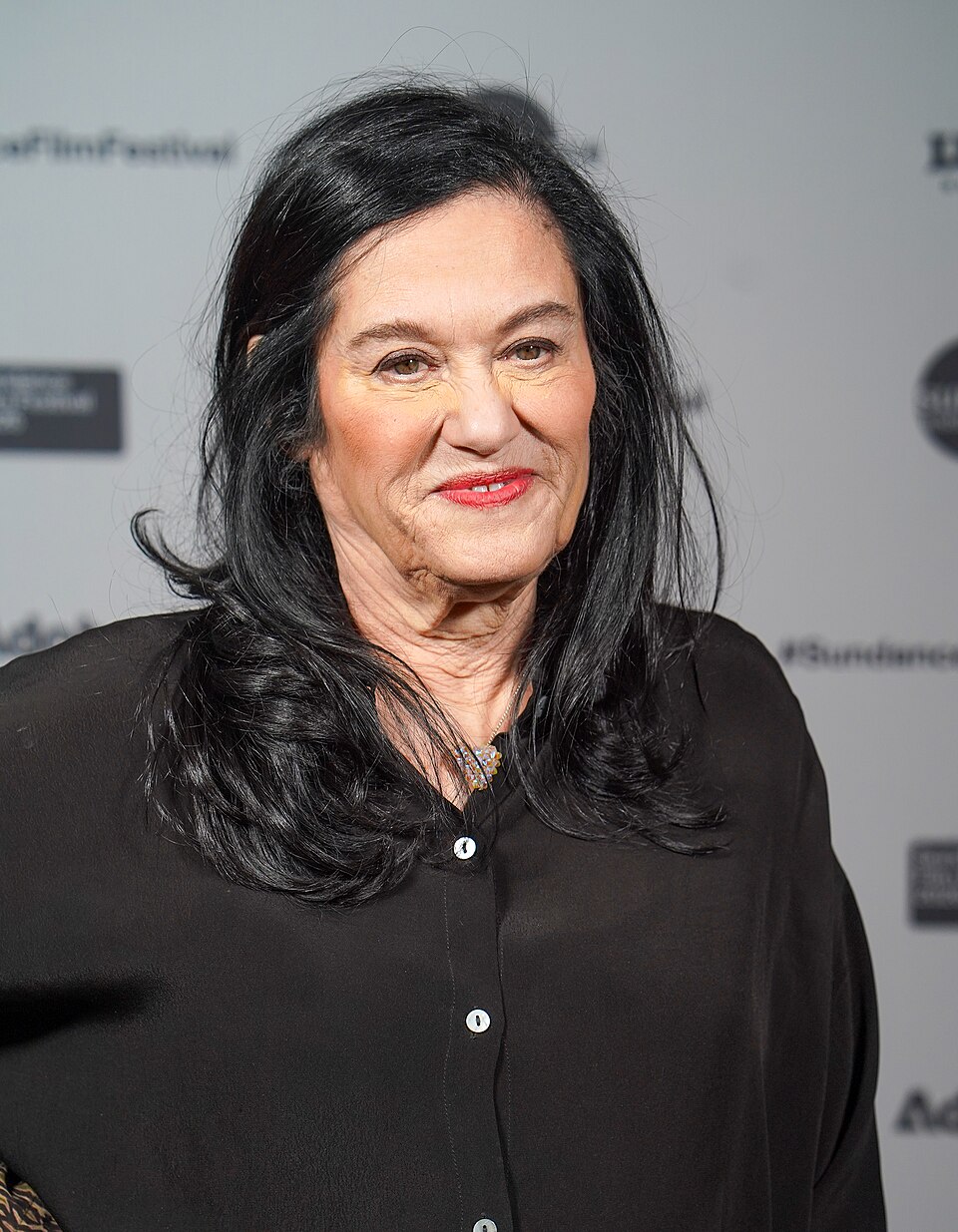
Barbara Kopple is an American film director known primarily for her documentary work. She is credited with pioneering a renaissance of cinema vérité, and bringing the historic French style to a modern American audience. Known for her "fly-on-the-wall" filmmaking style, Kopple captured raw, real-life events without interrupting the action. She has won two Academy Awards, for Harlan County, USA (1976), about a Kentucky miners' strike, and for American Dream (1990), the story of the 1985–86 Hormel strike in Austin, Minnesota, making her the first woman to win two Oscars in the Best Documentary ca
Barbara Kopple is an American film director known primarily for her documentary work. She is credited with pioneering a renaissance of cinema vérité, and bringing the historic French style to a modern American audience. Known for her "fly-on-the-wall" filmmaking style, Kopple captured raw, real-life events without interrupting the action. She has won two Academy Awards, for Harlan County, USA (1976), about a Kentucky miners' strike, and for American Dream (1990), the story of the 1985–86 Hormel strike in Austin, Minnesota, making her the first woman to win two Oscars in the Best Documentary ca
詳しい紹介を読む
Barbara Kopple (born July 30, 1946) is an American film director known primarily for her documentary work. She is credited with pioneering a renaissance of cinema vérité, and bringing the historic French style to a modern American audience. Known for her "fly-on-the-wall" filmmaking style, Kopple captured raw, real-life events without interrupting the action. She has won two Academy Awards, for Harlan County, USA (1976), about a Kentucky miners' strike, and for American Dream (1990), the story of the 1985–86 Hormel strike in Austin, Minnesota, making her the first woman to win two Oscars in the Best Documentary category.
Kopple gained acclaim for the film Bearing Witness (2005), a documentary about five women journalists stationed in combat zones during the Iraq War. She is also known for directing the documentary films Wild Man Blues (1997), A Conversation With Gregory Peck (1999), My Generation (2000), Running from Crazy (2013), Miss Sharon Jones! (2015), and Desert One (2019).
She received a Primetime Emmy Award for Fallen Champ: The Untold Story of Mike Tyson (1993), and directed episodes of television drama series such as the NBC police drama series Homicide: Life on the Street (1999) and the HBO prison drama series Oz (1999), winning a Directors Guild of America award for the former.
Kopple received a Lifetime Achievement Award from the National Academy of Television Arts and Sciences on September 28, 2023.
Early life and education
Kopple was born in New York City, and grew up on a vegetable farm in Scarsdale, New York, the daughter of a textile executive.
Her uncle, Murray Burnett, was a co-author of Everybody Comes to Rick's, an unproduced play, that was the basis for the film, Casablanca. Her mother and maternal grandparents grew up in Peekskill, New York, the latter of whom publicly criticized the attempted censorship of singer Paul Robeson in 1949.
At Northeastern University, she studied political science and clinical psychology, and for a clinical psychology course, she made her first film, "Winter Soldiers," about Vietnam veterans, instead of writing a term paper. While working among lobotomy patients at Medfield State Hospital with Northeastern University, she decided she wanted to be a filmmaker instead.
"I realized when I was studying psychology that nobody would probably ever read what I wrote" — Barbara Kopple
Kopple's political involvement started in college with her participation in antiwar protests against the Vietnam War.
Career
Kopple attended the School of Visual Arts, where she met documentary filmmakers Albert and David Maysles through a classmate.
"I really wanted to learn about documentaries, so I went to SVA (School of Visual Arts). I took this class in cinéma vérité. There was a woman in the class who said: "I work for these people, the Maysles brothers. They're just finishing a film and they could use some help. Would you like to come?" So I said, "Yes, are you kidding?" And I never went back into that class again. "— Barbara Kopple
She assisted them on their documentary Salesman, and then did camera work for their film on the Rolling Stones, titled Gimme Shelter. Reflecting on her time working with the Maysles, Kopple said "the wonderful thing about working for Alan and David Maysles was that they were the first company that treated women as equals...everybody attended all the meetings; everybody's opinion was important."
She subsequently worked as an editor, camera operator, and sound operator on numerous documentaries and then started production on Harlan County, USA in 1972. She also created a production company in 1972, Cabin Creek Films, through which she would continue to direct and produce features and television projects, in addition to documentaries. Notable intern alums from her production company, Cabin Creek Films, include Jesse Moss, Kristi Jacobson, and Jan Ackerman.
Harlan County, USA
Kopple first became aware of the plights of the Appalachia miners while studying at Northeastern University. In 1972, Kopple started her own production company, Cabin Creek Films. It was during this time that miners walked off the job in Harlan County, and Kopple began the filming Miners for Democracy movement led by Arnold Miller. When Tony Boyle was ousted from the union leadership and miners began striking for union recognition, Kopple moved to Harlan with a crew of five and a loan of $12,000. Kopple and her crew lived with the miners, filming (or, pretending to film) even when they ran out of film because the presence of a camera "kept down violence."
"In 1973, I went with Barbara Kopple to Harlan County, Kentucky as associate director and assistant camerawoman of Harlan County, U.S.A. That experience radically changed my approach to filmmaking. I had been working on the film syncing dailies and reviewing material. Then a call came from the United Mineworkers that they needed someone to film in Harlan County or there would be a killing. Barbara, Kevin Keating, Richard Warner (our local liaison who had owned a sock store in Knoxville, Tennessee), and I flew to Knoxville, loaded into a station wagon with all the 16 mm gear, and drove across 2 lane roads to the picket line. We arrived at 5 am. On one side of the road there were about 30 state troopers looking mean. On the other side, there were an equal number of tough-looking women with clubs. Within an hour, we were filming violent arrests and women being dragged...." — Anne Lewis
"The scene I love the best of me being in Harlan County was when [mine foreman] Basil Collins stopped his truck and said, "Come over here, honey." After I did, he said, "Who do you work for?" And I said, "United Press." He said, "Let me see your press card." And I yelled for Anne Lewis to go in my purse and get my press card. I actually did have one. He had guns in the car, and I asked him questions like, "Who are you and how do you feel about these people picketing up here?" I said, "And what's your position?" And he said, "Mine foreman." And I said, "Do you have any identificati