
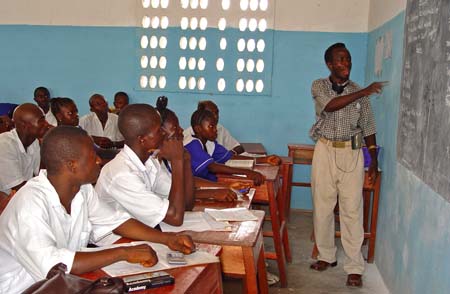
項目
学校の教員
school teacher
初等中等教育の教師
項目
school teacher
初等中等教育の教師
この項目を含む事件ファイルで情報と関係を見てみましょう。
この項目を含む事件ファイルはまだありません。
この項目から調査する最初のコメントをお待ちしています。
つながりがいつ生まれ、いつ変わったかを日付順に並べています。お知らせ投稿と出典の日付から作ります。
学校の教員 人物 ドローレス・アンブリッジ
学校の教員 人物 セブルス・スネイプ
学校の教員 人物 ドローレス・アンブリッジ
学校の教員 人物 ギルデロイ・ロックハート
学校の教員 人物 ギルデロイ・ロックハート
学校の教員 人物 セブルス・スネイプ
初等中等教育の教師
A teacher, also called a schoolteacher or formally an educator, is a person who helps students to acquire knowledge, competence, or virtue, via the practice of teaching.
Informally the role of teacher may be taken on by anyone (e.g. when showing a colleague how to perform a specific task).
In some countries, teaching young people of school age may be carried out in an informal setting, such as within the family (homeschooling), rather than in a formal setting such as a school or college.
Some other professions may involve a significant amount of teaching (e.g. youth worker, pastor).
In most countries, formal teaching of students is usually carried out by paid professional teachers. This article focuses on those who are employed, as their main role, to teach others in a formal education context, such as at a school or other place of initial formal education or training.
A teacher's role may vary among cultures.
Teachers may provide instruction in literacy and numeracy, craftsmanship or vocational training, the arts, religion, civics, community roles, or life skills.
Formal teaching tasks include preparing lessons according to agreed curricula, giving lessons, and assessing pupil progress.
A teacher's professional duties may extend beyond formal teaching. Outside of the classroom teachers may accompany students on field trips, supervise study halls, help with the organization of school functions, and serve as supervisors for extracurricular activities. They also have the legal duty to protect students from harm, such as that which may result from bullying, sexual harassment, racism or abuse.
In some education systems, teachers may be responsible for student discipline.
Teaching is a highly complex activity.
This is partially because teaching is a social practice, that takes place in a specific context (time, place, culture, socioeconomic situation etc.) and therefore is shaped by the values of that specific context. Factors that influence what is expected (or required) of teachers include history and tradition, social views about the purpose of education, accepted theories about learning, etc.
The competences required by a teacher are affected by the different ways in which the role is understood around the world. Broadly, there seem to be four models:
the teacher as manager of instruction;
the teacher as caring person;
the teacher as expert learner; and
the teacher as cultural and civic person.
The Organisation for Economic Co-operation and Development has argued that it is necessary to develop a shared definition of the skills and knowledge required by teachers, in order to guide teachers' career-long education and professional development. Some evidence-based international discussions have tried to reach such a common understanding. For example, the European Union has identified three broad areas of competences that teachers require:
Working with others
Working with knowledge, technology, and information, and
Working in and with society.
Scholarly consensus is emerging that what is required of teachers can be grouped under three headings:
It has been found that teachers who showed enthusiasm towards the course materials and students can create a positive learning experience. These teachers do not teach by rote but attempt to invigorate their teaching of the course materials every day. Teachers who cover the same curriculum repeatedly may find it challenging to maintain their enthusiasm, lest their boredom with the content bore their students in turn. Enthusiastic teachers are rated higher by their students than teachers who did not show much enthusiasm for the course materials.
Research shows that student motivation and attitudes towards school are closely linked to student-teacher relationships. Enthusiastic teachers are particularly good at creating beneficial relations with their students. Their ability to create ef
出典: Teacher (CC BY-SA)
構造化された情報、ユーザーの意見、AIが抽出した関係を区別して表示します。
knowledge (such as: the subject matter itself and knowledge about how to teach it, curricular knowledge, knowledge about the educational sciences, psychology, assessment etc.)
craft skills (such as lesson planning, using teaching technologies, managing students and groups, monitoring and assessing learning etc.) and
dispositions (such as essential values and attitudes, beliefs and commitment).
There are various mechanisms by which teacher enthusiasm may facilitate higher levels of intrinsic motivation.
Teacher enthusiasm may contribute to a classroom atmosphere of energy and enthusiasm which feeds student interest and excitement in learning the subject matter. Enthusiastic teachers may also lead to students becoming more self-determined in their own learning process. The concept of mere exposure indicates that the teacher's enthusiasm may contribute to the student's expectations about intrinsic motivation in the context of learning. Also, enthusiasm may act as a "motivational embellishment", increasing a student's interest by the variety, novelty, and surprise of the enthusiastic teacher's presentation of the material. Finally, the concept of emotional contagion may also apply: students may become more intrinsically motivated by catching onto the enthusiasm and energy of the teacher.