
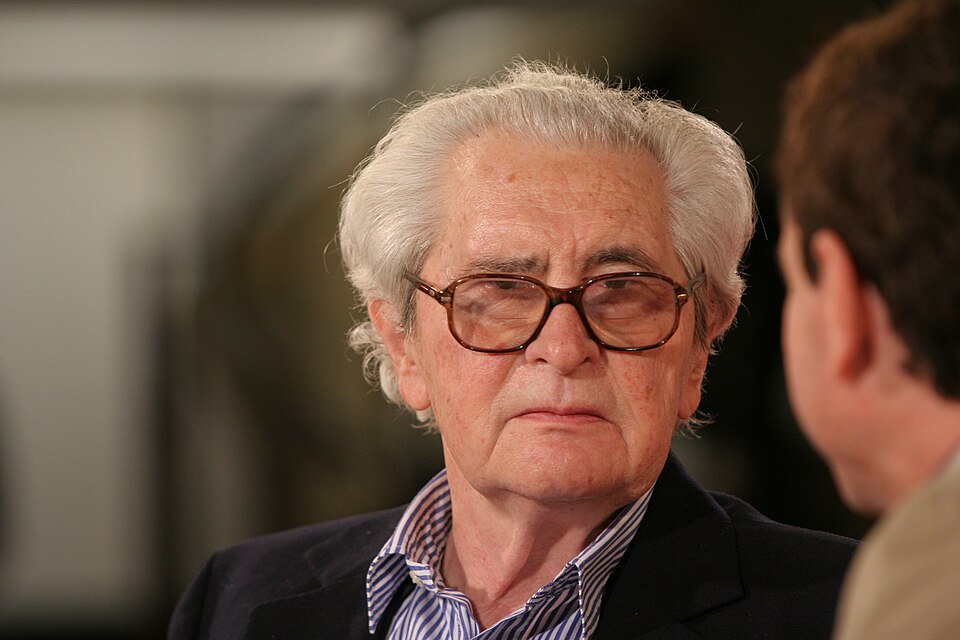
人物1923
ブジェチスラフ・ポヤル
Břetislav Pojar
チェコのアニメーション作家
人物1923
Břetislav Pojar
チェコのアニメーション作家
この項目を含む事件ファイルで情報と関係を見てみましょう。
この項目を含む事件ファイルはまだありません。
この項目から調査するチェコのアニメーション作家
Born in Sušice, Czechoslovakia, Pojar started his career in the late 1940s with his work on The Story of the Bass Cello (1949) based on the story by Anton Chekhov and directed by master Czech puppet animator Jiří Trnka. Pojar served as a puppeteer under his mentor Trnka.
Pojar compiled an extensive body of work as a director and animator in Czechoslovakia, where he made films in both puppet animation to the more common stop motion animation. He worked with the United Nations for the two films Boom and The Big If (with Vaclav Strnad worked as a producer in the latter). Pojar's work is characterized by strong social commentary, such as in Balablok, where armies of small circle- and square-shaped beings war with each other until they are all wounded into indistinguishable shapes. Often, Pojar's shorts contain little or no spoken dialogue.
In the mid-1960s, Pojar emigrated to Canada, where he began a long collaboration with the National Film Board. His Canadian work is some of his best known, and it has won awards at prestigious international film festivals. His film To See or Not to See (Psychocratie) won the Canadian Film Award for Film of the Year in 1970.
In the mid-2000s, Pojar moved back to the Czech film business in order to co-direct the collaborative animated feature film Fimfárum 2 (based on the stories of Jan Werich), which was released in 2006.
In 2012, Pojar died in Prague aged 89.
出典: Břetislav Pojar (CC BY-SA)
構造化された情報、ユーザーの意見、AIが抽出した関係を区別して表示します。
最初のコメントをお待ちしています。
つながりがいつ生まれ、いつ変わったかを日付順に並べています。お知らせ投稿と出典の日付から作ります。
ブジェチスラフ・ポヤル 国 チェコスロバキア