Scoobert Doo, more commonly known as Scooby-Doo, is an American cartoon character and the titular main protagonist of the eponymous animated television franchise created in 1969 by the American animation company Hanna-Barbera. He is a male Great Dane and lifelong companion of amateur detective Shaggy Rogers, with whom he shares many personality traits. He features a mix of both canine and human behaviors and is treated by his friends more or less as an equal. Scooby often speaks in a rhotacized way, substituting the first letters of many words with the letter 'r' a speech pattern that, while n
Scoobert Doo, more commonly known as Scooby-Doo, is an American cartoon character and the titular main protagonist of the eponymous animated television franchise created in 1969 by the American animation company Hanna-Barbera. He is a male Great Dane and lifelong companion of amateur detective Shaggy Rogers, with whom he shares many personality traits. He features a mix of both canine and human behaviors and is treated by his friends more or less as an equal. Scooby often speaks in a rhotacized way, substituting the first letters of many words with the letter 'r' a speech pattern that, while n
詳しい紹介を読む
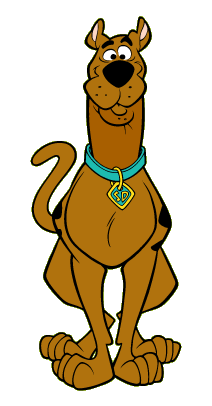
Scoobert Doo, more commonly known as Scooby-Doo, is an American cartoon character and the titular main protagonist of the eponymous animated television franchise created in 1969 by the American animation company Hanna-Barbera. He is a male Great Dane and lifelong companion of amateur detective Shaggy Rogers, with whom he shares many personality traits. He features a mix of both canine and human behaviors (reminiscent of other talking animals in Hanna-Barbera's series) and is treated by his friends more or less as an equal. Scooby often speaks in a rhotacized way, substituting the first letters of many words with the letter 'r' a speech pattern that, while never fully explained, is understood and accepted without question by those around him. His catchphrase is "Scooby-Dooby-Doo!"
History
Writers Joe Ruby and Ken Spears created the original Scooby-Doo series, Scooby-Doo, Where Are You!, for Hanna-Barbera as a part of CBS's 1969–1970 Saturday morning cartoon schedule. Originally titled Mysteries Five, the dog who later became Scooby was originally more of a sidekick character – a bongo-playing dog named "Too Much" whose breed varied between Great Dane and sheepdog between treatments.
By the time the series was pitched to the network as Who's S-S-Scared? in early 1969, Too Much was solidified as a cowardly Great Dane. Both the dog and the series would be renamed Scooby-Doo by Fred Silverman, CBS's head of daytime programming, between its unsuccessful first pitch and the second pitch that earned the show a green light. Silverman stated that he came up with the name from the syllables "doo-be-doo-be-doo" in Frank Sinatra's hit song "Strangers in the Night". Though a similar name was featured in the title of the single "Feelin' So Good (S.K.O.O.B.Y.-D.O.O.)" released just a few months earlier in 1968 by The Archies, a fictional band from the CBS series The Archie Show that was also overseen by Silverman. There was also a character in an unsold TV pilot Swingin' Together, broadcast in 1963 on CBS, named Skooby-doo.
Taking notes from a Hanna-Barbera colleague who was also a breeder of Great Danes, production designer Iwao Takamoto designed the Scooby-Doo character with a sloping chin, spots, a long tail, a sloped back, and bow legs – all traits in direct opposition to those of a prize-winning purebred Great Dane. In defining the personality of the dog, Ruby and Spears looked for inspiration to the characters played by Bob Hope in his horror-comedies – a coward who shows traits of bravery when his friends are in danger. Veteran Hanna-Barbera voice artist Don Messick was the original voice of Scooby and spent decades working on the character.
Scooby-Doo, Where Are You! premiered on CBS on September 13, 1969, at 10:30 a.m. Eastern Time. It ran for two seasons, with a total of 25 episodes. Its final first-run episode aired on October 31, 1970.
Personality
In most incarnations, Scooby is regarded as a unique Great Dane dog who is able to speak in broken English who usually puts the letter r in front of words and noises made. In some incarnations, such as A Pup Named Scooby-Doo, he is presented as a speech-impaired dog in the larger fictional universe as nobody in Coolsville seems bothered by his speaking ability. In more recent incarnations (most notably in Scooby-Doo! Mystery Incorporated), Scooby is able to speak in complete sentences and has more dialogue, though partially retaining his speech impediment. He consistently shows about the same level of intelligence as his friends, while also being subject to the same knack for clumsiness and moments of being dimwitted as well.
Different iterations of the character have been developed and expanded in the various series featuring the characters, many of them contradicting, such as the original series and the recent live-action films where Shaggy and Scooby first meet as older teenagers for the first time. This differs from the series A Pup Named Scooby-Doo, where they know each other from almost infancy, though the films may be seen as having a different continuity altogether than the cartoon products. As an adult canine, Scooby is usually treated as a mix of a pet and a friend by his companions.
In all versions of the character, Scooby and Shaggy share several personality traits, mostly being cowardly and perpetually hungry. Yet their friends (Fred, Daphne, and Velma) encourage them to go after the costumed villains, usually with "Scooby Snacks", a biscuit-like dog treat or cookie snack which often is shaped like a bone or, in later versions of the cartoons, Scooby's ID tag. However, Scooby's inherent loyalty and courage do often force him to take a more heroic stance even without any prodding. Scooby is also very ticklish, depicted in many of the television series and films.
Even with Scooby's speech impediment, most characters are able to understand him almost perfectly. In most iterations, he keeps his sentences relatively short, usually using charades for anything longer than three or four words. His catchphrase, usually howled at the end of every production, is "Scooby-Dooby-Doo!" (often pronounced "Rooby-Rooby-Roo"). Scooby was voiced by Don Messick through Arabian Nights in 1994, after which point Messick quit smoking; quitting smoking changed his voice and prevented him from achieving the same raspy vocal effect. Messick is also known for providing the voice of the dogs Astro on The Jetsons and the snickering Muttley. The characteristic speech impediments of Scooby and Astro are similar; however, of the two voices, Scooby's had a deeper and throatier timbre than Astro's.
According to Fred in Scooby-Doo: Behind the Scenes, the thought of having a dog with an Adam's apple was a little strange, but they got used to it, so when he started talking, it wasn't a big deal. But despite his special gift of speech, he did have his shortcomings like his cowardice. But as Mystery Inc. bonded, he would form a special partnership with Shaggy, comparing themselves to Sherlock Ho