
項目
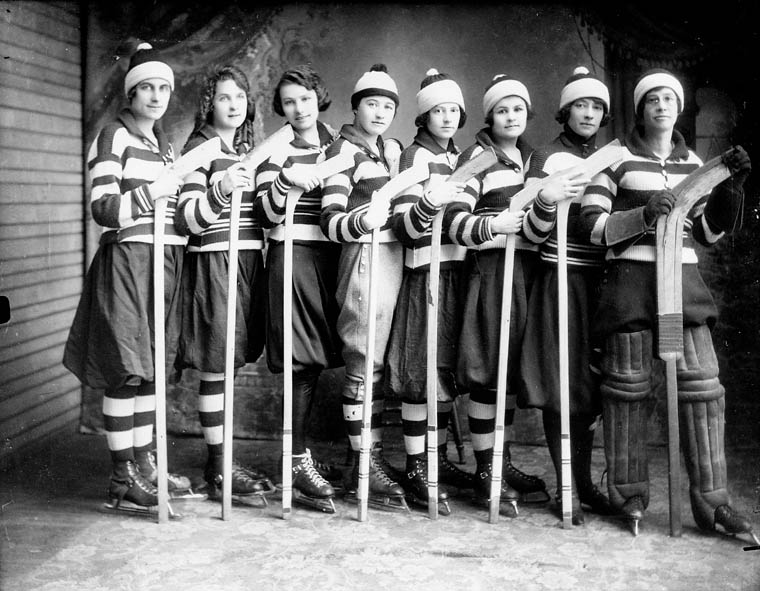
アイスホッケー選手
ice hockey player
アイスホッケーのプレーを職業とするスポーツ選手
項目
ice hockey player
アイスホッケーのプレーを職業とするスポーツ選手
この項目を含む事件ファイルで情報と関係を見てみましょう。
この項目を含む事件ファイルはまだありません。
この項目から調査するこの項目につながる作品や人物を調べています。
アイスホッケー選手
つながっているものを探しています。
最初のコメントをお待ちしています。
アイスホッケーのプレーを職業とするスポーツ選手
Ice hockey, known simply as hockey in North America and parts of Europe, is a team sport played on ice skates, usually on an ice skating rink with lines and markings specific to the sport. It belongs to a family of sports called hockey. The two opposing teams score by using their sticks to control and advance a vulcanized rubber hockey puck, and then shooting it into the net of the other team. Each goal is worth one point. The team with the highest score after an hour of gameplay, broken down into three 20-minute periods, is declared the winner; ties are broken in overtime or a shootout. In a formal game, each team has six skaters on the ice at a time, barring any penalties, including a goaltender. It is a full contact game and one of the more physically demanding team sports.
The modern sport of ice hockey was developed in Canada, most notably in Montreal, where the first indoor game was played on March 3, 1875. It draws influence from shinty which originated in Scotland, as well as field hockey which originated in England. Amateur hockey leagues began in the 1880s, and professional ice hockey originated around 1900. The Stanley Cup, emblematic of ice hockey club supremacy, was initially commissioned in 1892 as the "Dominion Hockey Challenge Cup" and was first awarded in 1893 to recognise the Canadian amateur champion and later became the championship trophy of the National Hockey League (NHL). In the early 1900s, the Canadian rules were adopted by the Ligue Internationale de Hockey sur Glace, in Paris, France, the precursor to the International Ice Hockey Federation (IIHF). The sport was played for the first time at the Olympics during the 1920 Summer Games—today it is a mainstay at the Winter Olympics. In 1994, ice hockey was officially recognized as Canada's national winter sport.
While women also played the game during its early formative years, it was not until the mid-1980s when organizers began to officially remove body checking from female ice hockey that it began to gain wider popularity, which by then had spread to Europe and a variety of other countries. The IIHF Women's World Championship was held in 1990, and women's play was introduced into the Olympics in 1998.
Ice hockey is believed to have evolved from simple stick and ball games played in the 18th and 19th centuries in Britain, Ireland, and elsewhere, primarily bandy, hurling, and shinty. The North American sport of lacrosse, derived from tribal Native American games, was also influential. The former games were brought to North America and several similar winter games using informal rules developed, such as shinny and ice polo, but later were absorbed into a new organized game with codified rules which today is ice hockey.
出典: Ice hockey (CC BY-SA)
構造化された情報、ユーザーの意見、AIが抽出した関係を区別して表示します。
While the general characteristics of the game remain constant, the exact rules depend on the particular code of play being used. The two most important codes are those of the IIHF and the NHL. Both of these codes, and others, originated from Canadian rules of ice hockey of the early 20th century.
Ice hockey is played on a hockey rink. During normal play, there are six players on ice skates on the ice per side, one of them being the goaltender. The objective of the game is to score goals by shooting the puck into the opponent's goal net at the opposite end of the rink. The players use their sticks to pass or shoot the puck.
With certain restrictions, players are allowed to redirect the puck using any part of their body. However, they may not catch or hold the puck in their hand, and using the hands to pass the puck to a teammate is prohibited unless the player is in the defensive zone.
Players are permitted to knock the puck out of the air to themselves using their hands, but they may not kick the puck into the opposing net. Unintentional deflections off the body or equipment, including skates, are allowed. Deliberately batting the puck into the goal with the hands or any other part of the body is prohibited.
Hockey is an off-side game, meaning that forward passes are allowed, unlike in rugby. Before the 1930s, hockey was an on-side game, meaning that only backward passes were allowed. Those rules emphasized individual stick-handling to drive the puck forward. With the arrival of offside rules, the forward pass transformed hockey into a true team sport, where individual performance diminished in importance relative to team play, which could now be coordinated over the entire surface of the ice as opposed to merely rearward players.
The six players on each team are typically divided into three forwards, two defencemen, and one goaltender. The term skaters typically applies to all players except goaltenders. The forward positions consist of a centre and two wingers: a left wing and a right wing. Forwards often play together as units or lines, with the same three forwards always playing together. The defencemen usually stay together as a pair generally divided between left and right. Left and right side wingers or defencemen are generally positioned on the side on which they carry their stick. A substitution of an entire unit at once is called a line change. Teams typically employ alternate sets of forward lines and defensive pairings when short-handed or on a power play. The goaltender stands in a semi-circle, usually blue, called the crease in the defensive zone keeping pucks out of the goal. Substitutions are permitted at any time during the game, although during a stoppage of play the home team is permitted the final change. When players are substituted during play, it is called changing on the fly. An NHL rule added in the 2005–06 season prevents a team from making any player substitutions after they ice the puck.
The boards surrounding the ice help keep the puck in play and they can also be used as tools to play the puck. Players are permitted to bodycheck opponents into the boards to stop progress. The referees, linesmen and the outsides of the goal are "in play" and do not stop the game when th