
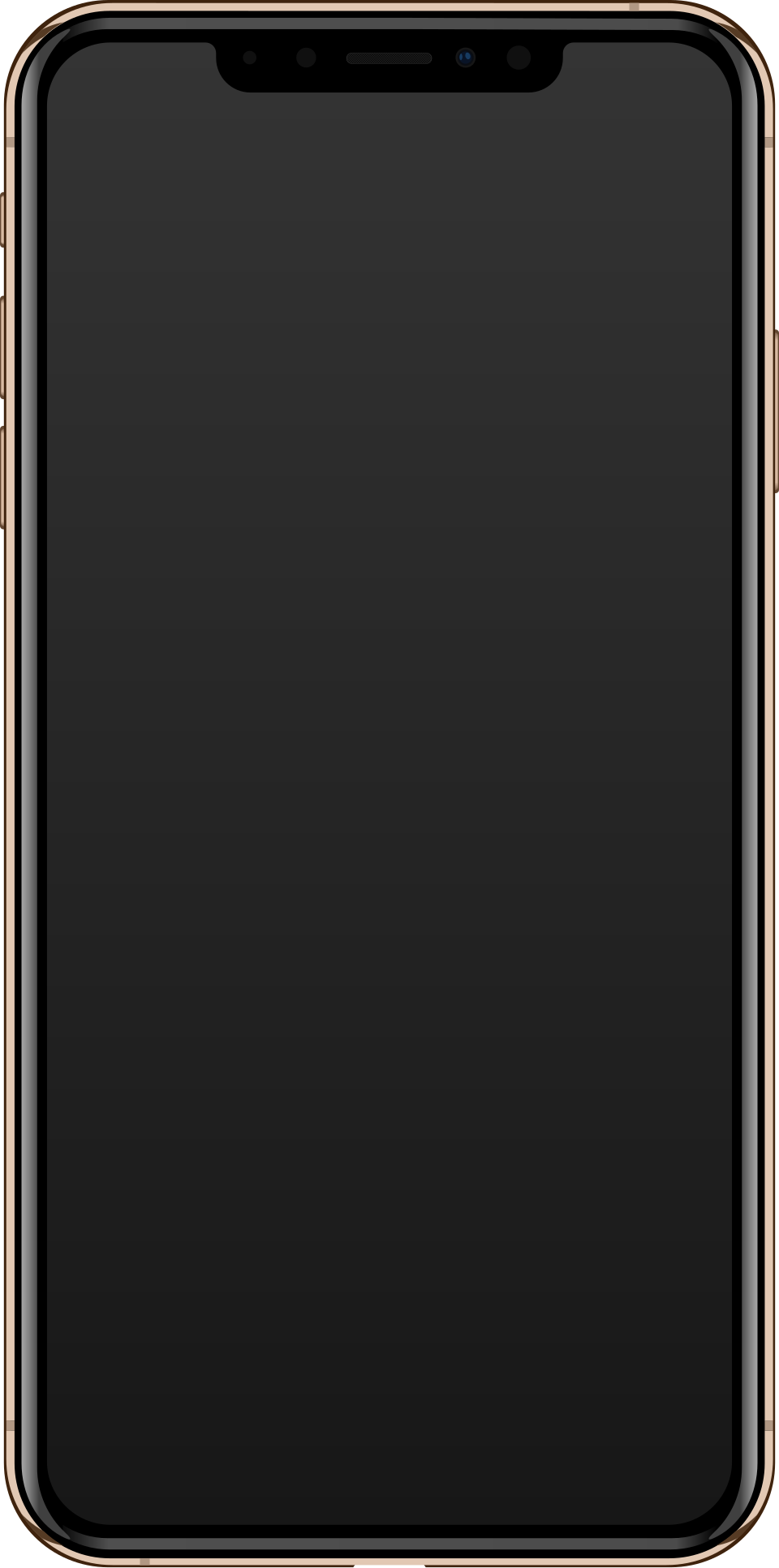
作品2018
iPhone XS Max
Appleのスマートフォン
作品2018
Appleのスマートフォン
この項目を含む事件ファイルで情報と関係を見てみましょう。
この項目を含む事件ファイルはまだありません。
この項目から調査する最初のコメントをお待ちしています。
Appleのスマートフォン
The iPhone XS and iPhone XS Max are smartphones designed, developed, and marketed by Apple. Released as the twelfth-generation flagship models of the iPhone, they succeeded the iPhone X and were unveiled alongside the lower-end iPhone XR on September 12, 2018, during a keynote address by Apple CEO Tim Cook at the Steve Jobs Theater at Apple Park in Cupertino, California. Pre-orders began on September 14, 2018, with general availability starting September 21, 2018. The iPhone XS and XS Max introduced improvements over their predecessor, including enhanced processing power, dual-SIM functionality, improved water resistance, and stereo audio recording for video capture.
Apple positioned the iPhone XS and XS Max as premium devices, targeting consumers seeking cutting-edge performance and advanced features, while simultaneously offering the iPhone XR – a lower-cost alternative with the same Apple A12 Bionic chip, but an LCD IPS panel display and a singular camera.Along with the iPhone 7 and iPhone 7 Plus, the iPhone XS and XS Max were discontinued on September 10, 2019, following the announcement of the 13th generation of iPhone: the iPhone 11, iPhone 11 Pro, and iPhone 11 Pro Max.
The iPhone XS, along with the iPhone 6s and XR, supported seven major versions of iOS from iOS 12 through iOS 18, making it among the longest supported iPhones at the time. They were surpassed by the iPhone 11, 11 Pro and SE (2nd generation), which supported eight versions.
The XS, which is visually near-identical to the iPhone X, has a better system-on-a-chip: the A12 Bionic chip built with a 7 nm process. It has a 5.85 inch (149 mm) OLED display (marketed as 5.8 inch) with a resolution of 2436 × 1125 pixels (2.7 megapixels) at 458 ppi, dual 12-megapixel rear cameras, and one 7-megapixel front-facing camera.
The iPhone XS Max has the same hardware and cameras, but a larger 6.46 inch (164 mm) OLED display (marketed as 6.5 inch) with a resolution of 2688 × 1242 pixels (3.3 megapixels) at 458 ppi and a larger battery (3,174 mAh). The XS has a smaller battery than the X, dropping to 2,658 mAh from 2,716 mAh. The XS' battery is a new single-cell L-shaped battery, while the iPhone XS Max battery remains two cells like the iPhone X. Apple said that the iPhone XS lasts up to 30 minutes longer than iPhone X, while the iPhone XS Max lasts up to 1.5 hours longer than iPhone X.
Apple said that the devices have faster Face ID technology than the iPhone X. It was also announced in June 2019 at WWDC that Face ID on iPhone XS, iPhone XS Max, iPhone XR and iPhone X would be made up to 30% faster with iOS 13, which was released on September 19, 2019.
The XS and XS Max are rated IP68 for dust and water resistance under IEC standard 60529, with Apple specifying a maximum depth of 2 meters and up to 30 minutes of submersion in water. This is an improvement over the IP67 water resistance of the iPhone 8 and X. Apple has performed tests in various liquids including chlorinated water, salt water, tea, wine, beer and juices.
The XS and XS Max use the A12 Bionic SoC, which consists of 6-core CPU (2x Vortex + 4x Tempest), 4-core GPU, and 8-core Neural Engine.
The wireless charging coil material was switched to copper to reduce charging time and power loss.
The iPhone XS, XS Max and XR are the first iPhones able to record stereo audio for videos.
Starting with the iPhone 2018 lineup (iPhone XS, iPhone XS Max and iPhone XR), these cameras were updated to a 12MP (1/2.55") sensor size with a 1.4 μm pixel size, the same sensor and pixel size as the primary cameras of the Samsung Galaxy S10, Samsung Galaxy S9 Samsung Galaxy S8 Samsung Galaxy S7, Pixel 2, Pixel 3a and Pixel 3a XL, Pixel 3 and Pixel 3 XL, and the Moto X4.
The iPhone XS and XS Max shipped with iOS 12 on launch, and supports all major versions of the operating system up to iOS 18. The iPhone XS and XS Max, as well as the iPhone XR, do not support iOS 26 due to hardware limitations.
The iPhone XS received generally positive reviews from critics after release. iPhone XS and XS Max users initially had issues with LTE, Wi-Fi reception and Bluetooth connections. Some experts claimed that a faulty antenna was to blame, and in response to many consumer complaints about iPhone XS/XS Max connectivity problems, Apple contacted users for help with their investigation. To resolve some problems with the XS/XS Max, Apple pushed the iOS 12.0.1 update on October 8, 2018, which, along with addressing the Chargegate issue, fixed a connectivity issue where Bluetooth could become temporarily unavailable on the XS/XS Max.
Users reported that the iPhone XS and XS Max would sometimes fail to charge by Lightning cable if it had been off for a while, and would only begin to charge if the screen was turned on. This was caused by a software bug with Apple's "Disable USB accessories when locked" setting, a feature intended to prevent unknown devices from accessing a user's content. The press dubbed the issue "Chargegate".This and a Bluetooth connectivity problem were fixed by iOS 12.0.1, released on October 8, 2018.
Customers also reported seeing unrealistic smoothness on their skin when taking a selfie with an automatic filter, an effect associated with the XS and XS Max's new Smart HDR camera feature. This technology combines multiple photos of varying exposures to increase dynamic range on the iPhones' photos, but can also reduce facial impe
出典: IPhone XS (CC BY-SA)
構造化された情報、ユーザーの意見、AIが抽出した関係を区別して表示します。
The XS and XS Max support dual SIMs through a nano-SIM and an eSIM. In mainland China, Hong Kong, and Macau, however, the XS Max comes with a dual nano-SIM tray (and no eSIM). The XS does not have a dual nano-SIM tray, so the eSIM functionality is enabled for use in Hong Kong and Macau, but not in mainland China.