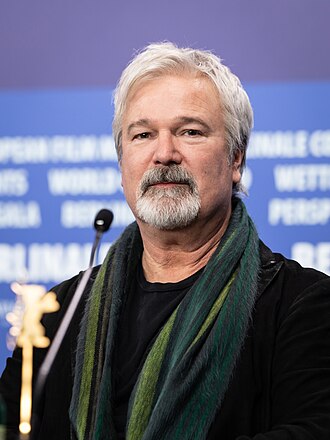
His first films were a series of 8 mm films called The Driver Files c. 1979, when he was a young teen. After graduating from film school at UCLA, he got his first job as a script reader at the commercial production company Limelight in 1987. After director Julien Temple viewed some of his work, he signed to his production company Nitrate Films, and later Palomar Pictures, where he directed music videos for bands like Vicious Rumors, Bad Religion, NOFX, 24-7 Spyz and Monster Magnet. Verbinski moved from music videos to commercials, where he worked for many brand names including Nike, Coca-Cola, Canon, Skittles and United Airlines. One of his most famous commercials was for Budweiser, featuring frogs who croak the brand name. For his efforts in commercials, Verbinski won four Clio Awards and one Cannes Advertising Silver Lion.
After completing a short film, The Ritual (which he both wrote and directed), Verbinski made his feature film directing debut in 1997 with Mouse Hunt, which became a global hit. Following that film's success, Verbinski planned and developed several aborted projects; The Sky Is Falling, The Lighthouse, Mission to Mars, How Georgie Radbourn Saved Baseball, Where the Wild Things Are, The Big Ticket, The Light Princess, Catch Me If You Can, Project 3, and a remake of Ten Seconds to Hell.
Verbinski returned in 2001 with the action/comedy The Mexican, starring Julia Roberts and Brad Pitt. The film received mixed reviews, and performed modestly at the box-office, earning $68 million domestically which was quite meager considering its star power (it was technically successful due to its moderately low $38 million budget). Verbinski followed it up with the horror film remake The Ring (2002), which struck gold globally, grossing well over $200 million worldwide. He was briefly in negotiations about returning to direct the sequel. Verbinski also had a directorial hand in The Time Machine that year, temporarily taking over for an exhausted Simon Wells. Verbinski directed some of the underground Morlock sequences and is given a "Thanks to" credit in the film.
He then directed the very successful Pirates of the Caribbean: The Curse of the Black Pearl which earned over $600 million at the international box office. This was his first collaboration with producer Jerry Bruckheimer, whom he has since collaborated with on several other movies. His next film was The Weather Man, which starred Nicolas Cage. The film received mixed to positive reviews but was a box office failure. In March 2005, he started filming the sequels Pirates of the Caribbean: Dead Man's Chest and Pirates of the Caribbean: At World's End. The former then became his biggest success so far, becoming the third film ever to gross over $1 billion at the international box office. In 2008, Verbinski's Blind Wink production company signed a deal with Universal. Verbinski was also set to direct a film for Universal based on the video game BioShock. However, budgetary and creative disputes stemming from Verbinski's wish to incorporate a functioning underwater rail transport system, driven by his noted fascination with trains, derailed development. Verbinski was then replaced by Juan Carlos Fresnadillo as director and the film was subsequently cancelled.