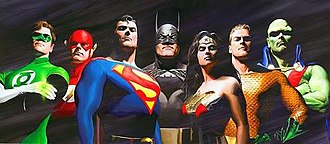
In its inception, the Justice League was a revival of the Justice Society of America, created by editor Sheldon Mayer and writer Gardner Fox in 1940. After World War II, superheroes fell out of popularity, which led to the cancellation of many characters, including the Justice Society, which last appeared in All-Star Comics #57 (March 1951). A few years later, sales rose again, and DC Comics revived some of these retired characters, reinventing a few of them in the process. Editor Julius Schwartz asked writer Gardner Fox to reintroduce the Justice Society of America. Schwartz decided to rename it the "Justice League of America" because he felt "League" would appeal better to young readers, evoking sports organizations such as the National League. The Justice League of America debuted in The Brave and the Bold #28 (March 1960), and after two further appearances in that title, got its own series, which quickly became one of the company's best-selling titles. This led DC Comics to create other superhero teams, such as the Teen Titans. Marvel Comics, a rival comic book publisher, noticed the Justice League's success and created the Avengers and the Fantastic Four.
The initial Justice League lineup included seven of DC Comics' superheroes who were regularly published at that time: Superman, Batman, Aquaman, the Flash, Green Lantern, the Martian Manhunter, and Wonder Woman. Fox also created a new, non-superhero character called Snapper Carr that was intended to represent DC's teenage readership and joined the League as an Honorary member in their debut story. While Superman and Batman were included in the Justice League's initial lineup, they were largely absent from the League's early stories, playing only minor roles as the pair were already starring together in DC's World's Finest Comics and Fox was worried the two more famous heroes would detract attention from their less popular teammates. As the series went on however, Superman and Batman became more and more present as readers increasingly demanded to see more of them in the League's stories. The team roster would quickly expand with the Green Arrow, the Atom and Hawkman being added to the team over the next four years.
In the Justice Society stories from the 1940s (in All-Star Comics), the Justice Society was used more as a framing device for its members' solo adventures. The stories tended to have the following structure: the Justice Society meets to discuss some new menace, they split up to undertake individual missions that somehow connect to that menace, and finally regroup for the showdown with the main villain. In the 1940s, most comic books were anthologies, and All-Star Comics was in practice not a major deviation from that. By contrast, the Justice League worked together more closely in their stories, thereby having a stronger identity as a team.