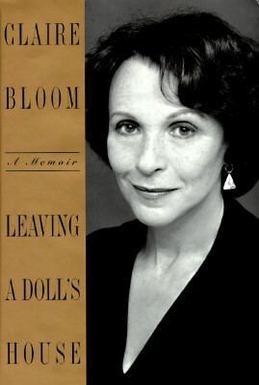
Bloom first met Roth in 1966, when they were both in earlier relationships. "To have such a mind as Philip Roth's fixed on your every word and gesture is both daunting and extremely flattering", she recalled of this first encounter. The couple finally began their relationship in 1975, and started living together at an early stage.
The details Bloom shared in Leaving a Doll's House were unflattering to Roth, and created a controversy regarding the true nature of their relationship. Bloom gives details of Roth's illnesses, such as occluded arteries and an unsuccessful operation on his knee. These conditions caused him great pain and resulted in his insomnia, lack of concentration, and when he found sleep, nightmares and ultimately a breakdown due in part, Bloom believes, to the drug Halcion. Bloom did her best to support Roth during his difficulties, but their marriage began to disintegrate. To Bloom's regret, believing that they had spent some of their happiest times there, Roth turned against London and England, and the couple moved to New York. Despite a productive collaboration devising a programme of one-woman Shakespeare performances called Then Let Men Know which involved Bloom presenting studies of Shakespearean female characters and saw her receive transatlantic bookings, cracks were showing in their relationship.
Having received an unexpected piece of good news, Bloom went to visit Roth in his studio two blocks away from their home, only to find his reaction 'cold, alarmed and unwelcoming'. Roth gave Bloom his novel Deception to read at a later stage than usual and Bloom found in it an unflattering description of an Anglo-Jewish family, clearly based on her own, and graphic descriptions of the protagonist's promiscuity which Bloom was uncertain were entirely fabricated. Then came the description of the protagonist's actress wife, called Claire, whose chief characteristics are being boring, middle-aged and constantly bemoaning the youth of his mistresses. Bloom's reaction was to find this portrait "nasty and insulting" and the use of her name "completely unacceptable". Roth returned home bearing expensive jewellery as a "guilt offering"; Bloom demanded that her name be removed from the text, to which Roth finally agreed.
Roth's medical condition deteriorated to the extent that he was rushed into intensive care and placed on a life-support machine. He slowly improved, however, and even his father's death at that time did not set back his recovery. In January 1990, one year after his operation, Bloom asked Roth to marry her, a union which she described as being "of immense significance" to her. Roth contemplated her proposal for a few weeks then accepted via a "charming" note and they were married on 19 April 1990. Bloom describes that she was so happy with his acceptance that she chose to sign and ignore the implications of an "insult" pre-nuptial which Roth had drawn up and which made no provision for his wife should he seek divorce, which in the terms of the pre-nuptial agreement, he was free to do at any time and at will. This document was later to be described by Bloom's lawyer as "unconscionable, the most brutal document of its kind he had ever encountered".