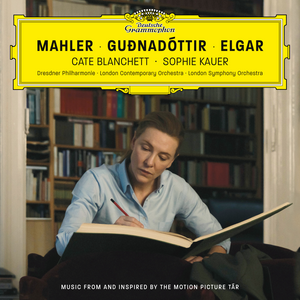
Tár – Music from and Inspired by the Motion Picture
Tár is a concept album consisting of 20 tracks, curated, composed, and produced by Icelandic musician Hildur Guðnadóttir. Featuring contributions from Cate Blanchett and cellist…
Tár (Music from and Inspired by the Motion Picture) is a concept album consisting of 20 tracks, curated, composed, and produced by Icelandic musician Hildur Guðnadóttir. Featuring contributions from Cate Blanchett and cellist Sophie Kauer, and performances from Dresden Philharmonic, London Contemporary Orchestra (conducted by Robert Ames), and London Symphony Orchestra, many of the tracks on the…
Tár is a concept album consisting of 20 tracks, curated, composed, and produced by Icelandic musician Hildur Guðnadóttir. Featuring contributions from Cate Blanchett and cellist Sophie Kauer, and performances from Dresden Philharmonic, London Contemporary Orchestra, and London Symphony Orchestra, many of the tracks on the album, along with several others, served as the soundtrack to Todd Field's 2022 psychological drama film, Tár, starring Blanchett in the lead role as Lydia Tár. Hildur's original music acts as the centrepiece of the album. The album was ruled ineligible for an Oscar nominati
Read more about this topic
Tár (Music from and Inspired by the Motion Picture) is a concept album consisting of 20 tracks, curated, composed, and produced by Icelandic musician Hildur Guðnadóttir. Featuring contributions from Cate Blanchett and cellist Sophie Kauer, and performances from Dresden Philharmonic, London Contemporary Orchestra (conducted by Robert Ames), and London Symphony Orchestra, many of the tracks on the album, along with several others, served as the soundtrack to Todd Field's 2022 psychological drama film, Tár, starring Blanchett in the lead role as Lydia Tár. Hildur's original music acts as the centrepiece of the album. The album was ruled ineligible for an Oscar nomination, as the content does not accurately reflect the music featured in the film.
The album was digitally released under the Deutsche Grammophon label on October 21, 2022, (two weeks after the film's limited release) and was released on vinyl on January 20, 2023. The album received positive responses by critics, praising Hildur's composition, production, and engineering, and topped the Billboard Traditional Classical Albums from the week beginning November 5, 2022, ahead of albums released during the period by the actual Berlin Philharmonic.
Concept album
The album, titled Tár (Music from and Inspired by the Motion Picture) is a concept album. It includes new music by Hildur Guðnadóttir as well as extracts of various works by Mahler and Edward Elgar. The online film music listings show over 30 tracks featured in the film.
The album is a listening experience of what Field referring the film as "the messiness of the work involved in preparing classical music for performance", which involves a combination of audio glimpses from real-life recording sessions, sequences from fictional rehearsals, music listened to by the film's characters, and completed versions of the music on which Lydia Tár had worked on. The cover of the recording is a nod to the photograph used for Claudio Abbado's 1993 Berlin recording of Gustav Mahler's Symphony No. 5. It does not include all of the tracks featured in the film, and does include some that are not used in the film.
We label verified structured information, user opinions, and AI-discovered relationships separately.
Blanchett performed and conducted Mahler's Symphony No. 5 in collaboration with the Dresden Philharmonic and concertmaster Wolfgang Hentrich; she felt "blessed to have her name featured in a talented assembly as a musician". She also performed on piano the Prelude in C major from Johann Sebastian Bach's The Well-Tempered Clavier as a part of Tár's teaching sessions. Extracts from Edward Elgar's Cello Concerto, performed by Sophie Kauer who plays the role of Russian cellist Olga Metkina, (a cellist in real life), along with the London Symphony Orchestra, conducted by Natalie Murray Beale. In addition to the classical pieces, the album featured jazz compositions: Jimmy Van Heusen and Johnny Burke's "Here's That Rainy Day" – performed by the New Trombone Collective with soloist Al Kay, conducted by Martijn Sohler, and "Cura mente" by shaman Elisa Vargas Fernández, which was used to "illustrate Tár's history in Shipibo-Konibo ethnomusicological fieldwork".
Hildur's new music created for the film serves as the central to both the film as well as the album. The album's introductory cue is a voice memo she sang to provide the main melody titled "For Petra", which is the music featured in the final session. A part of the recording session for the orchestral version, performed by the London Contemporary Orchestra and conducted by Robert Ames, is also included. Another piece written by Hildur is "Mortar", which she performed on cello.
Production
Hildur was involved in the project after Field's persistence on the importance of the film's music. The original score was recorded at the Abbey Road Studios in London, England. The album is a combination of audio glimpses from real-life recording sessions, sequences from fictional rehearsals, music listened by the film's characters and completed versions of the film's music, created by Lydia Tár in fiction. Recordings of classical pieces – Gustav Mahler's Symphony No. 5, Edward Elgar's Cello Concerto and Johann Sebastian Bach's The Well-Tempered Clavier – and non-classical compositions: the jazz song "Here's That Rainy Day" and "Cura Mente" were also included, whereas Hildur's original music acts as the centrepiece of the album.
The original score is composed by Hildur Guðnadóttir, who was reported to be the second person to be involved after the leading actress, Blanchett. Hildur had earlier been roped in for David O. Russell's Amsterdam (2022), prior to scoring for Tár, and had left the former project to focus on the latter. (She was eventually replaced on Amsterdam by Daniel Pemberton.) While reading the script, she felt that Field had authentically pictured on the life of composers and conductors in real life in the modern-day world, saying "There's a lot of how the character is that's very different from my musical world and my musical landscape. But I think that for a certain type of musician, I think he came pretty close." Field wanted her involvement in the process, as music was important and the film is about "the psychological and emotional aspects of what it is to rehearse music, what it is to write music, like what it is to be frustrated with that process, to be really encapsulated by it – or what happens if you're misaligned in your process."
Hildur explained that writing the score for the film was a three-fold process. While working on the script, she met Field multiple times during the location scoutings, discussing on the use of tempo and BPM for sequences and characters, and then tempo-mapped the film. Later, she wrote music that the main character Lydia Tár (Blanchett) was writing on the film, and witnessed her progress, but Hildur opined that they cannot hear the final version of the music she was writing in the film, but ended up finishing the music that she wrote on a record and played it in the final film. The final phase it to write the actual score of the