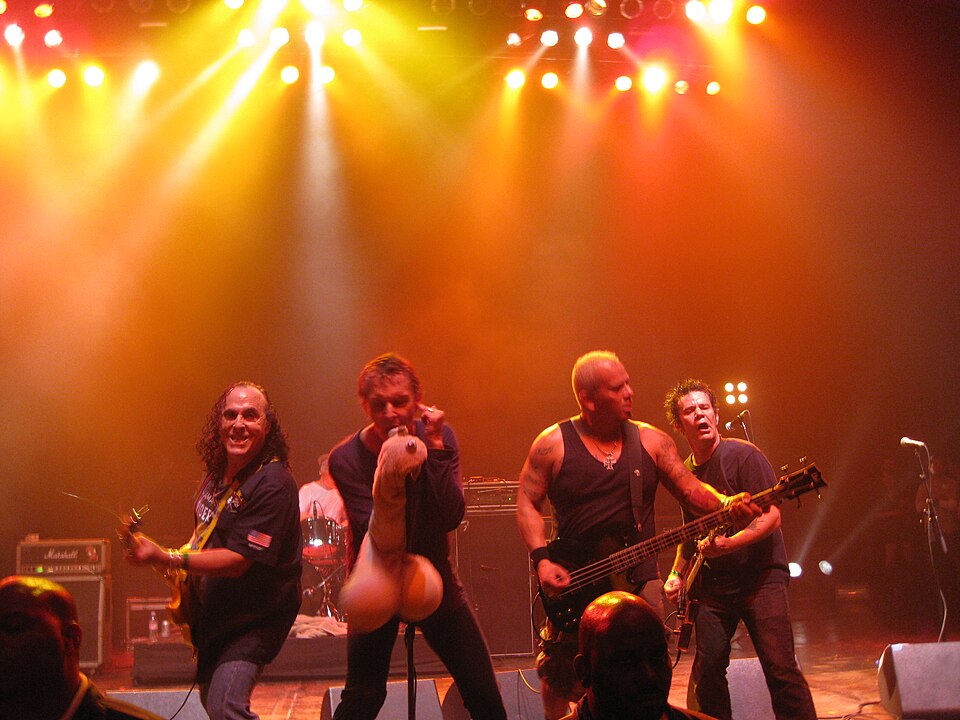
Eventual Dickies vocalist Leonard Graves Phillips was a self-described celibate, "introverted character" in the period following high school. He played keyboards in his bedroom and, together with friend Bob Davis (later Chuck Wagon), created a type of music that Phillips describes as "autism-rock", similar to Devo, though not as good. Another friend of Phillips was Steve Hufsteter, a former junior high school and high school classmate. The latter figure was the guitarist and main songwriter for local power pop band the Quick and was giving guitar lessons to Stan Lee (born Stan Sobol). Although Hufsteter thought highly of Phillips' keyboard playing, it was his opinion that Phillips becoming vocalist for the band Lee was starting would be good for his friend's social well-being. Phillips intentionally sabotaged his first audition but, realizing his mistake, aggressively entreated Lee for another chance. That audition was successful. Singing for the Dickies had its intended effect for Phillips, causing him to break out of his shell and improving his confidence with women.
As a teenager, Stan Lee was a drug buddy of Iggy Pop, once accepting Pop's well-known "leopard" jacket that the latter wore in the Stooges as payment for heroin. Surprisingly, it was not hanging out with Pop that pushed Lee into joining the nascent punk scene but, rather, the experience of going with eventual Dickies bassist Billy Club (Bill Remar) to see the Damned on their first American tour that proved most influential. Exposure to the music of the Ramones and the Weirdos was seminal as well. Prior to deciding on a punk rock direction, Lee had begun to learn guitar at the urging of friend Kevin DuBrow, with the ambition of becoming a Ritchie Blackmore–like virtuoso. His teacher, Hufsteter, suggested that playing punk was a more practical idea and, by way of convincing, provided Lee with his initial introduction to the music of the Ramones. Lee and Club rounded out their initial punk band lineup with Phillips, multi-instrumentalist Chuck Wagon, and drummer Karlos Kaballero (Carlos Caballero), who came up with the name "Dickies" (Lee preferred "the Imbeciles"), and the band made their live debut at the Whisky a Go Go in December 1977. The Dickies were among the first punk rock bands to emerge from Los Angeles. They were the first California punk band to appear on network television (C.P.O. Sharkey), and the first California punk band to be signed to a major record label (A&M Records).
The book Going Underground: American Punk Rock 1979–1989 describes the Dickies in the context of the early L.A. punk scene. Its author contends that the Dickies were "the best musicians on the scene and made good use of their talents". Also described is an early gig at the Masque in 1977. The opening band was so incompetent that "some punks turned a fire hose on them". The Dickies came out next, looking like "normal suburban nerds". The band "erupted in a tight, jackhammer, speed-of-light assault" of "ferocious... goofball comedy punk" which inspired manic dancing ("bodies carooming off each other"). The author claims that the Dickies' subsequent record contract caused jealousy among other bands, some of whom would say the Dickies were only in it for money. This belief is contrasted with the Dickies' actual stated primary goal of being written about in Slash (fanzine).