
人物1931
Hugh Thomas
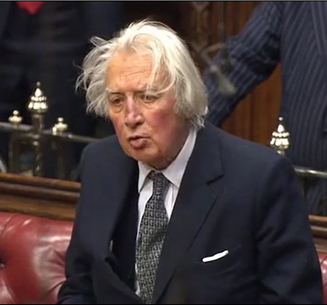
Hugh Swynnerton Thomas, Baron Thomas of Swynnerton, was an English historian, writer, diplomat and political adviser known best for his book The Spanish Civil War.
人物1931
Hugh Swynnerton Thomas, Baron Thomas of Swynnerton, was an English historian, writer, diplomat and political adviser known best for his book The Spanish Civil War.
在包含此条目的事件档案中探索信息与关系。
还没有包含此条目的事件档案。
从此条目开始调查等待第一条评论。
Hugh Swynnerton Thomas, Baron Thomas of Swynnerton, was an English historian, writer, diplomat and political adviser known best for his book The Spanish Civil War.
Hugh Swynnerton Thomas, Baron Thomas of Swynnerton (21 October 1931 – 7 May 2017), was an English historian, writer, diplomat and political adviser known best for his book The Spanish Civil War.
Hugh Swynnerton Thomas was born on 21 October 1931 in Windsor, Berkshire, England, to Hugh Whitelegge Thomas (1887–1960), a colonial commissioner in the Gold Coast and Cambridge cricketer, and his wife, Margery Augusta Angelo (née Swynnerton). Sir Shenton Thomas was his uncle. He was educated at Sherborne School in Dorset, before going up to Queens' College, Cambridge, where he was a major scholar and later an Honorary Fellow. Thomas gained a first class in Part I of the History Tripos in 1952, and the following year was president of the Cambridge Union Society. He also studied at the Sorbonne in Paris.
From 1954 to 1957, Thomas worked in the Foreign Office, partly as secretary of the British Delegation to the sub-committee of the UN Disarmament Commission, and in the British embassy in Paris under his future father-in-law Gladwyn Jebb. He lectured briefly at the Royal Military Academy at Sandhurst in 1957. After the success of his 1957 novel The World's Game, he accepted an offer from publisher James MacGibbon, then a literary agent at Curtis Brown, to pen the first "broad survey" of the Spanish Civil War, despite his lack of knowledge of Spanish, leading to the publication of his best-known work in 1961. From 1966 until resigning in 1976, he was Professor of History at the University of Reading, and chairman of the European committee. He was then chairman of the neoliberal Centre for Policy Studies in London from 1979 to 1991.
At university, Thomas was involved with the Conservative Party. He joined the Labour Party soon after quitting his Foreign Office job in the atmosphere of a scandal in early 1957, and was blocked as a prospective Labour candidate for Ruislip and Northwood in 1957–58 by Revolutionary Socialist League members on the selection committee. He remained a Labour member until 1974, when he again failed to secure a parliamentary seat. He then became an unofficial adviser to Margaret Thatcher, embracing her political project. He was particularly influential during the Falklands War in 1982. He was created a life peer as Baron Thomas of Swynnerton, of Notting Hill in Greater London by letters patent dated 16 June 1981, and sat as a Conservative, before he joined the Liberal Democrats in late 1997, declaring concerns about Euroscepticism in the Conservative ranks. He later sat as a crossbencher.
Thomas was married to Vanessa Jebb, a painter and a daughter of Gladwyn Jebb, the first Acting United Nations Secretary-General and British Ambassador to France. They had three children: Inigo, Isambard and Isabella.
Thomas won the Somerset Maugham Award (1962), the Nonino Prize (2009), the Boccaccio Prize (2009), the Gabarrón Prize (2008) and the Calvo Serer Prize (2009). The French Government appointed him Commander of the Order of Arts and Letters in 2008.
Thomas also received the Grand Cross of the Royal Order of Isabella the Catholic from Spain, as well as the Mexican Order of the Aztec Eagle, the Joaquín Romero Murube Prize in Seville (2013) and the Grand Cross of the Civil Order of Alfonso X the Wise (2014).
来源:Hugh Thomas, Baron Thomas of Swynnerton (CC BY-SA)
结构化信息、用户意见与 AI 提取的关系会分别标注。
He wrote political works favouring European integration, such as Europe: the Radical Challenge (1973), as well as histories. He was also the author of three novels: The World's Game (1957), The Oxygen Age (1958), and Klara (1988). Thomas's 1961 book The Spanish Civil War won the Somerset Maugham Award for 1962. A significantly revised and enlarged third edition was published in 1977; further editions were published in 1999 and 2012. Cuba, or the Pursuit of Freedom (1971) is a book of more than 1,500 pages tracing the history of Cuba from Spanish colonial rule until the Cuban Revolution. In 1985, Thomas signed a petition against the Sandinista National Liberation Front of Nicaragua, in support of the Contras, an anti-Sandinista paramilitary group.
In 1990, he was one of the leading historians behind the setting up of the History Curriculum Association. The Association advocated a more knowledge-based history curriculum in schools. It expressed "profound disquiet" at the way history was being taught in the classroom and observed that the integrity of history was threatened.