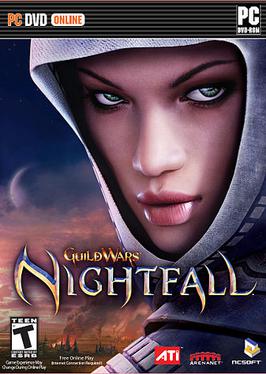
Guild Wars Nightfall is a fantasy action role-playing game and the third stand-alone campaign in the Guild Wars series developed by ArenaNet, a subsidiary of NCSOFT corporation. Nightfall was released worldwide on October 27, 2006, having been in development alongside Guild Wars Factions since November 2005.
Guild Wars Nightfall is a fantasy action role-playing game and the third stand-alone campaign in the Guild Wars series developed by ArenaNet, a subsidiary of NCSOFT corporation. Nightfall was released worldwide on October 27, 2006, having been in development alongside Guild Wars Factions since November 2005.
阅读详细介绍
Guild Wars Nightfall is a fantasy action role-playing game and the third stand-alone campaign in the Guild Wars series developed by ArenaNet, a subsidiary of NCSOFT corporation. Nightfall was released worldwide on October 27, 2006, having been in development alongside Guild Wars Factions since November 2005.
Nightfall takes place in the continent of Elona in the Guild Wars universe. It follows the player character as they join the Order of the Sunspears and uncover the desire of Warmarshal Varesh to return a long forgotten god to the world through an event called Nightfall. The players, assisted by their hero allies, fight through civil war, ignorant Vabbi princes and Varesh's demon allies as they attempt to prevent the coming of Nightfall.
A rerelease of the original game titled Guild Wars Reforged, which includes all content from Guild Wars Factions and Guild Wars Nightfall was released on December 3, 2025. The game will be released on mobile platforms on June 24th, 2026.
Gameplay
Nightfall is a continuation of the Guild Wars franchise and so follows the same gameplay principles. Guild Wars in previous releases attempted a marriage of Player versus Environment (or "PvE") and Player versus Player (or "PvP") gameplay, starting out with PvP being the logical endgame for the Prophecies campaign, and PvP optionally interspersed throughout Factions play. Nightfall moves away from this as the storyline is more PvE focused than previous campaigns.
Professions
A player with Guild Wars Nightfall may create a character from one of the six core professions from Prophecies or one of the Nightfall-specific professions:
The Dervish, described as a "holy warrior", wields a scythe and uses many different enchantments to support themselves and damage their enemies. They have the ability to temporarily transform into the likeness, or "form", of the Five Gods. They have higher base HP than any other profession.
The Paragon wields a spear and acts as a battle commander. Heavily armored, they are a support character capable of helping teammates through the use of "shouts" and chants, which affect all nearby allies.
The Assassin and Ritualist can only be created through the Guild Wars Factions campaign. If a person owns both campaigns, Assassin and Ritualists can travel to participate in Guild Wars Nightfall; but they cannot be created in Guild Wars Nightfall.
Heroes
In previous campaigns players could use NPC Henchmen with predetermined sets of skills to assist them with their questing. New henchmen available through Nightfall and Guild Wars: Eye of the North are called Heroes. Heroes are customizable in that the player can select skills, armor upgrades and weapons for them. The player also has a degree of control over the actions of the heroes: the player can set map waypoints for them, controlling the type of AI they use and directing the skills they use. Heroes are unlocked through play and can be taken into PvE areas. A new PvP arena was available specifically for players to fight each other with their Heroes but has since been removed. Heroes can be acquired by all characters (Tyrian, Canthan, Elonan) and used in battle if the player has a Nightfall or Eye of the North account. Additionally, each other campaign has a hero available to add to Nightfall (an assassin for Factions, and a necromancer for Prophecies).
PvE gameplay
As with the other Guild Wars campaigns, the maximum level for all characters is twenty. Nightfall strikes a middle ground with the other Guild Wars campaigns with the amount of time spent leveling; faster than Prophecies, where much of the game is spent achieving level 20, but slower than Factions where level 20 is very quickly achieved.
New PvE-only skills have been introduced available by gaining ranks in titles. The "Sunspear Rebirth Signet" is available by reaching a certain rank in the Sunspear Rank track, and each profession has been given a special Sunspear skill that increases in power as the player's Sunspear Rank increases. "Lightbringer's Gaze" and "Lightbringer's Signet" are available upon reaching level 2 and level 3 in the Lightbringer track, respectively (these skills also power up as the player's Lightbringer Rank increases). Also, wearing the skill title "Lightbringer" increases damage done to certain creatures in the PvE environment. Gaining higher ranks in the Sunspear and Lightbringer titles also awards players with hero skill points, which can be used to unlock new skills for themselves and their heroes to use; while buying skills with regular skill points (earned by levelling up and completing missions) can still be used to gain new skills, this method only allows you to unlock skills from the player's chosen professions; using hero skill points allows you to unlock skills from any profession.
Further benefits of title tracks have also been integrated into the game since; for example, the player's ranks in the Lucky/Unlucky (gained by playing various in-game gambling activities) and Treasure Hunter (gained by attaining "rare" items from chests) title tracks aid the player's chances of lockpicks not breaking when opening chests and reducing the chances of an item being destroyed when salvaging upgrade components (such as runes, which increase attributes).
PvE has been expanded when compared to the previous chapters; some parts of the game draw parallels to single player RPGs such as Knights of the Old Republic or Baldur's Gate. For example, the player has to undertake a certain Nightfall mission alone, without the use of Heroes, henchmen, or other players. The mission requires very little combat and actually consists of a series of mini-games. Another example is a mini-mission that involves the player acting as a lawyer in a court case, where choosing the right line of argument will alter the outcome of the trial. The ability for the player to choose a course of action brings the game closer to its offline counterparts as opposed to the linear mission structure in other Action RPGs, as well as Guild War