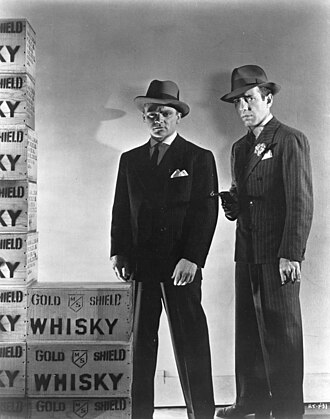
The definition of what constitutes a crime film is not straightforward. Criminologist Nicole Hahn Rafter in her book Shots in the Mirror: Crime Films and Society (2006) found that film scholars had a traditional reluctance to examine the topic of crime films in their entirety due to complex nature of the topic. Carlos Clarens in his book Crime Movies (1980), described the crime film as a symbolic representation of criminals, law, and society. Clarens continued that they describe what is culturally and morally abnormal and differ from thriller films which he wrote as being more concerned with psychological and private situations. Thomas Schatz in Hollywood Genres: Formulas, Filmmaking, and the Studio System (1981) does not refer to the concept of crime film as a genre, and says that "such seemingly similar "urban crime" formulas" such as the gangster film and detective film were their own unique forms. Thomas Leitch, author of Crime Films (2004) stated that the crime film presents their defining subject as a crime culture that normalizes a place where crime is both shockingly disruptive and completely normal. Rafter suggested the best way to skirt complexities of various films that may be defined as crime films as works that focus primarily on crime and its consequences, and that they should be viewed as a category that encompasses a number genres, ranging from caper films, detective films, gangster films, cop and prison films and courtroom dramas. She said that like drama and romance film, they are umbrella terms that cover several smaller more coherent groups.
The criminal acts in every film in the genre represents a larger critique of either social or institutional order from the perspective of a character or from the film's narrative at large. The films also depend on the audience ambivalence towards crime. Master criminals are portrayed as immoral but glamorous while maverick police officers break the law to capture criminals. Leitch defined this as a critical to the film as the films are about the continual breakdown and re-establishment of borders among criminals, crime solvers and victims, concluding that "this paradox is at the heart of all crime films." Rafter echoed these statements, saying crime films should be defined on the basis of their relationship with society.
Leitch writes that crime films reinforce popular social beliefs of their audience, such as the road to hell is paved with good intentions, the law is above individuals, and that crime does not pay. The genre also generally has endings that confirm the moral absolutes that an innocent victim, a menacing criminal, and detective and their own morals that inspire them by questioning their heroic or pathetic status, their moral authority of the justice system, or by presenting innocent characters who seem guilty and vice versa.