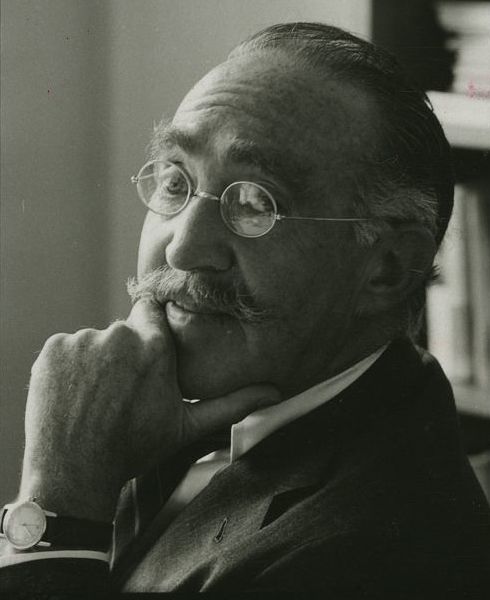
Perelman dropped out of Brown and moved to Greenwich Village in Manhattan, New York City.
Perelman wrote many brief, humorous descriptions of his travels for various magazines, and of his travails on his Pennsylvania farm, all of which were collected into books. (A few were illustrated by caricaturist Al Hirschfeld, who accompanied Perelman on the round-the-world trip recounted in Westward Ha!.)
Perelman is highly regarded for his humorous short pieces that he published in magazines in the 1930s and 1940s, most often in The New Yorker. For these, he is considered the first surrealist humor writer of the United States. In these numerous brief sketches he pioneered a new and unique style, using parody to "wring every drop of false feeling or slovenly thinking."
They were infused with a sense of ridicule, irony, and wryness and frequently used his own misadventures as their theme. Perelman chose to describe these pieces as feuilletons — a French literary term meaning "literary or scientific articles; serial stories" (literally "little leaves") — and he defined himself as a feuilletoniste. Perelman's only attempt at a conventional novel (Parlor, Bedlam and Bath, written in collaboration with Quentin Reynolds) was unsuccessful, and throughout his life he was resentful that authors who wrote in the full-length form of novels received more literary respect (and financial success) than short-form authors like himself even as he openly admired British humorist P.G. Wodehouse. While many believe Dawn Ginsbergh's Revenge to be a novel, it is actually his first collection of humorous pieces, many written while he was a student at Brown. It is largely considered juvenilia , and its pieces were never included in future Perelman collections.
The tone of Perelman's feuilletons was very different from those sketches of the inept "little man" struggling to cope with life that James Thurber and other New Yorker writers of the era frequently produced. Yet his references to himself were typically wittily self-deprecatory—as for example, "before they made S.J. Perelman, they broke the mold."
Sometimes he gleaned an apparently off-hand phrase from a newspaper article or magazine advertisement and would then write a brief, satiric play or sketch inspired by that phrase. A typical example is his 1950s work "No Starch in the Dhoti, S'il Vous Plait." Beginning with an off-hand phrase in a New York Times Magazine article ("...the late Pandit Motilal Nehru—who sent his laundry to Paris—the young Jawaharlal's British nurse etc. etc. ...), Perelman composed a series of imaginary letters that might have been exchanged in 1903 between an angry Pandit Nehru in India and a sly Parisian laundryman about the condition of his laundered underwear.