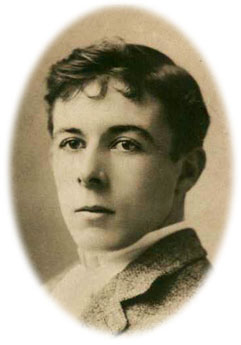
Sir Edward Seymour Hicks, better known as Seymour Hicks, was a British actor, music hall performer, playwright, actor-manager and producer. He became known, early in his career, for writing, starring in and producing Edwardian musical comedy, often together with his famous wife, Ellaline Terriss. His most famous acting role was that of Ebenezer Scrooge in Charles Dickens's A Christmas Carol.
Sir Edward Seymour Hicks, better known as Seymour Hicks, was a British actor, music hall performer, playwright, actor-manager and producer. He became known, early in his career, for writing, starring in and producing Edwardian musical comedy, often together with his famous wife, Ellaline Terriss. His most famous acting role was that of Ebenezer Scrooge in Charles Dickens's A Christmas Carol.
소개 자세히 읽기
Sir Edward Seymour Hicks (30 January 1871 – 6 April 1949), better known as Seymour Hicks, was a British actor, music hall performer, playwright, actor-manager and producer. He became known, early in his career, for writing, starring in and producing Edwardian musical comedy, often together with his famous wife, Ellaline Terriss. His most famous acting role was that of Ebenezer Scrooge in Charles Dickens's A Christmas Carol.
Making his stage début at the age of nine and performing professionally by sixteen, Hicks joined a theatrical company and toured America before starring in Under the Clock in 1893, the first musical revue ever staged in London. Following this, he starred in a revival of Little Jack Sheppard at the Gaiety Theatre, London which brought him to the attention of impresario George Edwardes. Edwardes cast Hicks in his next show, The Shop Girl, in 1894. Its success led to his participation in two more of Edwardes's hit "girl" musicals, The Circus Girl (1896) and A Runaway Girl (1898), both starring Terriss. He first played the role of Ebenezer Scrooge in 1901 and eventually played it thousands of times onstage. Hicks, along with his wife, joined the producer Charles Frohman in his theatre company and wrote and starred in a series of extraordinarily successful musicals, including Bluebell in Fairyland (1901), Quality Street (1902), The Earl and the Girl (1903) and The Catch of the Season (1904).
Hicks used his fortune from these shows to commission the building of the Aldwych Theatre in 1905 and the Hicks Theatre in 1906, opening the latter with a new hit show, The Beauty of Bath. His stage performances were less successful in later years, and he opted instead to star in music hall tours, including Pebbles on the Beach (1912). He continued to write light comedies, the most popular of which was The Happy Day (1916). On film, he first appeared in Scrooge and David Garrick both from 1913. Later notable films included The Lambeth Walk (1939) and Busman's Honeymoon (1940), and his last film was in the year of his death, 1949.
Life and career
Hicks was born in St Helier on the island of Jersey. At the age of nine, he appeared as Little Buttercup in Gilbert and Sullivan's H.M.S. Pinafore at his school in Bath. After that, he was determined to be an actor.
Early career
Frohman years
In early 1900, the Hickses played in their only Broadway show together, My Daughter-in-law, at the Frohman brothers' old Lyceum Theatre. They then joined forces with producer Charles Frohman and, in his company, over a period of seven years, they played the leads in a series of musicals written by Hicks, including Bluebell in Fairyland (1901 with music by Walter Slaughter and lyrics by Charles Taylor – this Christmas show for children was continually revived for the next four decades) and The Cherry Girl (1902). Hicks and Terriss also starred in Quality Street in 1902. At that time, they moved to a new home, The Old Forge, at Merstham, Surrey. Their cul-de-sac was renamed "Quality Street".
Hicks also wrote the highly successful The Earl and the Girl (1903) and the successful The Catch of the Season (1904 with Herbert Haines and Ta
Hicks first appeared professionally on stage at the age of sixteen in a production of In the Ranks at the Grand, Islington. In 1889, he joined the theatrical company of Mr. and Mrs. Kendal for an American tour where they presented a repertory of contemporary plays. Hicks starred as Dr. Watson in the first revue show ever staged in London, Under the Clock (1893), a parody of Sherlock Holmes and Watson written by Hicks with Charles Brookfield (who played Holmes), at the Royal Court Theatre. That same year, he married Ellaline Terriss. After that, he starred in a revival of Little Jack Sheppard at the Gaiety Theatre, London. This brought him to the attention of the impresario George Edwardes. In 1894, Hicks joined his wife in the successful "Fairy pantomime", Cinderella, produced by Henry Irving at the Lyceum Theatre with music by Oscar Barrett, where she had been playing the title role. He played Thisbe, one of Cinderella's half-sisters who, in this version, were "Girton College girls who can jabber Greek and Latin, read French, play golf, and indulge in manly exercises. Thisbe has an affectation for intellectuality – Ibsen, Spooks, and the new humor."
Edwardes gave Hicks the chance to star in his next show, The Shop Girl (1894), which became a hit at the Gaiety in 1894, playing for 546 performances. Hicks's wife joined Edwardes's company during the run of the show, replacing the star in the title role, and together they made the musical an even bigger hit. The following year, Hicks transferred with the show to Broadway for a short run and then toured in America in 1895 with his wife, where they befriended the American novelist Richard Harding Davis. At the instance of W. S. Gilbert, Hicks wrote a drama called One of the Best, a vehicle for his father-in-law William Terriss at the Adelphi Theatre, based on the famous Dreyfus trial. The Hickses were frequent guests of Gilbert at his estate in Grim's Dyke. Hicks hurried back from America for the opening in December 1895. It ran for over a year.
Another early success for the young couple was The Circus Girl (1896). Hicks and Terriss both had a comedy background, and they transformed the "lovers" roles in the new genre of Edwardian musicals from overly sentimental to mischievous and light-hearted characters exchanging witty banter. Hicks then worked as co-author on The Yashmak and then on one of the Gaiety Theatre's most successful shows, A Runaway Girl (1898), in which Terriss played the title role. This was followed by With Flying Colours (1899). Also in 1899, Hicks starred as the Duc De Richelieu in A Court Scandal, a comedy adapted by Aubrey Boucicault and Osmond Shillingford from Les Premières Armes de Richelieu by Dumanoir, at the Court Theatre. The same year, he and Terriss adopted a daughter, Mabel, and Terriss gave birth to their second child, Elizabeth ("Betty), in 1904.