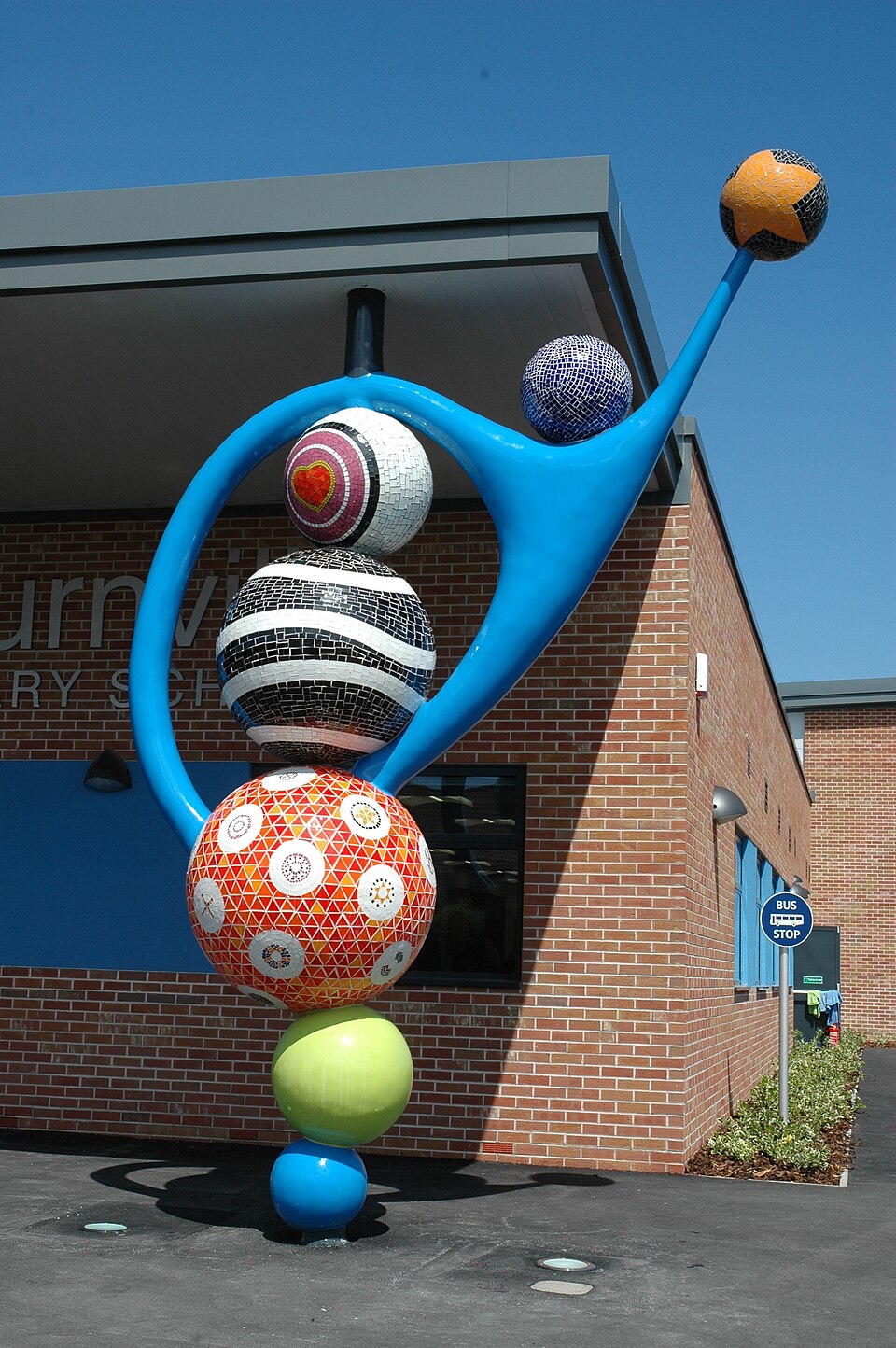
Bournville School is an all-through school and primary school with academy status, for students aged 4–16, in Bournville, Birmingham in the United Kingdom. The school has around 850 pupils currently on the roll, including a primary provision of around 150 students. The school became an Academy School on 1 November 2014 under the sponsorship of The Fairfax Multi Academy Trust (FMAT). Fairfax Academy is also in the same MAT.
Bournville School is an all-through school and primary school with academy status, for students aged 4–16, in Bournville, Birmingham in the United Kingdom. The school has around 850 pupils currently on the roll, including a primary provision of around 150 students. The school became an Academy School on 1 November 2014 under the sponsorship of The Fairfax Multi Academy Trust (FMAT). Fairfax Academy is also in the same MAT.
소개 자세히 읽기
Bournville School is an all-through school and primary school with academy status, for students aged 4–16, in Bournville, Birmingham in the United Kingdom. The school has around 850 pupils currently on the roll, including a primary provision of around 150 students. The school became an Academy School on 1 November 2014 under the sponsorship of The Fairfax Multi Academy Trust (FMAT). Fairfax Academy is also in the same MAT.
History
Before Bournville became a comprehensive school in the 1970s, it was previously two sibling grammar schools: Bournville Girls Grammar School and Bournville Grammar-Technical School For Boys, previously known as Bournville Boys Technical School. The technical school for boys, the city's first technical school, opened in October 1955. The technical school later combined with the girls' grammar school on the same site, and its current full title is Bournville School and Sixth Form Centre: a Business, Enterprise and Music College.
Beginnings
Originally designed and built as two separate schools, the first to be opened was Bournville Girls' Grammar School adjacent to the A38 Bristol Road South south of Bournville village in autumn 1954, housed in a modern building.
One year later, in September 1955, Bournville Boys' Technical School was also opened at the top end of the same site, together with the separate and new two-story dining room and a purpose-built technical block between the two school buildings. The twin schools shared the main playing field, with timetables arranged so that activities of the two schools did not clash. The tennis courts were under the control of the girls' school and were not available to the boys' school, except by special arrangement at the weekends.
The establishment of Technical Grammar schools was a government initiative under the Tripartite Educational System, originally mapped out in the Education Act 1944, to encourage the development of the skilled senior and middle management engineers, scientists and technicians.
The new school's timetable ensured that in years seven to nine the traditional academic subjects were covered, while in years ten onwards academic studies were reduced and more time was spent on the technical subjects of chemistry, physics, woodwork, metalwork and technical drawing. The boys' school forged ties with local industrial and scientific concerns and, in return for cash sponsorship of materials and occasional teaching support by their specialists and foremen, those engineering businesses enjoyed first call on qualified pupils when they left school.
Segregation
During the early years there were no female teachers at the boys' school and only two male teachers at the girls' school. Great efforts were made by the teachers of both schools to keep the boys and girls from becoming distracted by interacting with each other. Lunchtime timetables were arranged so that the girls had the first two sittings and the boys were not allowed into the dining room building until it had been vacated. Sports activities on the sports field took place at different times and even at the end of the school day the girls' grammar school was dismissed fifteen minutes earlier. The only joint activities during the 1950s were occasional joint theatrical and musical productions and an after school ballroom dancing society in the boys' school hall. "Club Griffin" school dances in the 1960s and 1970s were mixed. A Mrs Cotton was the first Head Mistress at the Girls school when the school opened.
Sport and recognition
Boys and girls of all ages were required to wear a school uniform and cap for the boys and beret for the girls when travelling to or from school and on school trips. The wearing of caps was made non-compulsory after summer 1968. Team sports played were rugby and basketball in winter and cricket in summer. Teams competed in the Birmingham grammar school leagues at all age groups. The boys also had a swimming team and an athletics team. The girls' school played netball and hockey in winter and tennis in summer.
Both schools held an annual cross-country race. Entry was compulsory for all pupils, who also had to complete at least three after-school practice runs over the full course in the weeks preceding the race, with teachers placed on every corner to ensure nobody dropped out or took shortcuts.
After school activities
After school there were school clubs and societies organised and run by both teachers and senior pupils, which took place in classrooms all over both schools. There was a historical society, chess club, ballroom dancing society, geography club, film society, drama club, choral society, science club, astronomy society and the poetry club. The girls' grammar additionally had knitting and sewing clubs, a cookery club, a small string orchestra and a ballet society.
Merge
Entry to both schools in the early years had been by eleven-plus examination with both schools selecting only those pupils who had achieved the highest scores in the area's feeder schools. However, under government Circular 10/65, implemented by Birmingham's local education authority, the 11+ examination was scrapped along with the tripartite system of grammar, technical grammar and secondary modern schools, to be replaced by a comprehensive system.
The Bournville schools combined and became a joint comprehensive, switching to coeducational mixed education in September 1973. The schools' teaching staffs combined under a single management structure with a single head teacher. The original Girls' Grammar school building became the 'lower school' facility and the Boys' Grammar at the top end of the site became 'upper school'. The combined School has continued to maintain a reputation for excellence in the Selly Oak, Bournville and Northfield catchment areas.
The former Boys' School is now the upper school, called The Charlotte Brontë Building, and the former Girls' School is now the lower school, called The Edward Elgar Building. There is also an annex to the Elgar building (previously the Science Annex), housing one science lab and a resistant