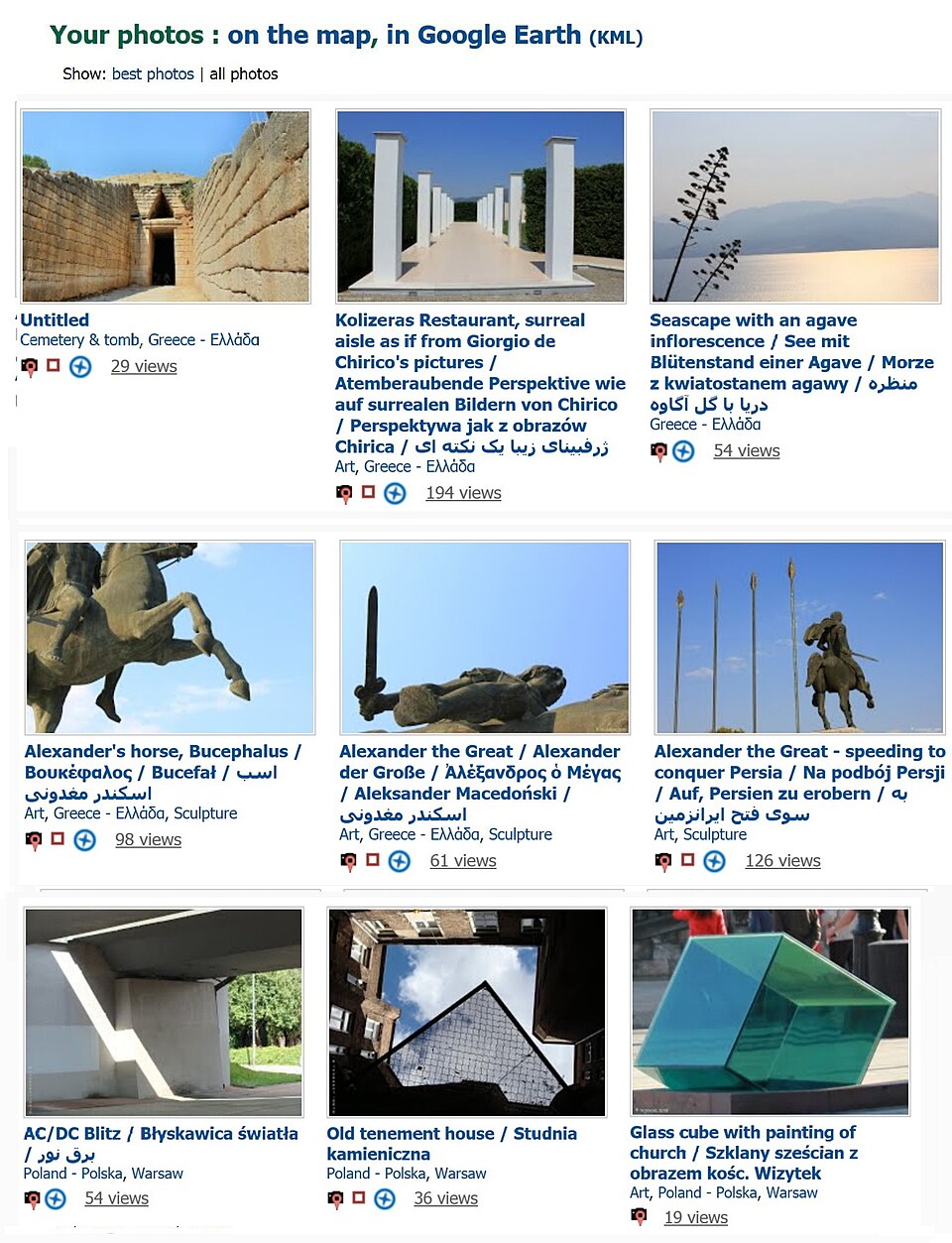
Image sharing, or photo sharing, is the publishing or transfer of digital photos online. Image sharing websites offer services such as uploading, hosting, managing and sharing of photos. This function is provided through both websites and applications that facilitate the upload and display of images. The term can also be loosely applied to the use of online photo galleries that are set up and managed by individual users, including photoblogs. Sharing means that other users can view but not necessarily download images, and users can select different copyright options for their images.
Image sharing, or photo sharing, is the publishing or transfer of digital photos online. Image sharing websites offer services such as uploading, hosting, managing and sharing of photos. This function is provided through both websites and applications that facilitate the upload and display of images. The term can also be loosely applied to the use of online photo galleries that are set up and managed by individual users, including photoblogs. Sharing means that other users can view but not necessarily download images, and users can select different copyright options for their images.
소개 자세히 읽기
Image sharing, or photo sharing, is the publishing or transfer of digital photos online. Image sharing websites offer services such as uploading, hosting, managing and sharing of photos (publicly or privately). This function is provided through both websites and applications that facilitate the upload and display of images. The term can also be loosely applied to the use of online photo galleries that are set up and managed by individual users, including photoblogs. Sharing means that other users can view but not necessarily download images, and users can select different copyright options for their images.
While photoblogs tend only to display a chronological view of user-selected medium-sized photos, most photo sharing sites provide multiple views (such as thumbnails and slideshows), the ability to classify photos into albums, and add annotations (such as captions or tags).
Desktop photo management applications may include their own photo-sharing features or integration with sites for uploading images to them. There are also desktop applications whose sole function is sharing images, generally using peer-to-peer networking. Basic image sharing functionality can be found in applications that allow you to email photos, for example by dragging and dropping them into pre-designed templates.
Photo sharing is not confined to the web and personal computers, but is also possible from portable devices such as camera phones, either directly or via MMS. Some cameras now come equipped with wireless networking and similar sharing functionality themselves.
History
During the 1984 Los Angeles Olympics, Japanese photographers from Asahi Shimbun and Yomiuri Shimbun newspapers needed to quickly send photos back to their Tokyo offices under tight deadlines. They used a prototype Canon Sill Video System D1413 still video camera to capture digital photos on a video floppy disk, selected key shots on a display monitor, and transmitted the images to Tokyo over a phone line. It took 6 minutes to transfer a black-and-white image and 24 minutes for a color photo.
Revenue models
Image sharing sites can be broadly broken up into two groups: sites that offer photo sharing for free and sites that charge consumers directly to host and share images.
Of the sites that offer free photo sharing, most can be broken up into advertising-supported media plays and online photo finishing sites, where photo sharing is a vehicle to sell prints or other merchandise. These designations are not strict, and some subscription sites have a limited free version. Consumers can share their photos directly from their home computers over high speed connections through peer-to-peer photo sharing using applications. Peer-to-peer photo sharing often carries a small one-time cost for the software. Some sites allow you to post your pictures online and they will then project the image onto famous buildings during special events, while other sites let you insert photos into digital postcards, slide shows and photo albums and send them to others.
Some free sites are owned by camera manufacturers, and only accept photos made with their hardware.
Subscription-based
In return for a fee, subscription-based photo sharing sites offer their services without the distraction of advertisements or promotions for prints and gifts. They may also have other enhancements over free services, such as guarantees regarding the online availability of photos, more storage space, the ability for non-account holders to download full-size, original versions of photos, and tools for backing up photos. Some offer user photographs for sale, splitting the proceeds with the photographer, while others may use a disclaimer to reserve the right to use or sell the photos without givin
Nippon Telegraph and Telephone (NTT) launched the Integrated Services Network (INS‑Net), the first commercial Integrated Services Digital Network (ISDN), for the Japanese market in 1988. It launched with an image sharing service supporting high-resolution color digital images.
The first photo sharing web sites originated during the mid-to-late 1990s, primarily from services providing online ordering of prints (photo finishing), but many more came into being during the early 2000s with the goal of providing permanent and centralized access to a user's photos, and in some cases video clips too. Webshots, SmugMug, Yahoo! Photos and Flickr were among the first. This has resulted in different approaches to revenue generation and functionality among providers.
In 1995, Webshots was one of the first online photo sharing platforms. Webshots offered an easy-to-use interface and basic photo editing tools. In 2002, SmugMug was founded, focusing on providing a high-quality photo sharing experience for professional photographers. SmugMug offers features such as custom photo galleries and e-commerce options. In 2003, Yahoo! Photos was one of the most popular photo sharing platforms thanks to its integration with Yahoo's email and search services. In 2004, Flickr was founded, quickly becoming popular due to its vibrant photography community and effective tagging system.
The 2010s saw the rise of mobile apps and cloud storage. The advent of smartphones with high-quality cameras and the availability of cloud storage services such as Google Photos, Dropbox, and iCloud Photo Library revolutionized the way people take, store, and access their photos. Mobile apps such as Instagram, Snapchat, and TikTok emerged, offering a simple and socially focused photo sharing experience. These apps met the need for instant sharing with friends and followers.
In recent years, AI and machine learning have become increasingly integrated into photo sharing platforms. AI is being used to improve image quality, automatically tag images with relevant keywords, detect and filter inappropriate content, and create new effects and filters. AI has the potential to revolutionize the way people share photos, making it easier for them to share better-looking images and find relevant images.