
항목
자서전 작가
autobiographer
자서전을 집필하는 사람
항목
autobiographer
자서전을 집필하는 사람
이 항목이 포함된 사건 파일에서 정보와 관계를 함께 살펴보세요.
이 항목이 포함된 사건 파일이 아직 없습니다.
이 항목으로 조사 시작하기이 항목과 이어지는 작품이나 사람을 살펴보고 있어요.
자서전 작가
연결된 것을 찾고 있어요.
자서전을 집필하는 사람
An autobiography, sometimes informally called an autobio, is a self-written account of one's own life, providing a personal narrative that reflects on the author's experiences, memories, and insights. This genre allows individuals to share their unique perspectives and stories, offering readers a glimpse into the author's personal journey and the historical or cultural context in which they lived.
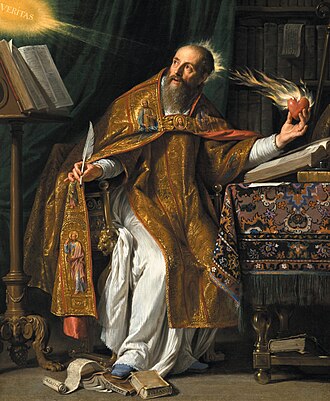
The term "autobiography" was first used in 1797, but the practice of writing about one's life dates back to antiquity. Early examples include Saint Augustine's Confessions (c. 400), which is considered one of the first Western autobiographies. Unlike biographies, which are written by someone else, autobiographies are based on the author's memory and personal interpretation of events, making them inherently subjective. This subjectivity can sometimes lead to inaccuracies or embellishments, as the author may recall events differently or choose to present them in a certain light.
Autobiographies can take various forms, including memoirs, spiritual autobiographies, and fictional autobiographies. Memoirs typically focus on specific memories or themes from the author's life, rather than providing a comprehensive account. Spiritual autobiographies, such as Augustine's Confessions, detail the author's religious journey and spiritual growth. Fictional autobiographies, on the other hand, are novels written in the first person, presenting a fictional character's life as if it were an autobiography.
The word "autobiography" was first used deprecatingly by William Taylor in 1797 in the English periodical The Monthly Review, when he suggested the word as a hybrid, but condemned it as "pedantic". However, its next recorded use was in its present sense, by Robert Southey in 1809. Despite only being named early in the nineteenth century, first-person autobiographical writing originates in antiquity. Roy Pascal differentiates autobiography from the periodic self-reflective mode of journal or diary writing by noting that "[autobiography] is a review of a life from a particular moment in time, while the diary, however reflective it may be, moves through a series of moments in time". Autobiography thus takes stock of the autobiographer's life from the moment of composition. While biographers generally rely on a wide variety of documents and viewpoints, autobiography may be based entirely on the writer's memory. The memoir form is closely associated with autobiography but it tends, as Pascal claims, to focus less on the self and more on others during the autobiographer's review of their own life.
Autobiographical works are by nature subjective. The inability—or unwillingness—of the author to accurately recall memories has in certain cases resulted in misleading or incorrect information. Some sociologists and psychologists have noted that autobiography offers the author the ability to recreate history.
Spiritual autobiography is an account of an author's struggle or journey towards God, followed by conversion a religious conversion, often interrupted by moments of regression. The author re-frames their life as a demonstration of divine intention through encounters with the Divine. The earliest example of a spiritual autobiography is Augustine's Confessions though the tradition has expanded to include other religious traditions in works such as Mohandas Gandhi's An Autobiography and Black Elk's Black Elk Speaks. Deliverance from Error by Al-Ghazali is another example. The spiritual autobiography often serves as an endorsement of the writer's religion.
A memoir is slightly different in character from an autobiography. While an autobiography typically focuses on the "life and times" of the writer, a memoir has a narrower, more intimate focus on the author's memories, feelings and emotions. Memoirs have often been written by politicians or military leaders as a way to record and publish an account of their public exploits. One early example is that of Julius Caesar's Commentarii de Bello Gallico, also known as Commentaries on the Gallic Wars. In the work, Caesar describes the battles that took place during the nine years that he spent fighting local armies in the Gallic Wars. His second memoir, Commentarii de Bello Civili (or Commentaries on the Civil War) is an account of the events that took place between 49 and 48 BC in the civil war against Gnaeus Pompeius and the Senate.
Leonor López de Córdoba (1362–1420) wrote what is supposed to be the first autobiography in Spanish. The English Civil War (1642–1651) provoked a number of examples of this genre, including works by Sir Edmund Ludlow and Sir John Reresby. French examples from the same period include the memoirs of Cardinal de Retz (1614–1679) and the Duc de Saint-Simon.
The term "fictional autobiography" signifies novels about a fictional character written as though the character were writing their own autobiography, meaning that the character is the first-person narrator and that the novel addresses both internal and external experiences of the character. Daniel Defoe's Moll Flanders is an early example. Charles Dickens' David Copperfield is another such classic, and J.D. Salinger's The Catcher in the Rye is a well-known modern example of fictional autobiography. Charlotte Brontë's Jane Eyre is yet another example of fictional autobiography, as noted on the front page of the original version. The term may also apply to works of fiction purporting to be autobiographies of real characters, e.g., Robert Nye's Memoirs of Lord Byron.
In antiquity such works were typically entitled apologia, purporting to be self-justification rather than self-documentation. The title of John Henry Newman's 1864 Christian confessional work Apologia Pro Vita Sua refers to this tradition.
The historian Flavius Josephus introduces his autobiography Josephi Vita (c. 99) with self-praise, which is followed by a justification of his actions as a Jewish rebel commander of Galilee.
The rhetor Liban
출처: Autobiography (CC BY-SA)
확인된 구조화 정보, 사용자 의견, AI가 찾은 관계를 구분해 표시해요.
아직 댓글이 없어요. 먼저 한마디 남겨 보세요.