
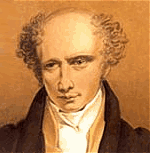
인물1795
William Wyon
William Wyon was a British engraver who was official chief engraver at the Royal Mint from 1828 until his death.
인물1795
William Wyon was a British engraver who was official chief engraver at the Royal Mint from 1828 until his death.
이 항목이 포함된 사건 파일에서 정보와 관계를 함께 살펴보세요.
이 항목이 포함된 사건 파일이 아직 없습니다.
이 항목으로 조사 시작하기아직 댓글이 없어요. 먼저 한마디 남겨 보세요.
William Wyon was a British engraver who was official chief engraver at the Royal Mint from 1828 until his death.
William Wyon (1795 – 29 October 1851) was a British engraver who was official chief engraver at the Royal Mint from 1828 until his death.
Wyon was born in Birmingham and, in 1809, was apprenticed to his father, Peter Wyon who was an engraver and die sinker. In 1816, he went to London. He studied the works of John Flaxman, attended the schools of the Royal Academy, and gained a gold medal from the Society of Arts for a copy of the head of Ceres, and a second for an original group. In 1816 he was appointed assistant engraver to the mint, and in 1828 chief engraver. In 1831 he was elected associate and in 1838 full member of the Royal Academy. He died in Brighton, United Kingdom. Wyon is buried under a simple rectangular York stone slab at West Norwood Cemetery. He was the father of engraver Leonard Charles Wyon.
Under the influence of Flaxman, a master of relief sculpture, Wyon was a highly visible proponent of the Neoclassicist vogue.
In 1834 he modelled the head of Princess Victoria, who was 15 years of age at the time. This work was subsequently used for the City Medal struck in 1837 to celebrate Victoria's first visit to the City of London after her accession to the throne and another medal also issued in 1837 commemorating her visit to the Guildhall.
The name of William Wyon is well known among coin and medal collectors because of his prodigious output and artistic skill. He designed the second and third effigies of George IV, the effigy of William IV in 1830, working from the bust by Sir Francis Chantrey, and "The Young Head", which graced Victoria's coinage from 1838 to 1860 on the pennies and the rest of the coinage until 1887. He also designed the Naval General Service Medal, of which 20,933 were issued. Notable among his medallic work are the obverse designs for the prize, juror and other medals for The Great Exhibition at Crystal Palace in 1851, the year of his death in Birmingham.
출처: William Wyon (CC BY-SA)
확인된 구조화 정보, 사용자 의견, AI가 찾은 관계를 구분해 표시해요.