
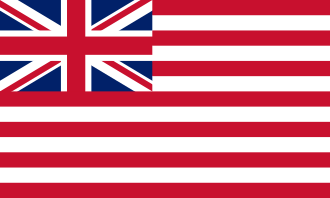
항목
Bengal Army
The Bengal Army was the army of the Bengal Presidency, one of the three presidencies of British India within the British Empire.
항목
The Bengal Army was the army of the Bengal Presidency, one of the three presidencies of British India within the British Empire.
이 항목이 포함된 사건 파일에서 정보와 관계를 함께 살펴보세요.
이 항목이 포함된 사건 파일이 아직 없습니다.
이 항목으로 조사 시작하기이 항목과 이어지는 작품이나 사람을 살펴보고 있어요.
Bengal Army
연결된 것을 찾고 있어요.
아직 댓글이 없어요. 먼저 한마디 남겨 보세요.
The Bengal Army was the army of the Bengal Presidency, one of the three presidencies of British India within the British Empire.
The Bengal Army was the army of the Bengal Presidency, one of the three presidencies of British India within the British Empire.
It was formed in 1756 and underwent various re-organisations, including the creation of irregular infantry and cavalry regiments during the 1840s. It was originally recruited from high-caste Hindus but more diversity was introduced after 1857.
The presidency armies, like the presidencies themselves, belonged to the East India Company (EIC) until the Government of India Act 1858, passed in the aftermath of the Indian Rebellion of 1857, transferred all three presidencies to the direct authority of the British Crown. In 1895 the three presidency armies were merged into the British Indian Army.
The Bengal Army originated with the establishment of a European Regiment in 1756. While the East India Company had previously maintained a small force of Dutch and Eurasian mercenaries in Bengal, this was destroyed when Calcutta was captured by the Nawab of Bengal on 30 June that year.
A total of 64 Bengal Army regular infantry and cavalry regiments rebelled during the Indian Rebellion of 1857, or were disbanded after their continued loyalty was considered doubtful. From 1858 onwards the Chamars (outcaste) and the actual high-caste Awadhi and Bihari Hindu presence in the Bengal Army was reduced because of their perceived primary role as "mutineers" in the 1857 rebellion. The new and less homogeneous Bengal Army was essentially drawn from Punjabi Muslims, Sikhs, Gurkhas, Baluchis and Pathans, although twelve of the pre-mutiny Bengal line infantry regiments continued in service with the same basis of recruitment, traditions and uniform colours as before.
A largely unspoken rationale was that an army of diverse origins was unlikely to unite in rebellion.
In 1895 the three separate Presidency Armies began a process of unification which was not to be concluded until the Kitchener reforms of eight years later.
As an initial step the Army of India was divided into four commands, each commanded by a lieutenant-general. These comprised Bengal, Bombay (including Aden), Madras (including Burma) and Punjab (including the North West Frontier). In 1903 the separately numbered regiments of the Bombay, Madras and Bengal Armies were unified in a single organisational sequence and the presidency affiliations disappeared.
The Bengal infantry units in existence at the end of the Presidency era continued as the senior regiments (1st Brahmans to 48th Pioneers) of the newly unified Indian Army.
The Bengal Army of the East India Company was mainly recruited from high castes living in Bihar and the Awadh.
Prior to 1857, company military service was most popular in the zamindaris of North and South Bihar with the East India Company signing contracts to raise levies of troops from them. Recruits from the Rajput and Brahman caste were common and they would use service in the Bengal Army as an opportunity to raise their wealth and status and for this r
출처: Bengal Army (CC BY-SA)
확인된 구조화 정보, 사용자 의견, AI가 찾은 관계를 구분해 표시해요.
In 1757, the first locally recruited unit of Bengal sepoys was created in the form of the Lal Paltan battalion. It was recruited from soldiers that had served in the Nawab's Army from Bihar and the Awadh (Oudh) who were collectively called Purbiyas. Drilled and armed along British army lines this force served well at the Battle of Plassey in 1757 and 20 more Indian battalions were raised by 1764. In 1766, the Monghyr Mutiny, quelled by Robert Clive, affected many of the white officers of the Bengal Army.
In his deposition, Lieutenant General Jasper Nicolls, who was an army commander stationed in India, stated of the Bengal Army's recruitment that:
"It may well be said that the whole sepoy army of Bengal is drawn from the Company's province of Bihar and Oudh, with very few exceptions".
The East India Company steadily expanded its Bengal Army and by 1796 the establishment was set at three battalions of European artillery, three regiments of European infantry, ten regiments of Indian cavalry and twelve regiments (each of two battalions) of Indian infantry.
In 1824 the Bengal Army underwent reorganisation, with the regular infantry being grouped into 68 single battalion regiments numbered according to their date of establishment. Nine additional infantry regiments were subsequently raised, though several existing units were disbanded between 1826 and 1843. On the eve of the First Afghan War (1839–42) the Bengal Army had achieved a dominant role in the forces of the HEIC. There were 74 battalions of Bengal regular infantry against only 52 from Madras, 26 from Bombay and 24 British (Queen's and Company). On average an inch and a half taller and a stone heavier than the southern Indian troops, the Bengal sepoy was highly regarded by a military establishment that tended to evaluate its soldiers by physical appearance.
A new feature in the Bengal Army was the creation of irregular infantry and cavalry regiments during the 1840s. Originally designated as "Local Infantry" these were permanently established units but with less formal drill and fewer British officers than the regular Bengal line regiments.
The main source of recruitment continued to be high caste Brahmins, Bhumihars and Rajputs from Bihar and Oudh, although the eight regular cavalry regiments consisted mainly of Muslim sowars from the Indian Muslim biradaris such as the Ranghar, Sheikhs, Sayyids, Mughals, and Hindustani Pathans.
Another innovation introduced prior to 1845 was to designate specific regiments as "Volunteers" – that is recruited for general service, with sepoys who had accepted a commitment for possible overseas duty. Recruits for the Bengal Army who were prepared to travel by ship if required, received a special allowance or batta. Two of these BNI regiments were serving in China in 1857 and so escaped any involvement in the great rebellion of that year. The East India Company's Bengal Army in 1857 consisted of 151,361 men of all ranks, of whom the great majority - 128,663 - were Indians.