
キャラクター
Tommy Carcetti
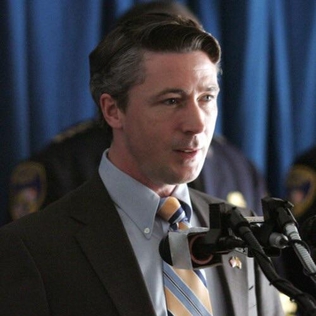
Thomas J. "Tommy" Carcetti is a fictional character on the HBO drama The Wire, played by Aidan Gillen. Carcetti is an ambitious and venal Baltimore politician who begins the series with a seat on the city council.
キャラクター
Thomas J. "Tommy" Carcetti is a fictional character on the HBO drama The Wire, played by Aidan Gillen. Carcetti is an ambitious and venal Baltimore politician who begins the series with a seat on the city council.
この項目を含む事件ファイルで情報と関係を見てみましょう。
この項目を含む事件ファイルはまだありません。
この項目から調査する最初のコメントをお待ちしています。
Thomas J. "Tommy" Carcetti is a fictional character on the HBO drama The Wire, played by Aidan Gillen. Carcetti is an ambitious and venal Baltimore politician who begins the series with a seat on the city council.
Thomas J. "Tommy" Carcetti ( kar-KET-ee) is a fictional character on the HBO drama The Wire, played by Aidan Gillen. Carcetti is an ambitious and venal Baltimore politician who begins the series with a seat on the city council.
Tommy Carcetti first appears as a member of the Baltimore City Council. Although he is depicted as a loving father, he is regularly unfaithful to his wife Jen. He also works closely with Tony Gray, a fellow councilman. Carcetti is idealistic and ambitious, and has the backing of local Democrats in Baltimore's 1st district as well as Major Stan Valchek of the Baltimore Police Department. To improve upon the crime and urban decay plaguing Baltimore, Carcetti considers running for mayor against the African-American incumbent, Clarence Royce, despite the prospect of being a white candidate in a predominantly black city.
Using his connection to Valchek, Carcetti successfully manipulates Acting Commissioner Ervin Burrell into working with him, promising resources and political capital in exchange for inside information about Royce's decision-making. Carcetti becomes increasingly disillusioned with Royce and decides to run against him, recruiting college friend and Washington political consultant Theresa D'Agostino as his campaign manager.
With Carcetti's encouragement, Gray starts his own campaign for mayor. Realizing that Gray's campaign would split the black voter base in the election, D'Agostino advises Carcetti that enhancing Gray's chances of success would in turn improve his own. Carcetti dislikes the idea of abusing his friend's trust, but follows D'Agostino's strategy nonetheless.
After the BPD learns about "Hamsterdam" — Major Howard "Bunny" Colvin's drug-tolerant zones in West Baltimore — Royce refuses to allow the department to immediately shut them down. Burrell, believing the mayor is making a ploy against the police, leaks the information to Carcetti. At D'Agostino's suggestion, Carcetti tours the area with Colvin, seeing that Hamsterdam has had the positive impact of isolating the drug trade from the rest of Colvin's district.
At a city council meeting, Carcetti implicitly blames Royce for the debacle in an impassioned speech. Through this, Gray realizes that Carcetti is running for mayor without his knowledge or input. After Carcetti publicly launches his campaign, Gray ends both their alliance and their friendship. Carcetti's speech relies heavily on "war" rhetoric, which clashes with Colvin's view that such perspectives have made the war on drugs unwinnable.
出典: Tommy Carcetti (CC BY-SA)
構造化された情報、ユーザーの意見、AIが抽出した関係を区別して表示します。
Carcetti continues his campaign, with D'Agostino serving as his strategist while Norman Wilson, a former editor at The Baltimore Sun, becomes his campaign manager. When early polls show low numbers for Carcetti, he assumes that he has already lost on the basis of his race and begins to lose interest in the campaign. He chooses not to prepare for an upcoming debate with Royce and Gray, believing that he could win the debate but still lose the election regardless.
However, Carcetti's debate performance is invigorated when he learns from Valchek that a state's witness was recently murdered. He uses this inside information and his previous request for a witness protection scheme to ambush Royce to great effect. Carcetti persuades Gray to publicly criticize Royce with the promise of a prominent council position in exchange for taking a large share of the African-American vote.
His confidence restored, Carcetti hits the campaign trail with renewed vigor, receiving assistance from State Delegate Odell Watkins, who has turned against Royce. Thanks to his alliance with Watkins, Carcetti defeats Royce in a close Democratic primary election. In a city with a 9 to 1 Democratic advantage, Carcetti easily defeats a Republican named Crawford in the general election with 81% of the vote.
As mayor-elect, Carcetti immediately makes changes before his inauguration. After discussions with city officials, he decides to replace Burrell as BPD commissioner, planning to attract outside candidates while asking Burrell to resign. Burrell quickly realizes what is happening and rallies support from City Council President Nerese Campbell, corrupt State Senator Clay Davis, and a group of influential black ministers. Burrell orders an increase in arrests at Davis' suggestion, hoping to prove that the BPD is functioning well under his leadership. A frustrated Carcetti restricts Burrell's authority and insists that he clear his orders through Deputy Commissioner William Rawls.
Major Cedric Daniels, a politically neutral African-American district commander, impresses Carcetti with his interest in securing quality felony arrests instead of statistically based reductions in crime. Carcetti offers Daniels a promotion to the Criminal Investigations Division and an automatic promotion to the rank of colonel. Through Daniels, Carcetti learns of Burrell's arrest hike and consequently orders the BPD to reform its approach by prioritizing quality felony cases over statistical quotas.
Carcetti's plans for the BPD are derailed when he learns that Baltimore's schools face a $54 million budget deficit. He and Wilson travel to Annapolis in order to convince the governor to bail out the schools. The governor agrees on the condition that Carcetti face public humiliation by publicly admitting to eliciting his aid. Carcetti rejects the offer, as it would be damaging to his own planned campaign for governor; Wilson is left disappointed at Carcetti's decision to put his ambition ahead of the needs of the city. Carcetti justifies his decision by saying that he would be in a better place to help the city schools as governor.
Carcetti deals with a brutality complaint against BPD sergeant Thomas "Herc" Hauk. At Wilson and Rawls' suggestion, Carcetti decides to defer to Daniels, Herc's former commanding officer, who decides that a reprimand for excessive force is sufficient punishment. Burrell approaches Carcetti to suggest that a more rigorous review of He