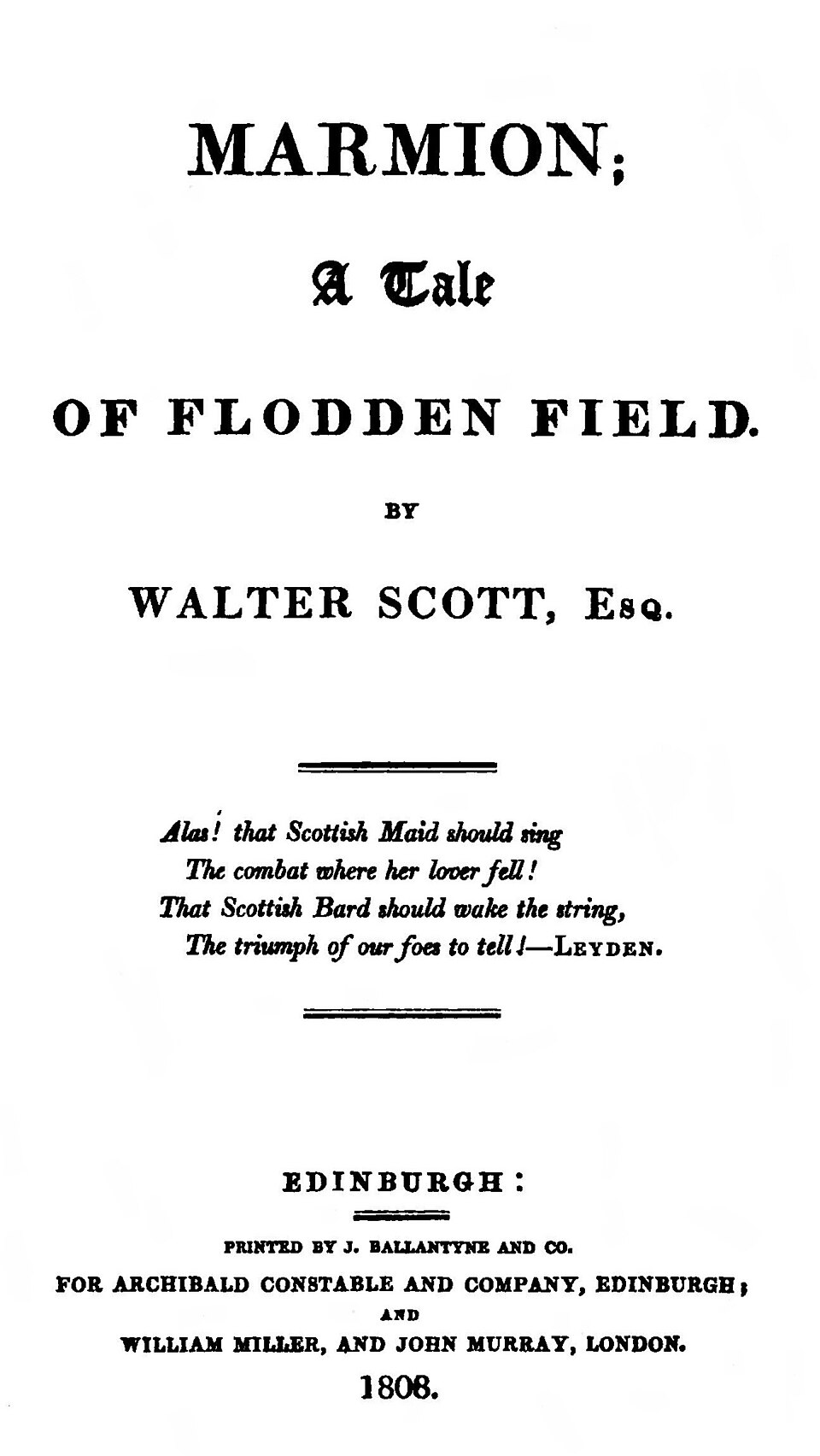
Introduction to Canto 1 (To William Stewart Rose, Esq.): Writing in November, Scott considers possible remedies for the destructive effect of time in the natural world, in public affairs (he elegises Nelson, Pitt, and Fox), and in literature: namely spring, the apocalypse, and the revival of medieval romance.
Canto 1 (The Castle): The English knight Marmion and his train are received by Sir Hugh the Heron at Norham Castle who arranges for a palmer to guide him on his embassy from Henry VIII to James IV, King of Scots in Edinburgh.
Introduction to Canto 2 (To the Rev. John Mariot): Scott considers remedies for historical decline and personal loneliness, namely the joy Mariot and he have found in humble enjoyments, and the purity of solitary meditation.
Canto 2 (The Convent): The Abbess of Whitby, with a party of nuns including a novice Sister Clare, journeys by sea to Lindisfarne, where she forms one of a tribunal in sentencing Constance de Beverly to be immured alive together with an accomplice in the planned murder of Clare. In her final speech Constance tells how she had escaped from a convent to join Marmion who had then abandoned her for the wealthy Clare, charging Clare's fiancé with treason and defeating him in armed combat.