
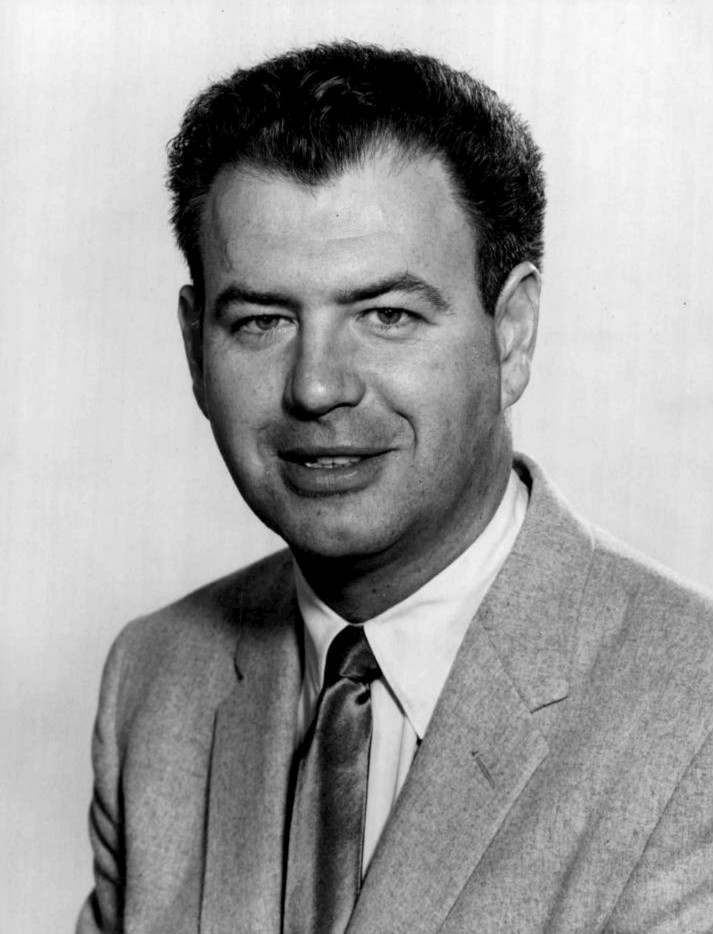
인물1921
넬슨 리들
Nelson Riddle
미국 작곡가
인물1921
Nelson Riddle
미국 작곡가
이 항목이 포함된 사건 파일에서 정보와 관계를 함께 살펴보세요.
이 항목이 포함된 사건 파일이 아직 없습니다.
이 항목으로 조사 시작하기아직 댓글이 없어요. 먼저 한마디 남겨 보세요.
미국 작곡가
Nelson Smock Riddle Jr. (June 1, 1921 – October 6, 1985) was an American arranger, composer, bandleader and orchestrator whose career stretched from the late 1940s to the mid-1980s. He worked with many vocalists at Capitol Records, including Frank Sinatra, Ella Fitzgerald, Nat King Cole, Judy Garland, Dean Martin, Peggy Lee, Johnny Mathis, Rosemary Clooney and Keely Smith. He scored and arranged music for many films and television shows, earning an Academy Award and three Grammy Awards. He found commercial and critical success with a new generation in the 1980s, in a trio of platinum albums with Linda Ronstadt.
Riddle was born on June 1, 1921, in Oradell, New Jersey. He was the only surviving child of Marie Albertine Riddle (a native of Mulhouse, France, whose father was Spanish) and Nelson Smock Riddle, who was of English-Irish and Dutch descent. His mother had suffered six miscarriages and one stillbirth in her lifetime. It was his mother's second marriage. The family later moved to nearby Ridgewood.
Following his father's interest in music, he began taking piano lessons at age eight and trombone lessons at age fourteen. He was encouraged to continue his musical pursuits at Ridgewood High School.
A formative experience was hearing Serge Koussevitsky and the Boston Symphony Orchestra playing Maurice Ravel's Boléro. Riddle said later: "... I've never forgotten it. It's almost as if the orchestra leaped from the stage and smacked you in the face ..."
By his teenage years, Riddle had decided to become a professional musician; "... I wanted to be a jazz trombone player, but I didn't have the coordination." So he began to turn to composing and arranging.
The Riddle family had a summer house in Rumson, New Jersey. Riddle enjoyed Rumson so much that he convinced his parents to allow him to attend his senior year in high school there (1938).
In Rumson while playing for trumpeter Charlie Briggs' band, the Briggadiers, he met one of the most important influences on his later arranging style: Bill Finegan, with whom he began arranging lessons. Despite being only four years older than Riddle, Finegan was considerably more musically sophisticated, and within a few years Riddle was creating not only some of the most popular arrangements from the swing era, such as Glenn Miller's "Little Brown Jug", but also great jazz arrangements such as Tommy Dorsey's "Chloe" and "At Sundown" from the mid-1940s.
After his graduation from Rumson High School, Riddle spent his late teens and early twenties playing trombone in and occasionally arranging for various local dance bands, culminating in his association with the Charlie Spivak Orchestra. In 1943, Riddle joined the Merchant Marine, serving at Sheepshead Bay, New York for about two years while continuing to work for the Charlie Spivak Orchestra.
Riddle studied orchestration under his fellow merchant mariner, composer Alan Shulman. After his enlistment term ended, Riddle traveled to Chicago to join Tommy Dorsey's orchestra in 1944, where he remained the orchestra's third trombone for eleven months until drafted by the Army in April 1945, shortly before the end of World War II. He was discharged in June 1946, after fifteen months of active duty. He moved shortly thereafter to Hollywood to pursue a career as an arranger, and spent the next several years writing arrangements for multiple radio and record projects. In May 1949, Doris Day had a No. 2 hit, "Again", backed by Riddle.
In 1950, Riddle was hired by composer Les Baxter to write arrangements for a recording session with Nat King Cole; this was one of Riddle's first associations with Capitol Records. Although one of the songs Riddle had arranged, "Mona Lisa", soon became the biggest selling single of Cole's career, the work was credited to Baxter. However, once Cole learned the identity of the arrangement's creator, he sought out Riddle's work for other sessions, and thus began a fruitful partnership that furthered the careers of both men at Capitol.
출처: Nelson Riddle (CC BY-SA)
확인된 구조화 정보, 사용자 의견, AI가 찾은 관계를 구분해 표시해요.
During the same year, Riddle also formed a friendship with Vern Yocum (born George Vernon Yocum), a big band jazz musician (and brother of Pied Piper Clark Yocum) who would transition into music preparation for Frank Sinatra and other entertainers at Capitol Records. A collaboration followed, with Vern becoming Riddle's "right hand" as copyist and librarian for the next thirty years.
In 1953, Capitol Records executives viewed the up-and-coming Riddle as a prime choice to arrange for Frank Sinatra. Sinatra was reluctant however, preferring instead to remain with Axel Stordahl, his long-time collaborator from his Columbia Records years. When success of the first few Capitol sides with Stordahl proved disappointing, Sinatra eventually relented and Riddle was called in to arrange his first session for Sinatra, held on April 30, 1953. Riddle drew on Sinatra's rhythm section, led by drummer/percussionist Irving Cottler (who was the featured drummer on Cole's "Mona Lisa"). The first product of the Riddle–Sinatra partnership, "I've Got the World on a String", became a runaway hit and is often credited with relaunching the singer's slumping career. Riddle's personal favorite was a Sinatra ballad album, one of his most successful recordings, Only the Lonely.
For the next decade, Riddle continued to arrange for Sinatra and Cole, in addition to such Capitol artists as Kate Smith, Judy Garland, Dean Martin, Keely Smith, Sue Raney and Ed Townsend. He also found time to record his own instrumental discs, released on Capitol in both 45 rpm single, and LP album format. Riddle's most successful tune was "Lisbon Antigua", released in November 1955, which reached and remained at the No. 1 position for four weeks in 1956. Riddle's most notable LPs were Hey ... Let Yourself Go (1957) and C'mon ... Get Happy (1958), both of which peaked at a respectable number twenty on the Billboard charts. In 1959, he won the Grammy Award for Best Musical Composition First Recorded and Released in 19